
哈佛大學年度慣例
2026錄取文書范文新鮮釋出!
看看被錄的同學們
究竟靠什么打動了招生官~
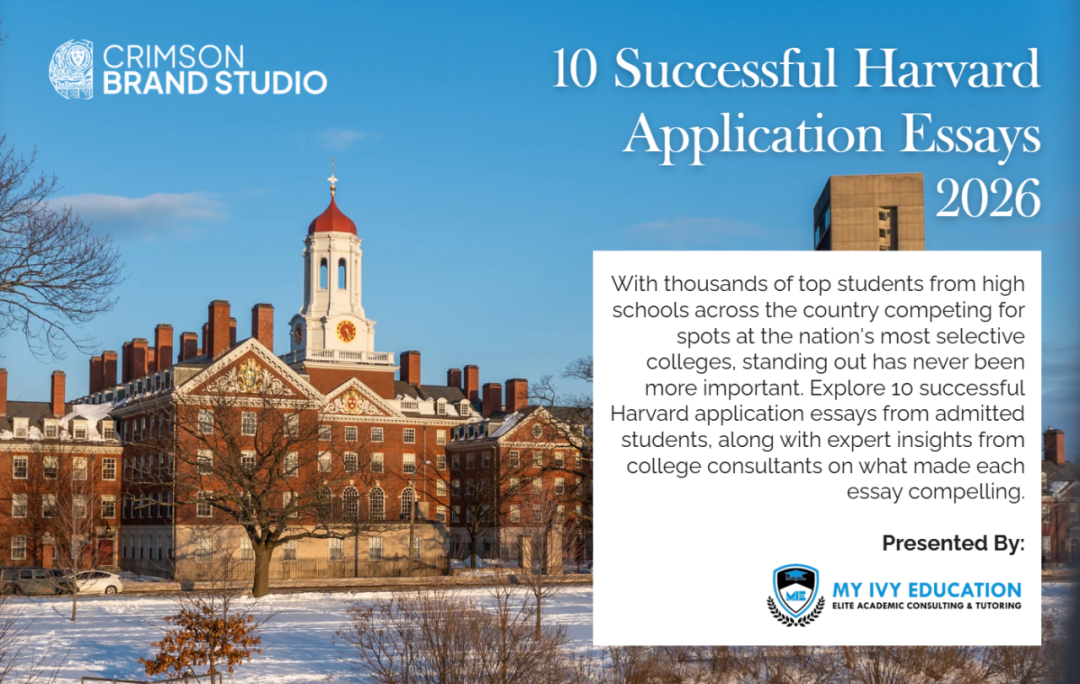
哈佛大學公開2026Fall優(yōu)秀文書
哈佛大學指出,來自全國各高中的頂尖學子都在爭搶名校席位,因此在申請中脫穎而出至關重要。
為此,特別推出全新系列——哈佛申請范文集。這些文章均出自已被錄取的學生之手,旨在幫助申請者理解并掌握撰寫優(yōu)秀申請文書的要領。
同時,哈佛還邀請大學升學專家深度剖析每篇范文的寫作技巧與成功之道,為廣大學子提供切實可行的參考與指導。
第一篇:George’s Essay
George的文章一開頭就擲地有聲。以對話開篇是一種常見手法,但諷刺的是,這反而可能讓文章淹沒在人群中。然而,George憑借出其不意的效果巧妙地避開了這一陷阱。
🔽 George’s Essay 🔽
“We need you to throw bombs.”
It was a rather unorthodox way of telling me to write something controversial. With the deadline of our first issue rapidly approaching, the Co-Editors-in-Chief of my high school newspaper wanted to do something special, to set a precedent. Readership was the priority, and our best shot of increasing it was through the publication of a wide variety of eye-catching topics: the pervasive alcohol problem, the sexist dress code, and, of course, what would later be my opinion piece on our suburb’s diversity, or rather lack thereof.
But I’m sure the newspaper teacher was beginning to have her initial doubts about my ability to run the section. While others already had an idea of what they wanted to write about, I—the supposed outspoken Opinions Editor—was the only one who didn’t have a clue what to write about. Was I even deserving of the position if I couldn’t speak my mind on simple school issues?
As the only junior awarded a section editor position, I somehow beat out seniors who had applied for Opinions Editor as their top choice. However, it was only a few weeks in before I fell upon the same self-doubts about writing for the paper that I had had as a sophomore the year before. Taking on the role of clueless newspaper newbie early on that sophomore year, I found guidance only in the sponsor’s singular, resonating message: “Write about whatever interests you.” It was supposedly as simple as that. No parameters. No governing rubric. No monotonous prompts. No, unlike the five-paragraph, formal essays and research papers we were programmed to churn out, my school paper presented an unprecedented opportunity of free will at hand, a creative free will that no other class had ever really emphasized firstmost. But not even I could capitalize on that kind of independence. That first year on the staff would mostly bear witness to the same “who, what, where, when, and why” features, news, and sports pieces, issue after issue, that demonstrated a skill in article writing, sure, but didn’t quite showcase a writer’s voice that was true to me.
That was to change, I resolved. This time around, I would write about the topic that was inherently bomb-laden: my heritage and my place in the predominantly white community where I had grown up in. Being, for a period of time, the only student of color in my elementary school, as well as the unfortunate recipient of countless, blatantly racist Asian impressions and jokes, would eventually shape a perspective that I was hesitant to speak openly about. Not anymore. There was too much at stake, an identity even. I could recognize that much. A long night of meticulous drafting would pass before giving way to a rough, but impassioned, opinion piece that spoke to the lack of both racial and political diversity that distinguished our community. The administration went on to censor out the more colorful aspects of all of our opinion pieces, but, for once, I could unabashedly take pride in the voice expressed in that draft. It was never about the stun factor, but rather about finding the courage to give my writing a stun factor in the first place.
Reflecting now on my involvement both on the paper as well as for other print publications, I’ve come to accept a certain credence. The opportunities writing offers are wide and plentiful in terms of self-expression at large, but the pursuit of topics that push you outside of your comfort zone makes the difference needed to write with a compelling conviction. As it turned out, this stated call to conviction came as the curious result of a simple request, a summoning of some internal, unrelenting voice capable of “throwing bombs.”
🔽 文書詳細點評 🔽
George’s essay begins with a bang. Starting with dialogue is a popular choice, which can ironically make an essay run the risk of blending into the crowd. However, George artfully avoids that pitfall through sheer unexpectedness. Simultaneously, he anticipates any potential fallout of discussing a topic as controversial as bombs by immediately clarifying that he is talking about journalism. In doing so, he fits form to function: since his essay describes how he beat out seniors for the Opinions Editor position, readers want to see his writing skills shining through!
The essay keeps the balancing act established from line 1 alive throughout, walking the tightrope between vivid language (the alliteration of “clueless newspaper newbie”; the parallelism of “No parameters. No governing rubric. No monotonous prompts”) without losing clarity. Moreover, while George tackles problems that are sadly common for students to experience and discuss in their essays, such as facing racism, his nuanced takeaway sets him apart: his personal growth has led him to gain the courage he needs to self-express and advocate for others regardless of outcome, an essential skill for any future journalist and student seeking to be at the vanguard of higher education.
George’s essay could benefit from two tweaks. The “bomb-laden” topic of his identity and marginalization only comes into the essay in paragraph 5, making its introduction a little abrupt. Additionally, his mention of identity being “at stake” merits more discussion, as it is a fascinating insight that, fleshed out, would show even more of the complexity he clearly brings to the table. Ultimately, however, this essay serves as a great lesson to keep in mind for any student who describes an interest or intended major in a writing-related field on their college applications: the personal statement is the ideal place to strut your stuff.
第二篇:Omar's Essay
Omar的文章闡明了自己在回答一個看似簡單的問題時所經(jīng)歷的內(nèi)心獨白(這也是其他人所經(jīng)歷的),簡明扼要地揭示了在處理自身身份和他人賦予的標簽時,那些往往未被察覺的復雜性。
🔽 Omar's Essay 🔽
“You’re Muslim?” It seems like a question which demands a yes or no answer, but I rarely answer in one word. On the lucky occasions I can, I respond with a whole essay.
In daily interactions, I never know the extent to which I should answer. It’s a loaded question. I jump to the follow-ups: “What does this person want to hear?”; “How do I explain I am a particular Muslim, of many kinds?”; and then, “Is this person actually asking, or has he or she already decided who I am?” I feel the need to protect my identity.
Among other things, I’m a Shia Ismaili Muslim. The Ismaili sect is progressive: we are encouraged to participate in Ramadan, a typically required pillar of Islam, and pray three times a day, while most Muslims pray five times. My family decides when to attend mosque each week, while others go daily. Our Imam preaches personal choice and engagement with secular life. Yet, these complexities can be difficult to convey.
When I share with others that I’m Muslim, I feel an anticipatory sting because I know they’ll see me as foreign. Even the word “Muslim” is stigmatized. Some say it only when they need to, others avoid the word entirely–though always, when it’s said, the room goes quiet. I’ve learned I have to break the silence; I’m the only one who can.
As one of the only Muslims in my school, I’m often in a position where I must advocate for my faith, even when it makes me feel naked. In my immediate world, Islam is in an uncharted interstitial space where the status of Muslims has improved, yet prejudices persist. While unspoken, I still hear them. As I navigate the complicated space of being Muslim now, I must endeavor to discover and dismantle my peers’ misconceptions–because they won’t admit them out loud.
When curious minds ask about my religion, I have trouble finding the balance of what to say. When I say too little, I regret missing the chance to convey Islam’s complexities, knowing my simple answer satisfies previous beliefs. When I say too much, I worry people will think I’m overprotective of my faith and won’t be interested to learn more. And even when I say the right thing and my friends hear me, when they respond with shock or awe, I feel the most pain. They don’t see my experience as normal, it makes me feel alien. Yet in reality, there are two billion of us and Islam’s name derives from the Arabic word “salaam,” meaning peace. Why must I explain myself so often? We come in peace.
And even then, though I often represent my faith, I am not the representative of it; no one person can be. I’d like to escape my given definition as just the “Muslim friend.” I am a baker–when I was young, I learned my grandma’s traditional Indian methods of making meat pies, and since then, spun-off her puff pastry recipe to make chocolate croissants. I am also an explorer–I collect key cards from every place I visit, from my homestay on the Vietnam rice paddies to a tent in the Serengeti in my family’s homeland of Tanzania. My keycards remind me of my experiences abroad, and that traveling like a dry and ready sponge is the most effective way to soak up knowledge of foreign culture, in all three dimensions. I’m also a pretty “normal” high school kid. I enjoy going to parties with friends, though I don’t drink, and I separately order a cheese slice, rather than peeling off pepperoni.
So I’m Muslim–it’s not the only thing I am, but my faith gives me the confidence to be self-possessed and advocate for a three dimensional view of all people. So when someone says “You’re Muslim?” I respond “Yes, but you can call me Omar. Omar Munaf Abdul Priyadarshi Medhavi.”
🔽 文書詳細點評 🔽
Omar’s essay explores his own identity—how he thinks of himself and how he navigates the perception of others. He sheds light on the internal monologue he (and others) experience when answering a seemingly-simple question, revealing quite succinctly the often-unthought-of complexities of navigating both one’s own identity and the labels that are placed on us by others. Omar explores this tension while also educating the reader on a less-discussed sect of Islam.
The context of being the sole representative of his entire minority group at school and the weight that places on his shoulders daily provides a touchpoint for others with similar experiences while simultaneously helping the reader understand the social and interpersonal challenges Omar has faced navigating high school. These are experiences that have prepared him to navigate the complexities of a dynamic and geographically diverse college environment.
As a reader, I wanted to hear more from Omar about how he “breaks the silence” as “the only one who can.” Instead, his essay veers back toward others’ gazes and his concerns over prejudice and labeling. This could have been condensed and combined into the previous paragraph to make room to show, rather than tell, what it actually looks like when Omar breaks that silence—a specific moment would add the texture his reflection earns but never quite delivers.
Omar’s essay follows the structure of many successful essays: beginning with a motif that acts as a point of dissonance that resolves at the end. The resolution is stronger than it first appears: Omar’s full name draws from his Arabic, Indian, and East African heritage, making the case that no single label can contain him. It makes a satisfying conclusion that reflects pride in his own identity without needing to scream “I am proud of who I am”.
第三篇:My (Im)Perfect Life Essay
大多數(shù)文章描述了一個轉折點,而這篇文章則將這個轉折點搬上了舞臺,邀請你親眼目睹一個完美規(guī)劃的人生如何逐漸瓦解,變成更雜亂卻也更有意義的樣子。
🔽 My (Im)Perfect Life Essay 🔽
Growing up, I packaged my whole life into three square feet in the corner of my bedroom.
Every tiny chair in my dollhouse was perfectly pushed in, every miniature book precisely aligned, and every bedspread meticulously smoothed; each room in the dollhouse had to be absolutely perfect. I would politely ask visitors not to play with it, lest my world unravel. To calm my overactive mind, I’d imagine myself as a miniature figurine in its perfectly contained world where nothing was ever out of place: friends never moved away, pets didn’t die, and there was no sound of parents fighting.
In my real life, however, I struggled with the fact that nothing seemed as neat and organized as my brain wanted it. And so, I imposed structure wherever I could, color-coordinating highlighters in jars and alphabetizing my books. As I got older, maintaining the dollhouse meant keeping my body a size XS, securing straight As, and pleasing everyone with no room for mistakes. But every time I fell short, I wished I could exert the type of control over my life as I exerted on those three feet.
My obsession with perfection drove me to be a high achiever. Getting good grades, training hard in dance, and securing leadership roles in all my pursuits made me feel like order was an important and necessary part of me. So when I was diagnosed with Obsessive Compulsive Disorder, I was unhappy and overwhelmed. In typical perfectionist fashion, I didn’t like the idea that there was something wrong with me. But over time, it has helped me understand my own compulsions, as well as the unsettling feelings I regularly experienced. Seeing myself through the lens of my diagnosis, I felt like I was finally understood.
Slowly, I’ve worked to push past my desire for constant control and experiment with imperfection. Starting with the dollhouse, I left one chair un-tucked and one bed unmade. Although it took every ounce of my being, I suppressed the urge to run back into my room and correct the set-up. Continuing my experiments, I allowed my sister to play with the house’s once off-limits treasures. Watching her sticky hands touch my immaculate figurines, I practiced sitting with my discomfort.
Eventually, I pushed myself beyond the dollhouse, researching OCD and employing strategies to help reduce my impulses and release control. Although I felt uncomfortable my progress inspired me to be a resource for others who might be struggling silently alongside me. So I wrote a workbook called ‘The Power of Choice’ to help other teens identify and overcome unhealthy habits in an empowering, proactive way.
To reach out to even more people, I then created a podcast called Teens Talking Truth, where I used comedy and empathy to create a space to talk about issues that teens grapple with, from perfectionism, anxiety, insecurity and unhealthy comparisons to cultivating healthy friendships and gratitude. Making the podcast felt cathartic, providing me with an outlet to work through issues I continue to struggle with and helping me find my authentic voice in the process. Receiving feedback from our thousands of listeners about ways that our episodes impacted their lives has been the greatest reward.
Today, when I look at the dollhouse in the dusty corner of my bedroom, I no longer wish to be one of its perfect little inhabitants. I’m not stuck in that inanimate world anymore, but rather inhabit one that is far messier and also far more joyful.
Now, I accept my flaws and value progress over perfection. While I still feel the urge to keep everything in its orderly place, I have the self-awareness to recognize it and change course. Accepting the imperfections within myself and the world around me has been my greatest struggle–and at the same time, my greatest achievement.
🔽 文書詳細點評 🔽
Most essays describe a turning point. This one stages it, inviting you to watch as a perfectly arranged life slowly unravels into something messier and far more meaningful.
In working with this student, our team set out to take this familiar theme and rework it into something more vulnerable and authentic to her experience. In the process, we aimed to reveal not just her struggle, but her capacity for reflection and her willingness to rewrite her own operating system. What ultimately sets the essay apart is how clearly the writer externalizes her feelings, turning her surroundings into reflections of her internal world. Even more impressively, she allows the setting to evolve as she does, as shown through shifts in imagery, syntax, and perspective.
The dollhouse acts as the essay's central metaphor, initially bearing the full weight of the writer's need for order and certainty. In the three square feet where "friends never moved away, pets don't die, and there was no sound of parents fighting," everything is preserved and protected. But the safety also feels suffocating: nothing changes because nothing is allowed to.
As the essay progresses, the images and the sentence structure supporting them become looser, more chaotic, and more grammatically complex: chairs are left untucked, beds are unmade, and her sister's "sticky fingers" are tolerated in a sanctuary of order. These details are minor overall, but they trace the author's transformation from a child trying to assert control to a young adult who is beginning to make peace with the unpredictability of the real world.
Once the growth journey has become explicit, the writer smartly weaves in real accomplishments, namely the workbook and the podcast, and frames them as natural outgrowths of her insight instead of resume bullet points. In so doing, she demonstrates her ability to turn her reflection outward, redefine success on her own terms, take the initiative, and uplift others along the way.
By the closing lines, the dollhouse sits in "the dusty corner of [her] bedroom," symbolizing the student's internal transformation, her ability to let go and accept life as it is, beautiful imperfections and all.
第四篇:Samantha's Essay
乍一看,招生官可能會以為這只是另一篇圍繞“運動受傷、克服困難、恢復如初”這個老生常談主題的個人陳述。但Samantha的文章并非如此。
Samantha巧妙地描寫了一場災難性的中風如何促使她反思自己的身份、學會適應,并培養(yǎng)出同理心與責任感。這正是招生官在申請者的個人陳述中所尋找的品質。學校想知道一個申請者能為他們的校園帶來什么!
🔽 Samantha's Essay 🔽
An exceptional pain struck my right shoulder just hours after a routine track practice. I reported the symptoms to my father who promptly administered Tylenol. While adjusting myself restlessly on our living room sofa, the sharp sensation rapidly spread across my body. For a fleeting moment, all my muscles tightened and trapped me in utter agony. Then, ninety seconds passed and a release overwhelmed me. I was completely paralyzed.
At twelve, I suffered a rare spinal cord stroke which left me entirely immobile and unfeeling yet still cognitively intact. While lying in the coffin-like chamber of a five-hour MRI, I vividly recall evaluating my future. In the natural order of adolescent priority, I wondered if I would return home in time for school the next morning. Frantic doctors strung my unmoving limbs through countless inconclusive examinations: a spinal tap, angiogram, CT scan, and three MRIs would diagnose me with a stroke a neurologist claimed he had never encountered and hoped to never encounter again.
Baffled doctors revealed to my parents that I would be forever paralyzed, unable to breathe on my own. They recommended the immediate and permanent attachment of a ventilator. In a defiant, desperate attempt to save my life, I was transferred to a Boston hospital. Throughout the course of the transfer, I contracted pneumonia, sepsis, and eventually septic shock. My deteriorating conditions rendered my survival nothing short of miraculous.
My hunger was satisfied by the dispensing of a glucose and water concoction through feeding tubes. Excruciating sensations pierced my shoulder, ironically indicating the onset of recovery. Recovery would be accompanied by discouraging setbacks, mental torment, and a major dependency on nurses. Regardless of the circumstances, I chose to maintain a positive outlook.
I was graciously blanketed with optimism from my community. I began inpatient rehabilitation after eleven days in intensive care. I ritually engaged in physical, occupational, and speech therapies for a near fifty days of rehab. Despite medical odds, I reclaimed the ability to breathe, eat, and talk without assistance.
I escaped the confines of my hospital bed and eventually the limits of a wheelchair. At the end of my inpatient stay at Spaulding Rehabilitation Hospital, I limped beyond the entrance with a walker. Even with substantial weakness on my right side requiring years of outpatient therapy, I relished my triumph.
My residual deficits include minor sensation weakness on my right side and the inability to move my right hand. The remaining physical damage from my stroke is nonetheless incomparable to the fortune and privilege I have obtained. I have been gifted insight into the strength of humanity. Particularly, I have witnessed raw, uncensored battles between life-threatening illness and innocent children. I have witnessed courage in its truest form. After my battle, I feel wholeheartedly responsible to use my recovered being as a vessel to serve the families on the pediatric floors of my hospitals. I published a memoir recounting the stages of my stroke and have donated the proceeds. I have worked tirelessly to transform societal discomfort with disabilities through writing and public speaking. Ultimately, I have overcome.
I am unfamiliar with the young athlete who I was before my injury, yet I yearn for a chance to talk to her. Upon greeting her, I would extend a lifeless hand. Sensitive to how little time she has with her health, I would speak hesitantly. I would prepare her briefly, gently, withholding the impending pain and uncertainty.
Then, after reveling in her potential, I'd demand she sprint away from me. I would watch as she hurries from our conversation. Although her fear may leave her breathless, she does not suffocate. She will conquer great strides in denser air. She will clear tremendous hurdles and fill bleachers with spectators who will cherish her victories. She is young and unknowing now, but I am the living proof that she will find her way.
🔽 文書詳細點評 🔽
At first glance, admissions officers might think this essay is another personal statement centered on the often-overused topic of overcoming a sports injury, “I suffered, and I recovered.” However, this is not the case with Samantha’s essay.
Samantha deftly writes how suffering a catastrophic stroke caused her to reflect on her identity to adapt, and to develop both empathy and responsibility. These are precisely the traits admissions officers are looking for in an applicant’s personal statement. Schools want to know what an applicant will bring to their campus!
Samantha begins her essay with vivid description, tension, and authenticity that not only showcases her writing ability but also engages her reader. As the essay progresses, she does not tell us she was resilient, she shows us, she “contracted pneumonia and sepsis” and “reclaimed the ability to breathe, eat, and talk.” Samantha moves away from the idea that she overcame a horrible stroke and instead describes her resulting empathy, her desire to serve and advocate for others, and her renewed sense of purpose. For example, she tells us she wants to be a vessel to serve families, she published a memoir and donated the proceeds, and she has written and spoken publicly about societal discomfort with disabilities. Finally, Samantha’s metaphorical ending not only ties everything back together, but it is also a message of hope and leaves a lasting positive impression on her reader: “she will conquer great strides in denser air…will clear tremendous hurdles…fill bleachers with spectators.”
By thinking deeply, communicating clearly, and reflecting, Samantha produced an essay that enables her to connect with her reader and make an impact. In fact, we want to read her memoir!
第五篇:Mitchell's Essay
Mitchell的文章觸動了人性的核心:至親意外離世、對另一個親人的信任破裂、憤怒、抑郁、堅韌,最終走向和解。他以情感上的誠實和脆弱將讀者帶入他的世界,直面悲傷:“我將憤怒、悲傷和困惑都埋在心里。”
他沒有簡單地復述悲劇,而是揭示了失去親人如何隨著時間的推移重塑了他的人際關系、身份認同和目標感。
🔽 Mitchell's Essay 🔽
On January 18, 2013, a strident voice bellowed over the school's loudspeaker, "Mitchell F---: Please come up to attendance." I nonchalantly packed my backpack and meandered over to the attendance office. I noticed my father and a close family friend conferring with my middle school principal. I immediately detected the palpable anxiety and tension. My knees start shaking, and my skin's pallor repelled the eyes of those around me. With hesitation, my father and our friend held my hand and walked me to the car, where grim news inevitably awaited.
"Listen, Nene. Mami had a heart attack."
In a trembling voice, I asked if she was alive. He quickly reassured me that she was. I was silent all the way to the hospital.
Gelid air flowed through the hospital corridors, foreshadowing a life-changing moment. As I hastened to the ICU unit, anxiety rushed through my body. The constant, aggravating beeping of medical machines and the doctors' apprehensive whispers portended hopelessness. My mother was surrounded by tubes and machines; I was overwhelmed. I stared blankly at the ceiling, searching for hope. I mustered the strength to tell her about my day and that I loved her, ignorant that this would be the last time I would ever speak with my mom. Thirty minutes later as I prepared at home for swim practice, my father informed me that my mother had passed away from Hodgkin's Lymphoma. I dropped my bag in shock and ran into his arms, tears rushing down my face.
Challenging? A word that does not do this event justice.
Her death was a shock to me as my father had previously shared nothing about my mother's condition. I was angry with him because he thought by shielding me from her condition he 'protected' me. Ironically, this decision split our relationship apart. I no longer trusted him. I internalized my anger, my sadness, and my confusion.
I dreaded attending classes. I was heartbroken when she didn't pick me up from school just like every other day. I distanced myself from my peers to avoid their questions. My teachers appeared indifferent toward my loss.
My mothers death also hindered my performance in the sport I loved: swimming. The day after her death, I swam one of the best races of my life in her honor. But after that, I began missing practices. Staring constantly at a black line on the bottom of the pool exacerbated my grief. My goggles hid my tears, but they could not hide my despondency. The pool changed from being a beloved sanctuary into a cemetery for my thoughts.
As recently as my junior year, I battled bouts of depression, but, with counseling, grit, and grace, I have transformed into a strong, young adult. I now train and swim in my mother's honor. Her initials grace my swim cap, and her spiritual presence provides tenacity that is unwavering and authentic.
My dad and I have developed an open and earnest relationship. Learning to communicate openly without my mother as a bridge and facilitator has made us closer after the initial abyss. He attends all my meets, whether they are the World Championships in Budapest, Hungary; Junior Nationals in Austin, Texas; or high school meets in La Habra, California.
I now possess a new respect for a mother's role or her dedication to providing the best life for her child. Many children fail to appreciate their mother's ubiquitous presence or acknowledge their endless devotion.
The rigor of academia-which initially was another challenge after my tragedy-has become a source of both refuge and inspiration. I am eager to continue to develop as a scholar at the university level, and my original intent of studying medicine has developed a profound meaning. Armed with resiliency, empathy, and humility, I will never again be the scared and unsuspecting child that was called up to the office that day.
🔽 文書詳細點評 🔽
Mitchell's story tugs at the heartstrings of what makes us human: the unexpected death of a parent, broken trust of another, anger, depression, resilience, and ultimately reconciliation. He draws the reader into his world with emotional honesty and vulnerability, grappling with grief: “I internalized my anger, my sadness, and my confusion.” Rather than simply recounting tragedy, Mitchell reveals how loss reshaped his relationships, identity, and sense of purpose over time.
His essay also demonstrates how strong imagery and intentional word choice uniquely personalize the story. The line, “The pool changed from being a beloved sanctuary into a cemetery for my thoughts,” is especially poignant, transforming swimming from a sport into a symbol of grief, isolation, and eventual healing. The reader feels the emotional weight of his experience rather than simply observing it.
One of the greatest challenges in writing a compelling personal essay about tragedy is deciding which emotional thread deserves the deepest exploration. Mitchell covers significant emotional terrain in just 650 words: the shock of his mother's death, anger toward his father, depression, swimming, academics, and ultimately personal growth. Because of this ambitious breadth, certain transitions feel abrupt, leaving the reader too much room for interpretation at the expense of emotional relationships that could have been developed with greater depth and continuity.
For example, the evolving relationship between Mitchell and his father is one of the essay's most meaningful transformations, yet it only briefly lingers there before moving on to the next theme. Similarly, the reader understands that Mitchell loved his mother deeply, but we are given only limited glimpses into the texture of that relationship before her loss. Sometimes the most powerful revision work involves identifying which emotional arc sits at the true center of the story.
Even so, Mitchell succeeds in something many personal essays struggle to achieve: allowing vulnerability and resilience to coexist. By narrowing the breadth of topics covered and slightly reshaping the structure, the essay could land even more powerfully with the reader.
第六篇:Zoe’s Essay
Zoe的文章核心不在于修剪草坪本身,而在于她如何建立起一套挑戰(zhàn)自身假設的思維方式。
從招生的角度來看,這篇文章最大的優(yōu)勢之一在于它揭示了佐伊的思考方式。優(yōu)秀的個人陳述不僅僅是在敘述經(jīng)歷,它們還能闡明學生如何處理信息、如何做出決策,以及在觀點受到挑戰(zhàn)時如何回應。通過這些反思,Zoe展現(xiàn)了思維的靈活性和自我覺察力——這些品質在申請材料的其他地方往往難以充分體現(xiàn)。
🔽 Zoe’s Essay 🔽
Push forward, pull back, pivot, again.
Beads of sweat rhythmically descended from my hairline to my brow, then down my chin. The machine’s steady drone shook the handle, sending a vibration from my fingertips to my head, tickling my ears. The freshly cut grass poked up between my toes, both prickly and soft at the same time. Holding back a sneeze, my nose tingled with the sharp smell of the half-cut grass blades trailing behind me.
Every Sunday morning since I was thirteen, I was expected to mow my lawn and that of my elderly neighbors’. I would wake up hoping that my responsibility would magically disappear... only to be disappointed by dad harping on me to get out of bed and start mowing.
Starting with my backyard, I would rant to myself to blow off steam. I hate this. Why didn’t I just say, ‘NO, I will not mow the lawn?’ This is so boring and repetitive. However, I eventually gave in to the therapeutic redundancy of the task, and the voice in my head soon quelled.
Push forward, pull back, pivot, again.
My Sunday morning thoughts always began with a resentment towards the task, later wandering to the discussions I had with my dad throughout that week. Our relationship was classic for that of two resolute individuals. we would get along swimmingly until one of us got a little too spirited during a politically charged debate or when one played devil’s advocate a little too well. I would leave the discussion fuming, either frustrated that I couldn’t articulate a point well enough or mad, knowing I was wrong but unwilling to admit it.
Next, I would mow my neighbor’s lawn. Maybe I was overreacting. This isn’t even that bad. At least I’m breaking gender norms! Alone with my thoughts, focusing on the mundane task at hand, I soon learned that mowing the lawn was only as dull as I made it. I began to fill the empty time with reflections. Each time I pushed forward, I would reconsider my previous rhetoric. Each time I pulled back, I would think about why my dad said what he said. Each time I pivoted, I would reevaluate my initial conclusion. Each time I geared up to push forward again, I would pick out the lesson, enabling me to admit when I was defending the wrong.
Push forward, pull back, pivot, again.
The more I practiced reflecting, the easier it became for me to understand situations for what they were, rather than what the voice in my head insisted they were. Reflecting also gave me a chance to clear my head and build a nuanced approach to adversity. When I first pushed forward to pitch my anti-racism video newsletter, it was met with pushback from my school’s administration. Apparently, it wasn’t something our school needed. The BLM banner was good enough. Infuriated, I succumbed with an ‘I understand,’ even though the voice in my head disagreed. This is exactly what perpetuates systemic racism. Was I really in the wrong here? So, I pulled back to realize that the administrators had multiple stakeholders to account for and that I may have come off too strong and inflexible. I pivoted to come up with a more comprehensive, win-win plan. When I geared up to push forward again, I presented a more integrative plan that was well received by my school’s administrators, staff, and other students, thus beginning our collaboration in the Anti-Racism Working Group and video newsletter.
No longer do I need a lawn mower to reflect and get productive outcomes. All I have to remember is my simple mantra.
Push forward, pull back, pivot, again.
🔽 文書詳細點評 🔽
At its core, Zoe's essay is not about mowing lawns. It's about developing a process for challenging her own assumptions.
Through the recurring mantra, "Push forward, pull back, pivot, again," Zoe transforms a routine chore into a framework for navigating disagreement, adversity, and personal growth. The structure is effective because it helps readers understand a habit of mind that extends far beyond the lawn mower itself.
From an admissions perspective, one of the essay's greatest strengths is that it reveals how Zoe thinks. Strong essays do more than recount experiences; they illuminate how students process experiences, make decisions, and respond when their perspectives are challenged. Through these reflections, Zoe demonstrates intellectual flexibility and self-awareness, qualities that can be difficult to convey elsewhere in an application.
At the same time, the essay highlights a challenge many students encounter in personal statements: stopping at the first layer of reflection. Zoe identifies a compelling insight: meaningful progress often requires stepping back and reevaluating one's perspective, but there are moments where readers want to learn more. For example, what tension existed between her goals and the administrators' that she hadn't initially recognized? How has this process influenced how she approaches disagreement, evaluates perspectives that differ from her own, or approaches new challenges? What questions does she ask herself now when she encounters resistance or conflicting viewpoints?
These questions point to opportunities for deeper exploration. The strongest personal statements move beyond describing growth and instead unpack the evolution of the student's thinking in greater detail.
While additional depth could have strengthened certain moments in Zoe's essay, it offers a thoughtful reminder that compelling essays are rarely defined by the events they describe, but by the insight those events reveal about the student.
看到這里,2027 Fall的同學們是不是對文書寫作有了新的靈感?由于篇幅限制,剩下的幾篇精彩文書及專業(yè)點評,小林已經(jīng)貼心打包好啦!。掃碼添加顧問老師免費領取~
領取免費福利
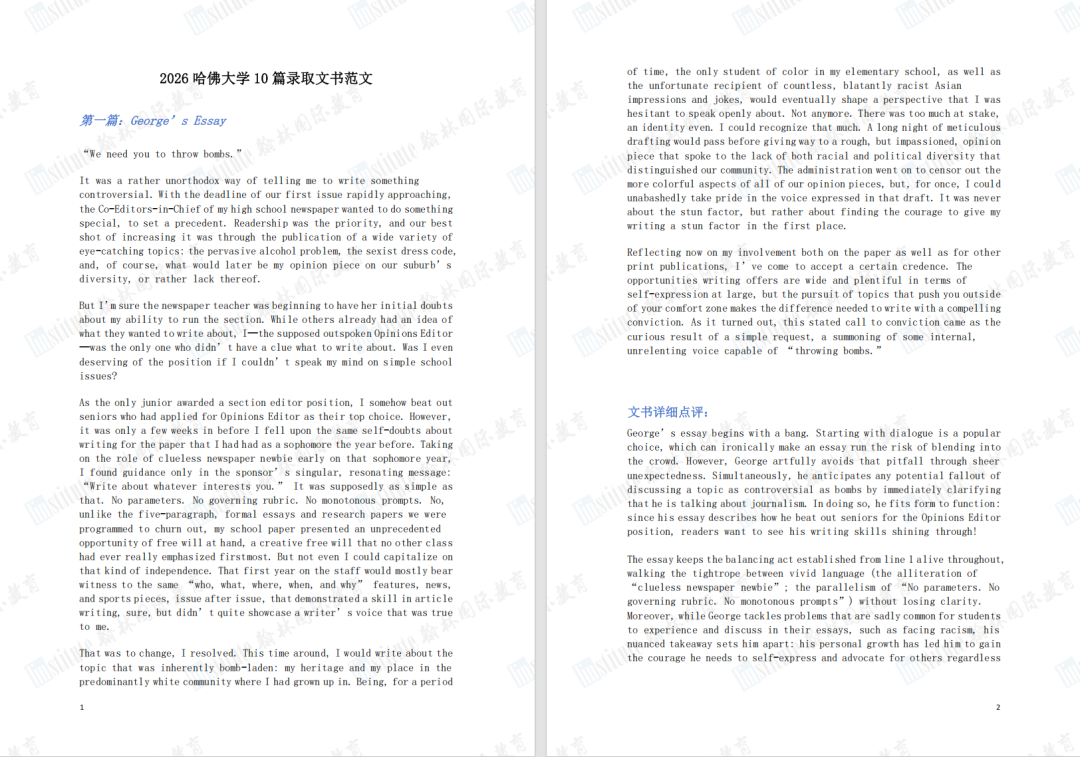
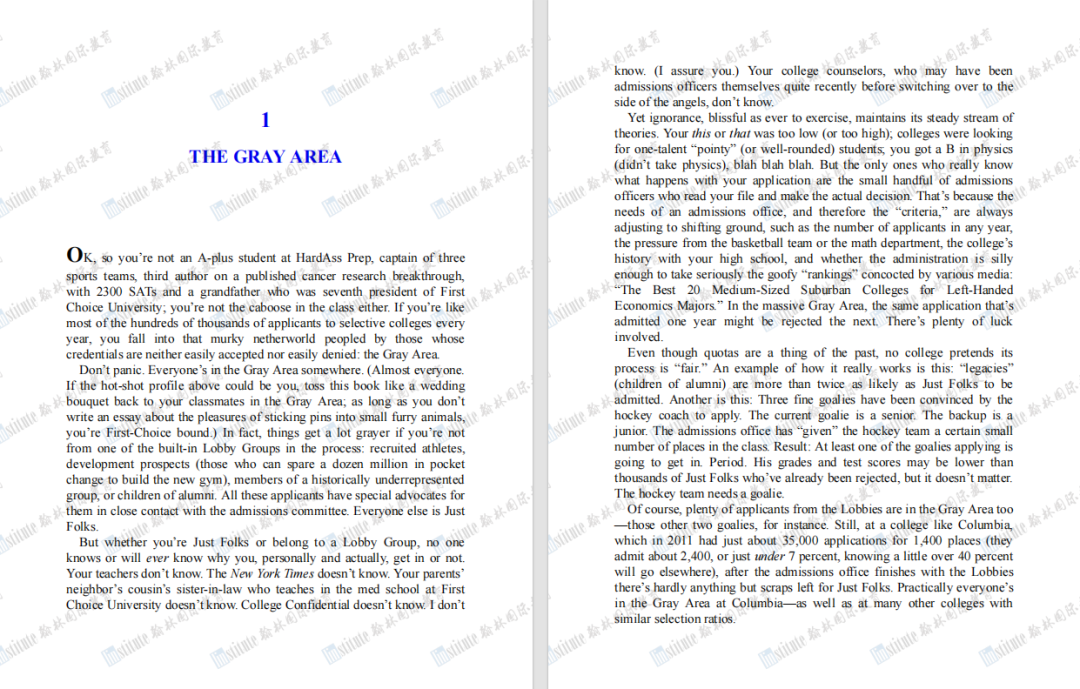
僅展示部分
2026哈佛錄取文書范文
美本申請推薦文書書籍
掃碼領取

當然除了文書之外,提升自身競爭力在申請中還是很重要的!
翰林已與無數(shù)學子攜手走過三千多個奮斗的日夜,點亮了無數(shù)求知的渴望!
多年深耕,翰林已經(jīng)不僅僅是一個校外培訓機構,目前各種資質完整,越來越像是一所學校,學生可在翰林完成整個國際高中階段的課程學習、考試、背提項目、發(fā)起社團活動等等。

我們始終致力于為學子提供最優(yōu)質、最專業(yè)的國際教育輔導服務。
01、頂尖師資團隊
翰林擁有一支優(yōu)秀且龐大的教師隊伍,實現(xiàn)了120+各學科賽事、以及IB/AP/AL全學科的全面輔導。
(僅展示部分)
全職導師61人,兼職導師儲備上千人,全職導師100% 碩士以及碩士以上學歷!
翰林目前有多位導師是博士背景 🔽
數(shù)學導師張博士:美國羅切斯特大學理論數(shù)學博士
數(shù)學導師莊博士:丹佛大學數(shù)學博士
數(shù)學導師安博士:約翰霍普金斯大學數(shù)學博士
數(shù)學導師張博士:英國南安普敦大學管理科學博士
化學導師李博士:香港科技大學有機化學博士
化學導師邱博士:中國科學院化學研究所有機化學博士
生物導師陳博士:英國曼徹斯特大學結構生物學博士
翰林導師都來自中國、美國、英國、加拿大、澳大利亞等頂尖大學,例如:賓夕法尼亞大學、約翰霍普金斯大學、加州大學、西北大學、牛津大學、劍橋大學、哥倫比亞大學、墨爾本大學、北京大學、中科院…

02、翰林獨家學術資料
在國際競賽教育領域,翰林始終居于前沿:當業(yè)內(nèi)多數(shù)還在梳理知識體系時,我們已完成對30余項國際賽事的系統(tǒng)化講義搭建,形成覆蓋多學科的知識網(wǎng)絡。
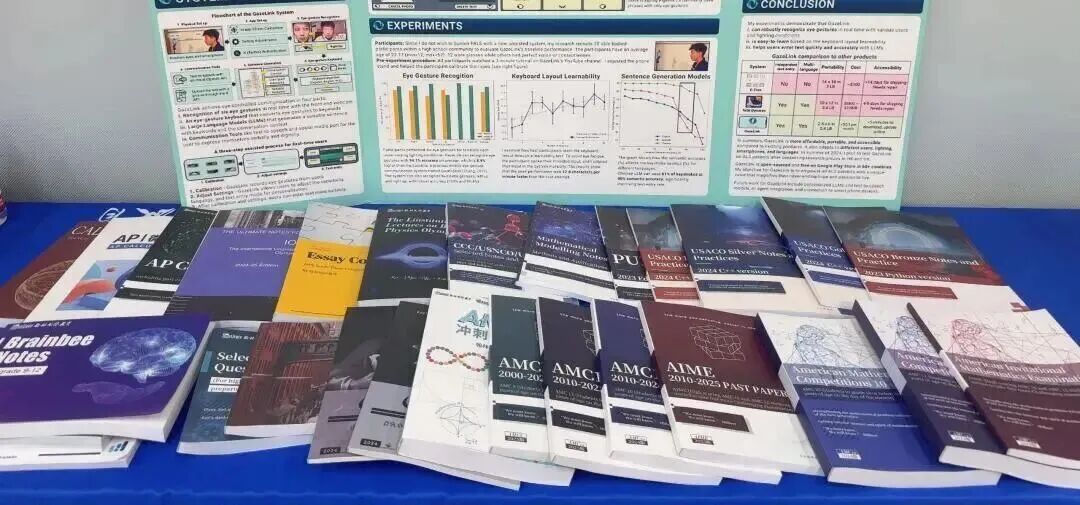
從AMC數(shù)學競賽起步,延伸至理科、經(jīng)濟商賽,以及IOL國際語言學奧賽、BrainBee腦科學等多元領域,學科講義均以「知識點梳理 + 真題精講 + 章節(jié)強化」三層閉環(huán)設計,幫助學生高效內(nèi)化賽事所需知識與解題思路,顯著提升備賽效率。
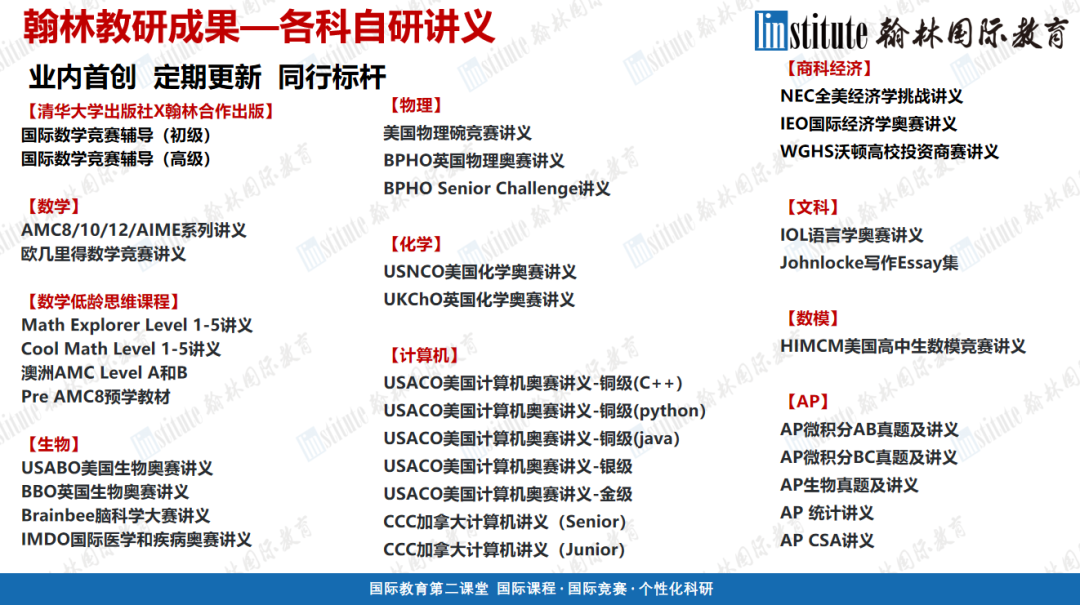
所有講義定期隨賽制與考題更新,經(jīng)濟商賽類更會持續(xù)補充最新商業(yè)案例,確保教學與實戰(zhàn)同步。
請點擊文章鏈接獲取更多講義詳情:
?深耕九載!翰林自研助力:30+國際競賽與課程精編講義,助力爬藤沖G5!
03、翰林閃耀精英榜
翰林深耕國際競賽領域多年,教學經(jīng)驗成熟扎實,已助力眾多學員在各類國際競賽中斬獲多項榮譽。從各類頂尖國際賽事到國際課程,翰林用累累獎牌印證了自身競賽教學體系的專業(yè)與高效。

🔽 點擊查看相關戰(zhàn)績
●2026翰林有方捷報頻傳!半年狂攬數(shù)百獎項,國家隊入圍、全球滿分頻現(xiàn),打造申請“黃金履歷”!
●翰林IB大考炸裂!78%學員狂飆40+,均分41.2碾壓全球均分近11分!
●2025翰林AP大考滿分霸屏!193名學員收獲527門5分科目!最高9門5分!
* 了解其他競賽戰(zhàn)績可以關注【翰林課程】公眾號或官網(wǎng)!
翰林始終致力于拓展國際教育第二課堂,堅守優(yōu)質教學理念與授課標準。
我們依據(jù)學生的年齡層次與學術志趣,量身規(guī)劃清晰的成長路徑;以定制化國際競賽方案為核心,配合靈活多樣的線上線下教輔,持續(xù)助力學員在世界舞臺斬獲獎項、圓夢名校!
報名/咨詢班課詳情!
更多信息可咨詢顧問
翰林賦能國際學術進階
全學科120+競賽|學術科研|IB/AP/A-LEVEL
培訓+美高雙資質,助力學員學術精彩!









