AQA A Level Chemistry復習筆記1.7.1 Collision Theory

Collision Theory
Collision theory
- The?collision theory?states that for a chemical reaction to take place the particles need to?collide?with each other in the correct?orientation?and with enough?energy
Collision Theory Table
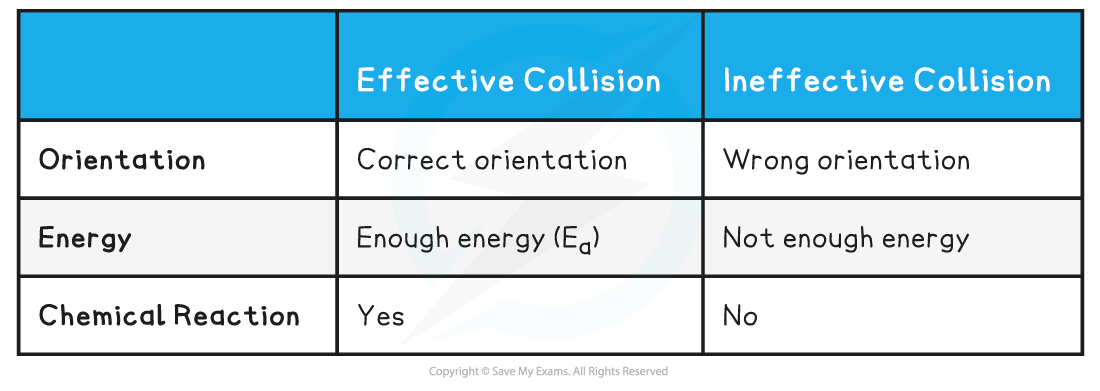
- An?ineffective collision?is when particles collide in the wrong orientation or when they don’t have enough energy and?bounce off?each other without causing a chemical reaction
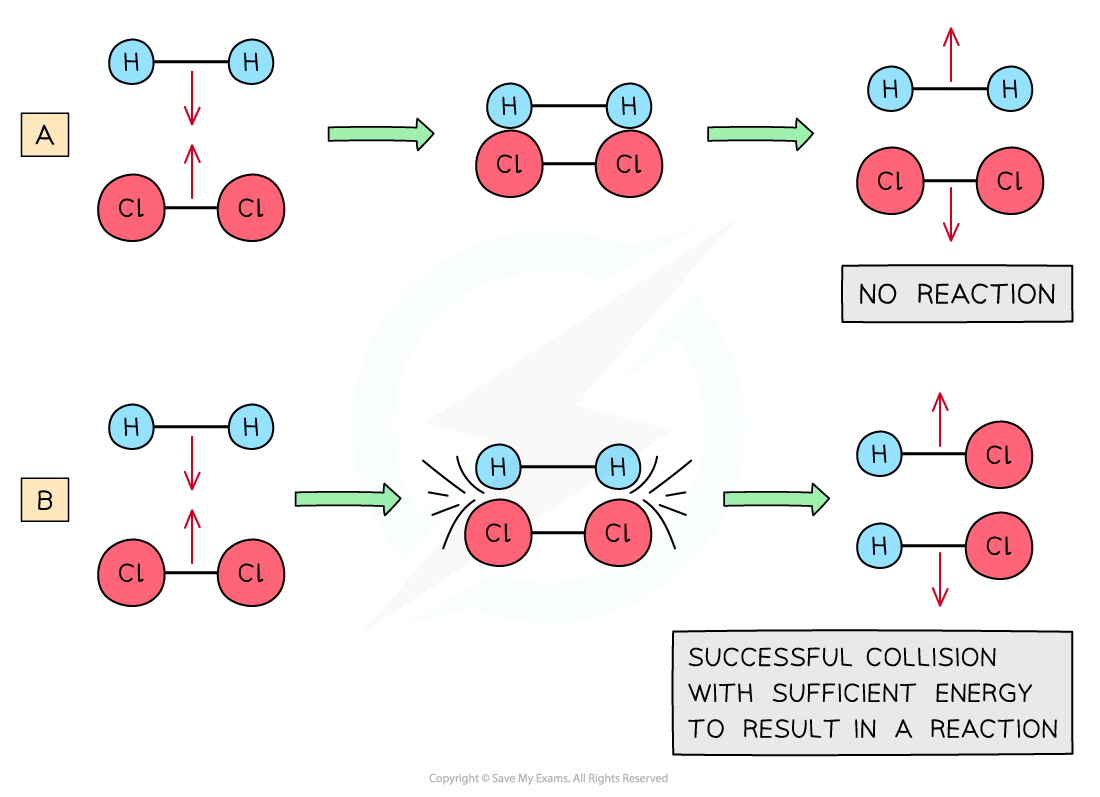
(a) shows an ineffective collision due to the particles not having enough energy whereas (b) shows an effective collision where the particles have the correct orientation and enough energy for a chemical reaction to take place
Increase in reaction rate
- The?collision frequency?is the number of collisions per unit time
- When more collisions per unit time take place, the number of particles with energy greater than the?Ea?increases
- This causes an?increase?in the?rate of reaction
Activation Energy
- For a reaction to take place, the reactant particles need to overcome a minimum amount of energy
- This energy is called the?activation energy (Ea)
- In?exothermic reactions?the reactants are higher in energy than the products
- In?endothermic reactions?the reactants are lower in energy than the products
- Therefore, the?Eain?endothermic reactions?is relatively larger than in exothermic reaction
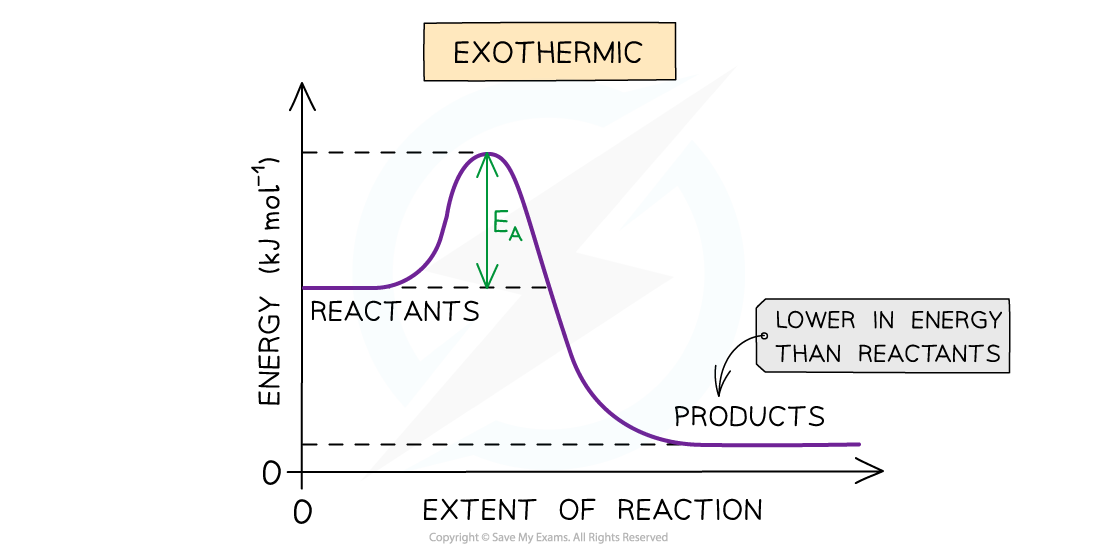
The diagram shows that the reactants are higher in energy than the products in the exothermic reaction, so the energy needed for the reactants to go over the energy barrier is relatively small
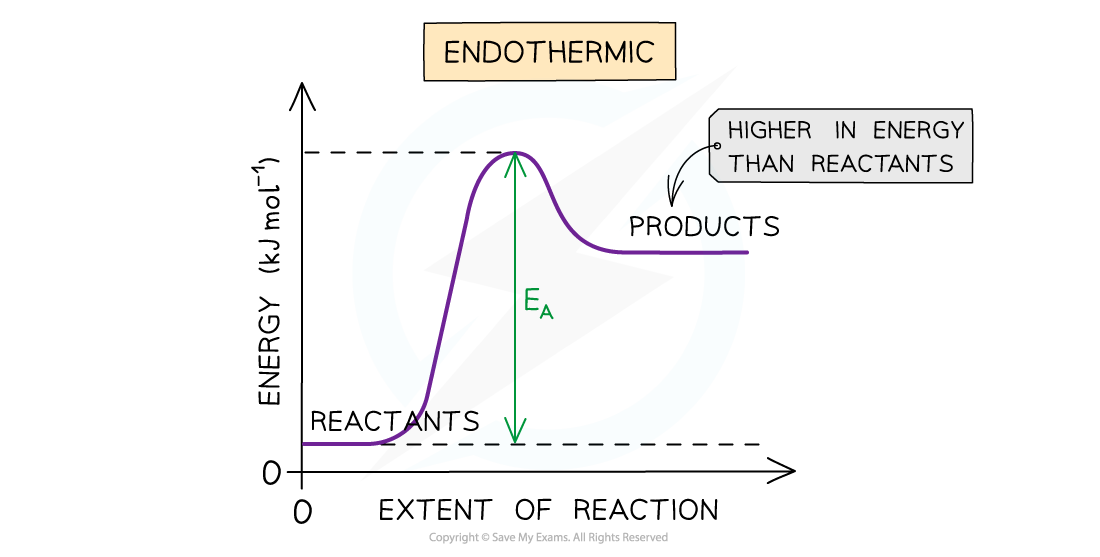
The diagram shows that the reactants are lower in energy than the products in the endothermic reaction, so the energy needed for the reactants to go over the energy barrier is relatively large
- Even though particles collide with each other in the same orientation, if they don’t possess a minimum energy that corresponds to the?Eaof that reaction, the reaction will?not?take place
- Therefore, for a collision to be?effective?the reactant particles must collide in the correct orientation?AND?possess a minimum energy equal to the?Ea?of that reaction
Catalysts and activation energy
- A?catalyst?is a substance that?increases?the?rate of reaction?without taking part in the chemical reaction by providing the particles an alternative mechanism with a lower activation energy
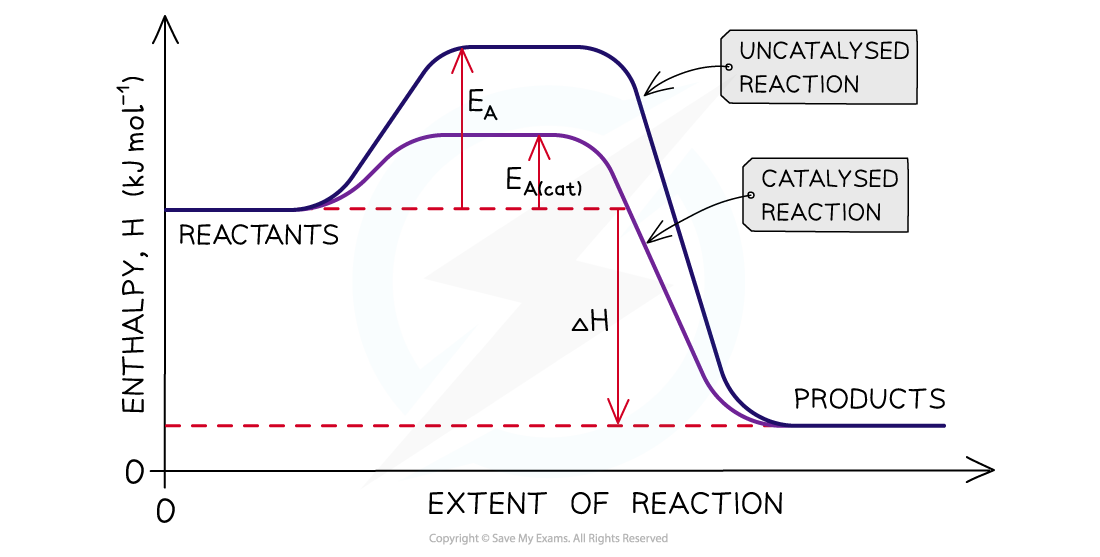
A catalyst increases the rate of a reaction by providing an alternative pathway which has a lower activation energy
Exam Tip
The activation energy is the energy needed to ‘activate’ the reactant particles in order for them to collide effectively and cause a chemical reaction.
轉載自savemyexams
以上就是關于【AQA A Level Chemistry復習筆記1.7.1 Collision Theory】的解答,如需了解學校/賽事/課程動態,可至翰林教育官網獲取更多信息。
往期文章閱讀推薦:
MIT官方發布【2026年夏季推薦閱讀書單】!橫跨科學/人文/經濟...


翰林AMC8視頻課重磅上線!

國際競賽真題資源免費領取






