AQA A Level Biology復(fù)習(xí)筆記1.1.5 The Glycosidic Bond

Forming the Glycosidic Bond
- To make monosaccharides more suitable for transport, storage and to have less influence on a cell’s?osmolarity, they are bonded together to form disaccharides and polysaccharides
- Disaccharides?and?polysaccharides?are formed when?two hydroxyl?(-OH) groups (on different saccharides) interact to form a strong covalent bond called the?glycosidic?bond (the oxygen link that holds the two molecules together)
- Every glycosidic bond results in?one?water?molecule being?removed, thus glycosidic bonds are formed by condensation
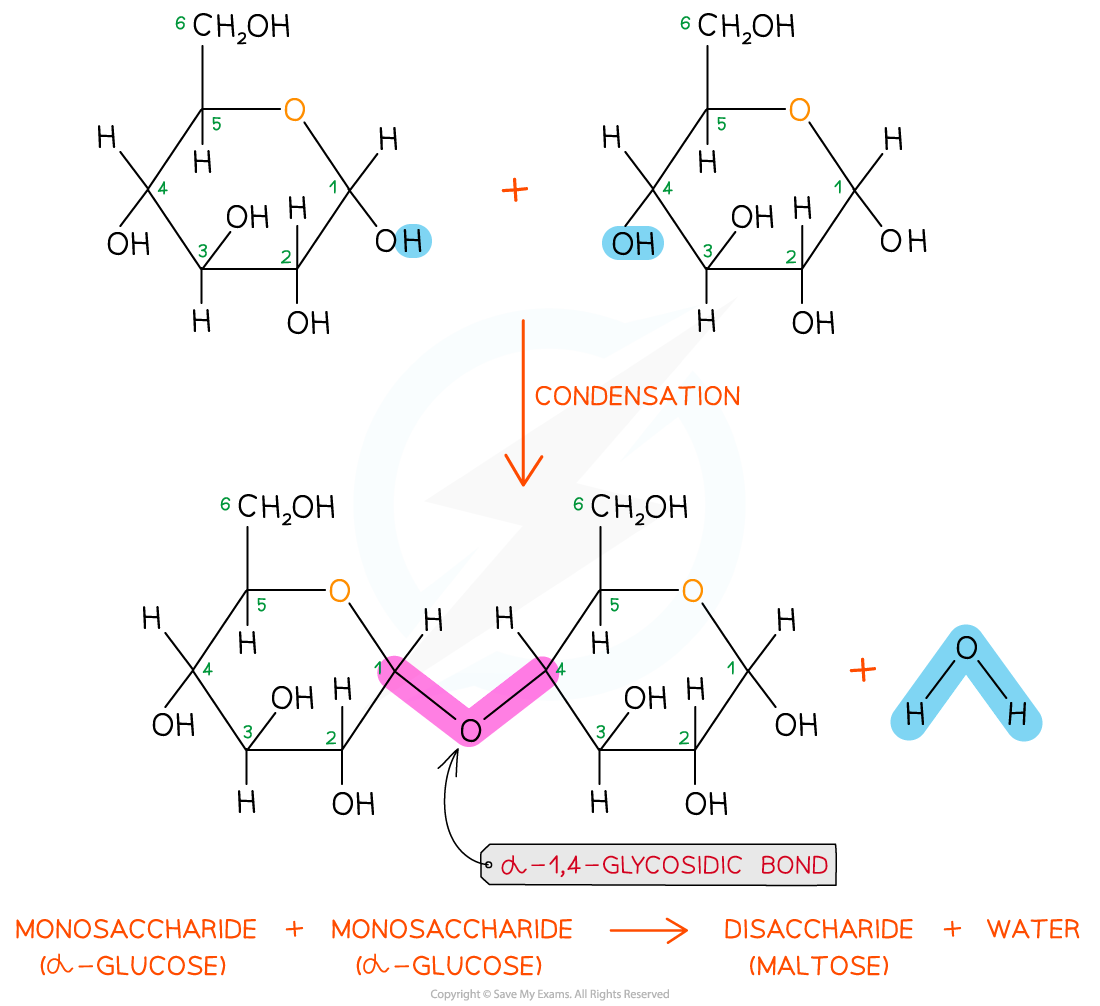
The formation of a glycosidic bond by condensation between two monosaccharides (glucose) to form a disaccharide (maltose)
- Each glycosidic bond is catalysed by enzymes specific to which OH groups are interacting
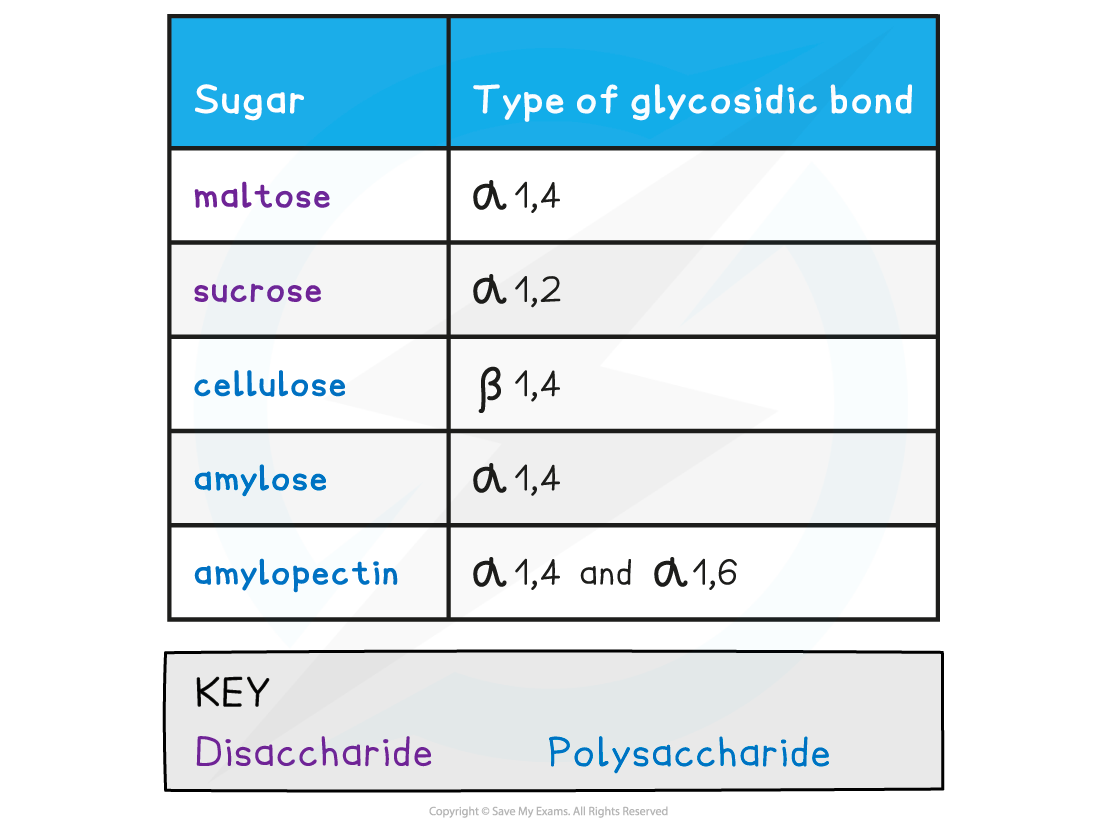
- As there are many different monosaccharides this results in different types of glycosidic bonds forming (e.g maltose has a α-1,4 glycosidic bond and sucrose has a α-1,2 glycosidic bond)
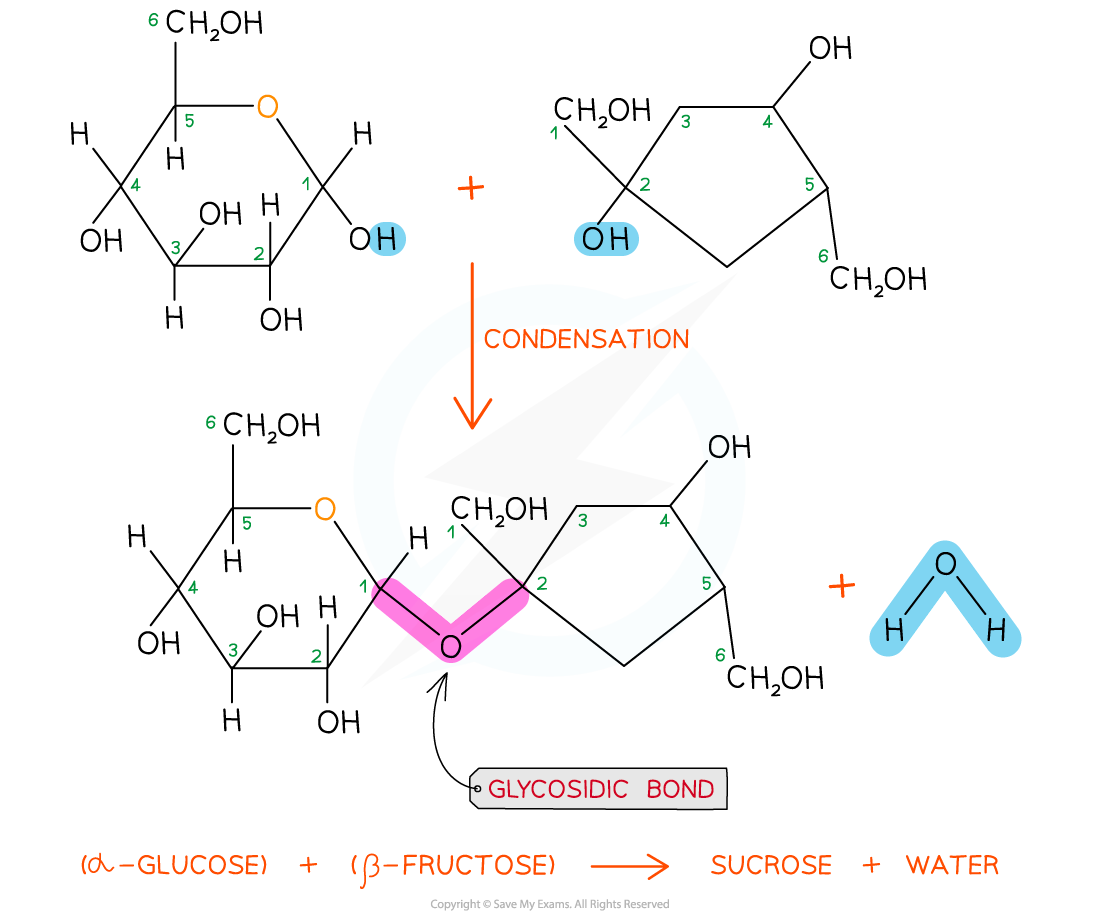 The formation of a glycosidic bond by condensation between α-glucose and β-fructose to form a disaccharide (sucrose)
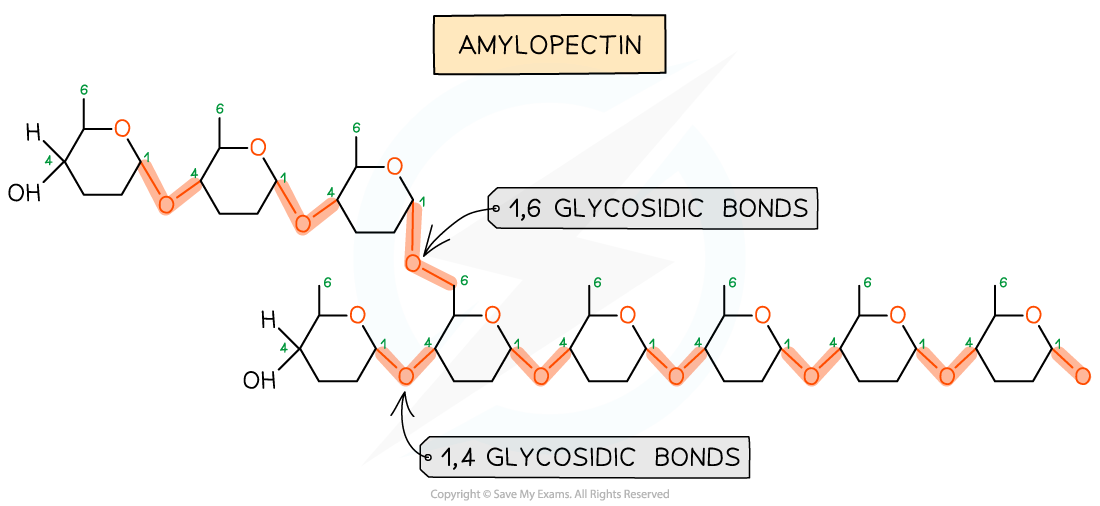
The formation of glycosidic bonds to create a polysaccharide (amylopectin)
Types of Glycosidic Bonds Table
Exam Tip
Make sure you can identify where the glycosidic bond is in a carbohydrate.
Breaking the Glycosidic Bond
- The?glycosidic bond?is broken when?water?is?added?in a?hydrolysis?(meaning ‘hydro’ - with water and ‘lyse’ - to break) reaction
- Disaccharides?and?polysaccharides?are broken down in hydrolysis reactions
- Hydrolytic reactions are catalysed by enzymes, these are different to those present in condensation reactions
- Examples of hydrolytic reactions include the digestion of food in the alimentary tract and the breakdown of stored carbohydrates in muscle and liver cells for use in cellular respiration
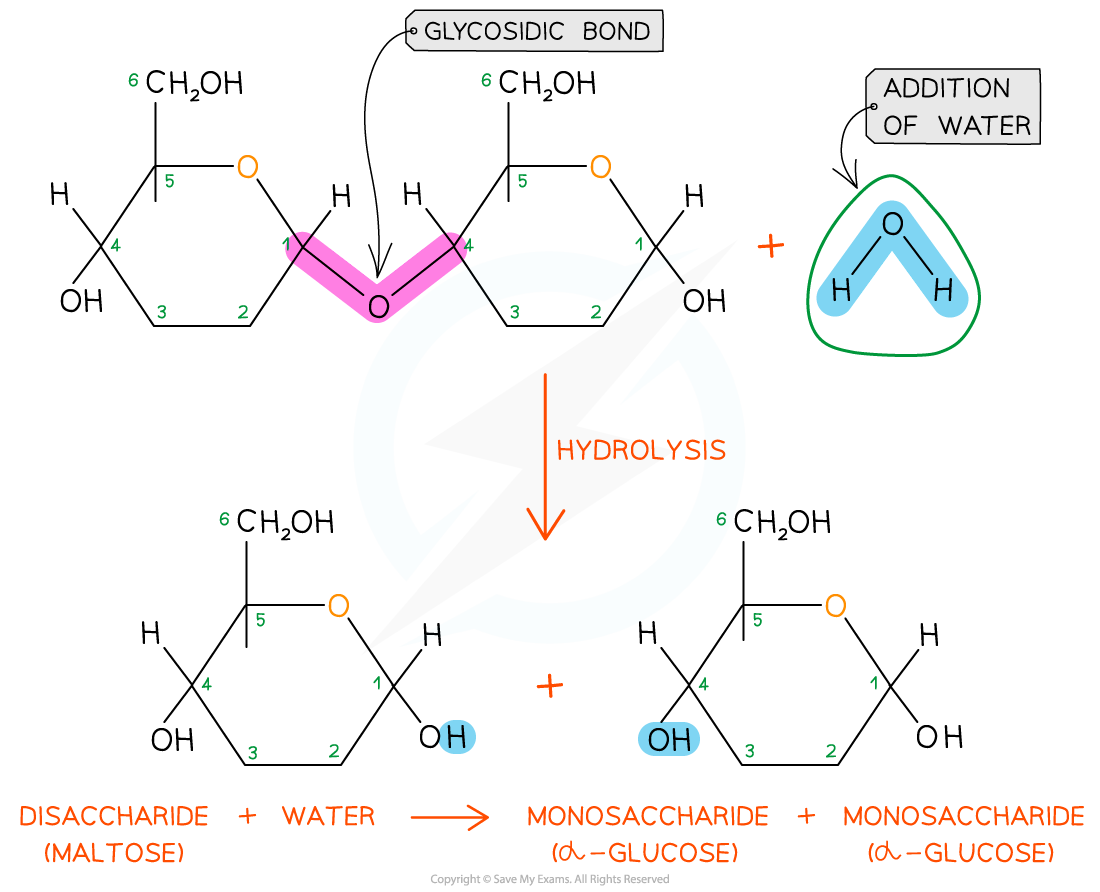
Glycosidic bonds are broken by the addition of water in a hydrolysis reaction
- Sucrose?is a?non-reducing sugar?which gives a?negative?result in a?Benedict’s test.?When sucrose is heated with?hydrochloric acid?this provides the water that?hydrolyses?the?glycosidic bond?resulting in two monosaccharides that will produce a positive Benedict's test
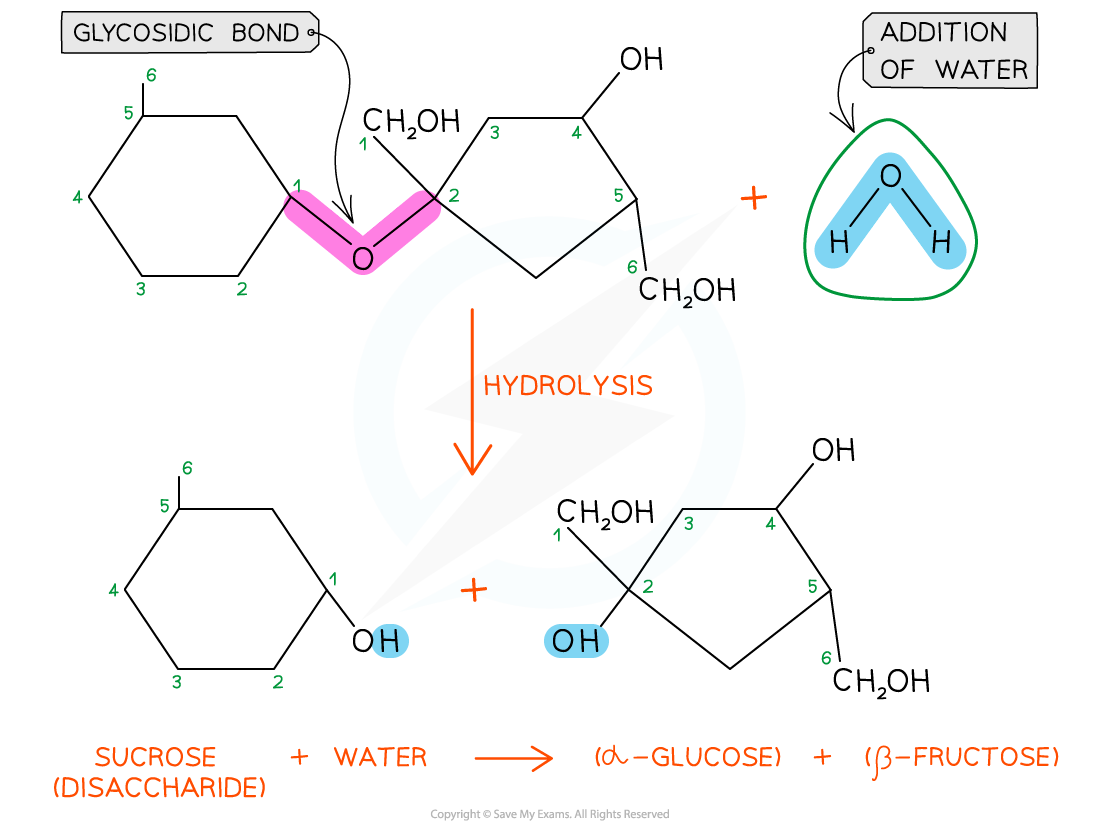
A molecule of glucose and a molecule of fructose are formed when one molecule of sucrose is hydrolysed; the addition of water to the glycosidic bond breaks it
Exam Tip
Remember that?disaccharides?hydrolyse to?two?monosaccharides whereas polysaccharides must undergo?many?hydrolytic reactions until they form monosaccharides.
轉(zhuǎn)載自savemyexams
以上就是關(guān)于【AQA A Level Biology復(fù)習(xí)筆記1.1.5 The Glycosidic Bond】的解答,如需了解學(xué)校/賽事/課程動態(tài),可至翰林教育官網(wǎng)獲取更多信息。
往期文章閱讀推薦:
斯坦福大學(xué)官方推薦書單!名校學(xué)霸們暑假都在讀什么?
MIT官方發(fā)布【2026年夏季推薦閱讀書單】!橫跨科學(xué)/人文/經(jīng)濟...


翰林AMC8視頻課重磅上線!

國際競賽真題資源免費領(lǐng)取






