AQA A Level Biology復(fù)習(xí)筆記4.1.2 Eukaryotic DNA

Chromosome Structure
- Chromosomes are made of?one?very long, condensed DNA molecule?associated with proteins (in eukaryotic cells)
- The main proteins present are the large positively charged globular proteins called?histones, their role is to?organise?and?condense?the DNA tightly so that it fits into the nucleus
- The other proteins are enzymes used in copying and repairing the DNA
- The tightly coiled combination of DNA and proteins is called?chromatin?– this is what chromatids, and therefore chromosomes, are made of
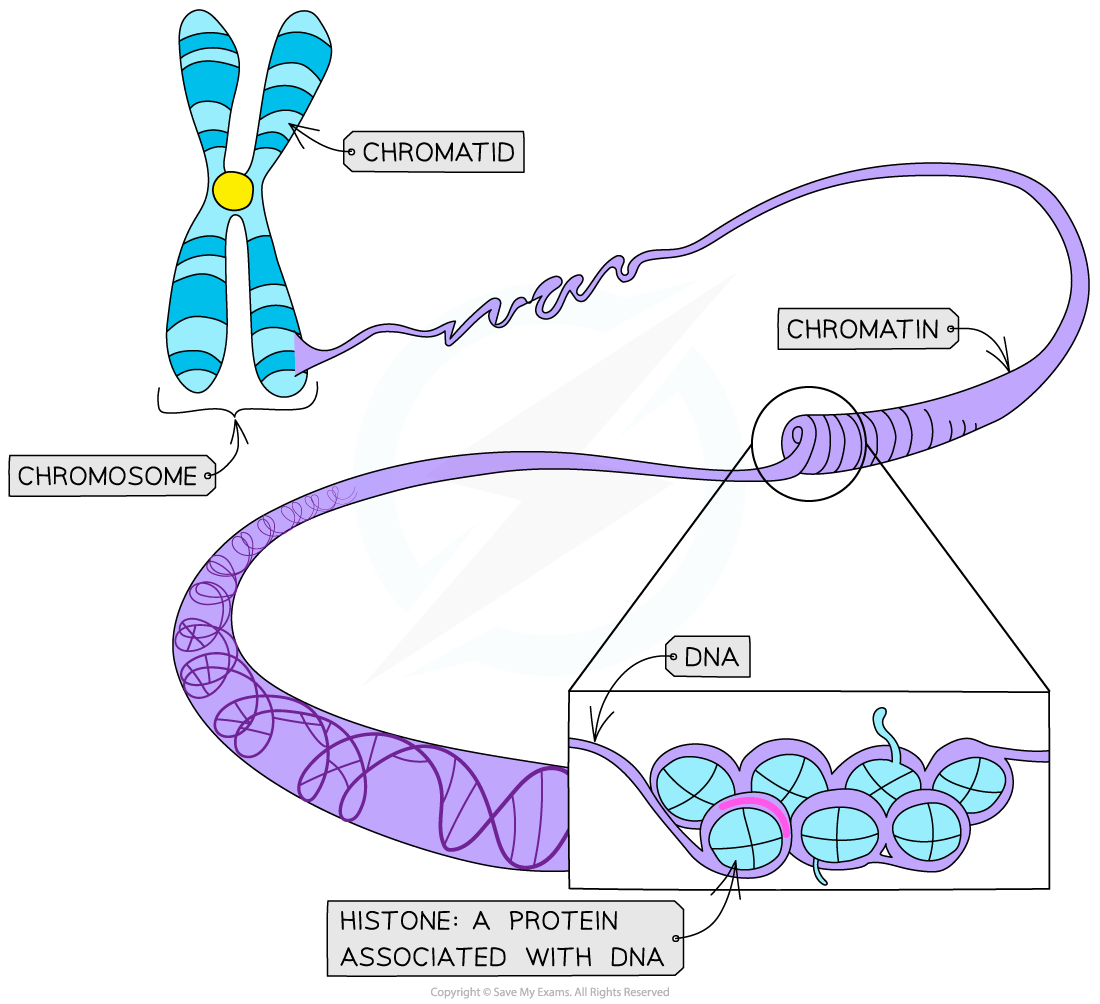
DNA is coiled around histone proteins to make chromatin
- During?interphase?(S phase) the DNA replicates to create?two identical strands of DNA called chromatids, joined together by a narrow region called the?centromere
- The two chromatids that make up the double structure of a chromosome are known as?‘sister chromatids’
- It is important that the?sister?chromatids?are?identical?(contain the same genes) because this is key to cell division, as one chromatid goes into one daughter cell and one goes into the other daughter cell during mitosis, ensuring the daughter cells are?genetically identical
- Each chromatid is made up of one very long, condensed DNA molecule, which is made up of a series of?genes
- The?ends?of the chromatids in chromosomes are ‘sealed’ with?protective structures?called?telomeres
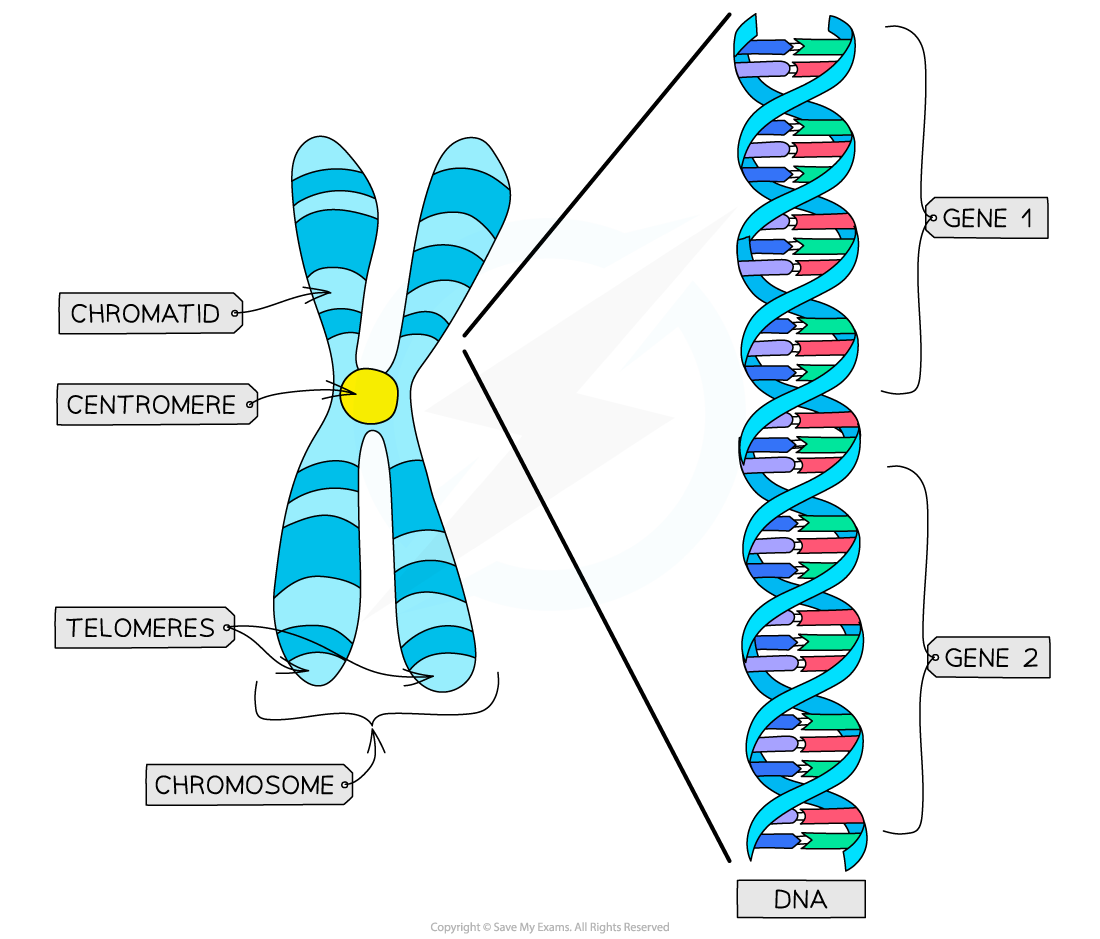
Simplified diagram of the structure of a chromosome
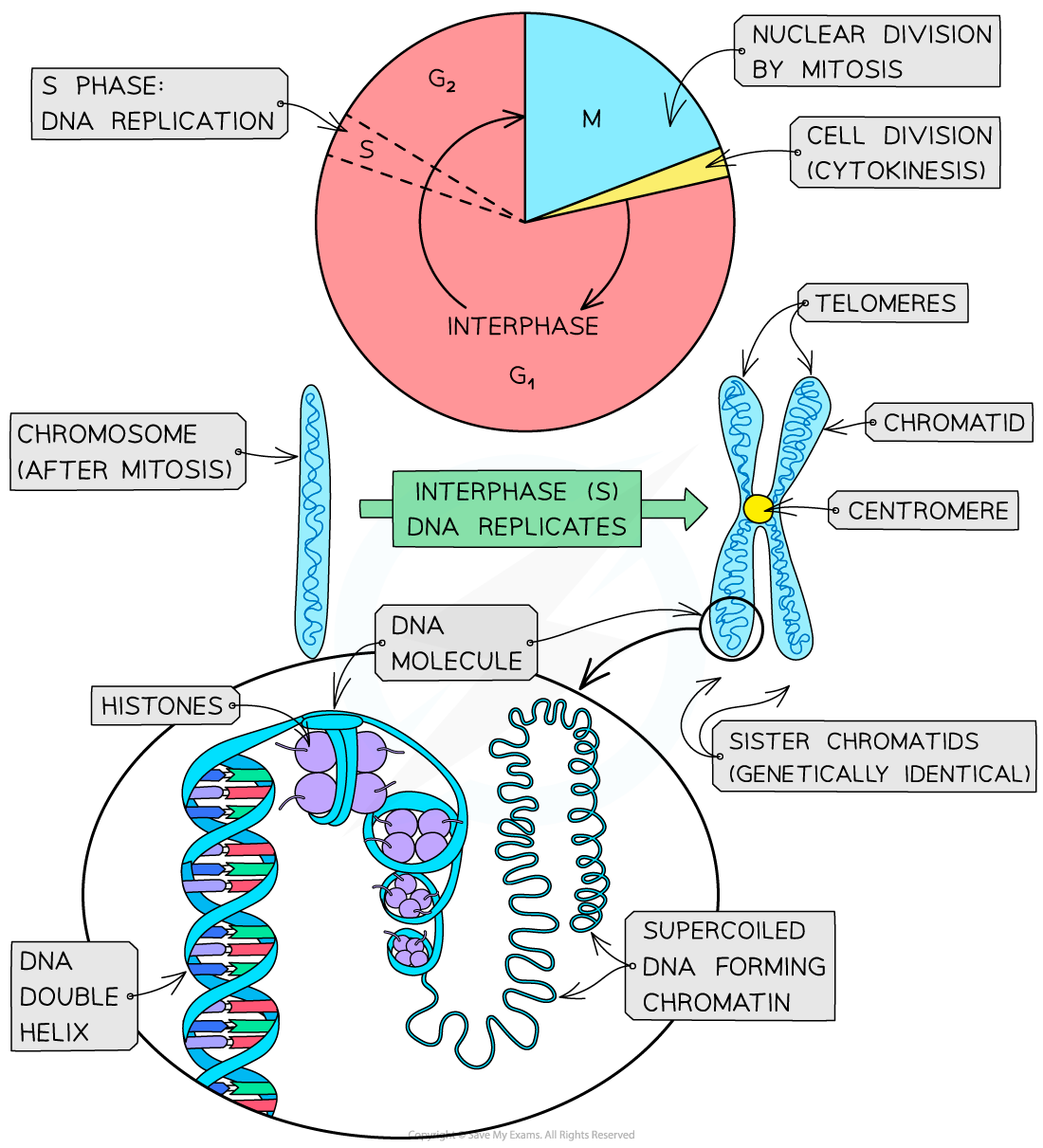
Diagram illustrating the structure of a chromosome before and after the S phase
Exam Tip
It is important to distinguish when the terms chromatid, sister chromatids and chromosomes are used.
轉(zhuǎn)載自savemyexams
以上就是關(guān)于【AQA A Level Biology復(fù)習(xí)筆記4.1.2 Eukaryotic DNA】的解答,如需了解學(xué)校/賽事/課程動(dòng)態(tài),可至翰林教育官網(wǎng)獲取更多信息。
往期文章閱讀推薦:
斯坦福大學(xué)官方推薦書(shū)單!名校學(xué)霸們暑假都在讀什么?
MIT官方發(fā)布【2026年夏季推薦閱讀書(shū)單】!橫跨科學(xué)/人文/經(jīng)濟(jì)...


翰林AMC8視頻課重磅上線!

國(guó)際競(jìng)賽真題資源免費(fèi)領(lǐng)取






