AQA A Level Chemistry復(fù)習(xí)筆記7.3.5 Acylation

Acyl Groups
Acyl groups
- Acyl groups can be built into many molecules using acyl chlorides or acid anhydrides (known as acylating agents)
- Acyl chlorides are?derivatives of carboxylic acids?by substitution of the -OH group by a chlorine atom
- Acyl chlorides are named by identifying the parent hydrocarbon chain and adding the suffix -oyl chloride
- They can also be named by removing the -oic acid from the carboxylic acid and adding?-oyl chloride
- Acid anhydrides are also?derivatives of carboxylic acids?formed by substitution of the -OH group by an alkanoate
- Acid anhydrides are named by identifying the parent hydrocarbon chain and adding the suffix -oic anhydride
- They can also be named by removing the -oic acid from the carboxylic acid and adding?-oic anyhydride
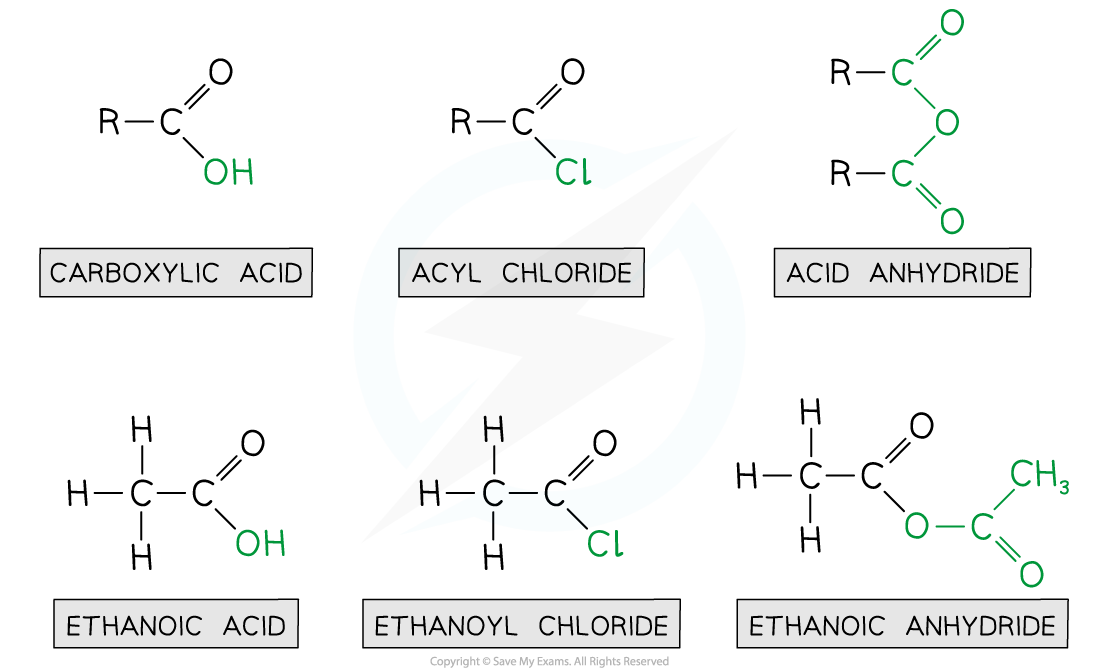
Ethanoic acid derivatives
Worked Example
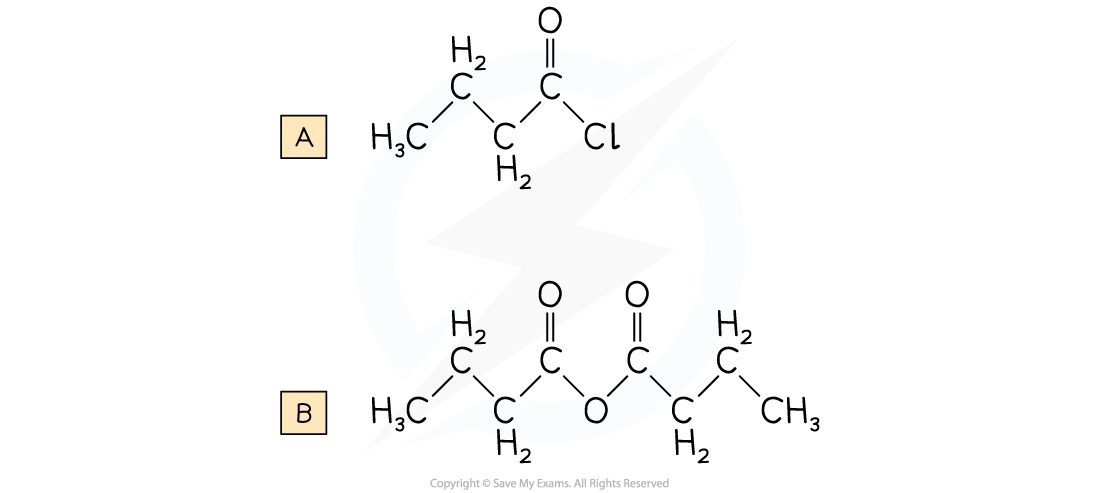
Draw the displayed formula for the following:a) butanoyl chlorideb) butanoic anhydride
Answer:
Nucleophilic Addition–Elimination
- Acyl chlorides?are?reactive?organic compounds that undergo many reactions such as?nucleophilic addition-elimination?reactions
- In nucleophilic addition-elimination reactions, the?nucleophilic?addition?of a small molecule across the C=O bond takes place followed by?elimination?of a small molecule
- Examples of these nucleophilic addition-elimination reactions include:
- Hydrolysis
- Reaction with alcohols to form?esters
- Reaction with ammonia and primary amines to form?amides
Hydrolysis
- The?hydrolysis?of acyl chlorides results in the formation of a?carboxylic acid?and?HCl?molecule
- This is a?nucleophilic?addition-elimination?reaction
- A?water molecule?adds across the C=O bond
- A hydrochloric acid (HCl) molecule is?eliminated
- An example is the hydrolysis of propanoyl chloride to form propanoic acid and HCl
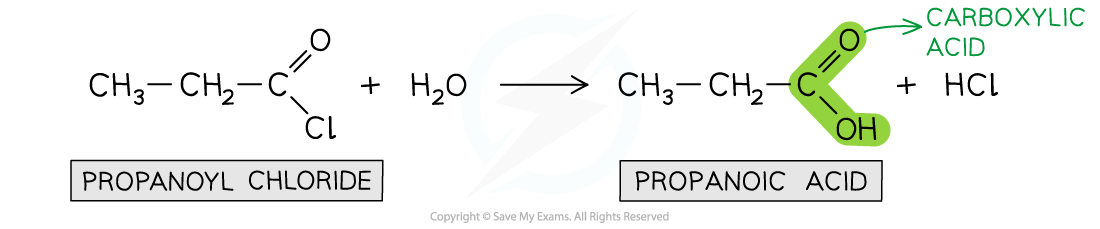
Acyl chlorides are hydrolysed to carboxylic acids
Formation of esters
- Acyl chlorides can react with?alcohols?to form esters
- The esterification of acyl chlorides is also a?nucleophilic?addition-elimination?reaction
- The alcohol adds across the C=O bond
- A HCl?molecule is eliminated
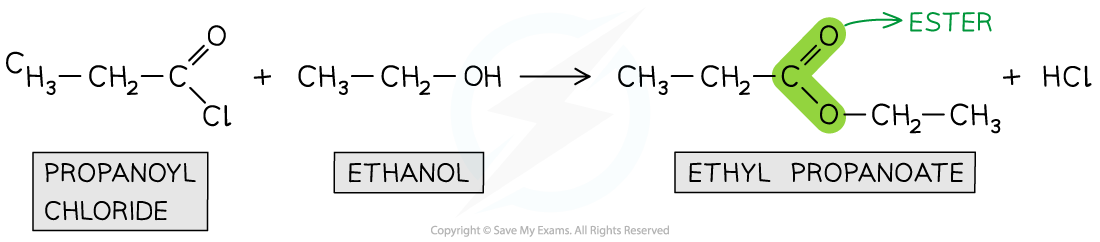
Acyl chlorides undergo esterification with alcohols to form esters
Formation of amides
- Acyl chlorides can form?amides?with?primary?amines?and?ammonia
- The nitrogen atom in ammonia and primary amine has a lone pair of electrons which can be used to attack the carbonyl carbon atom in the acyl chlorides
- The product is an?amide (when reacted with ammonia) or?N-substituted?amide (when reacted with primary amines)
- This is also an example of a?nucleophilic?addition-elimination?reaction as
- The amine or ammonia molecule adds across the C=O bond
- A HCl?molecule is eliminated
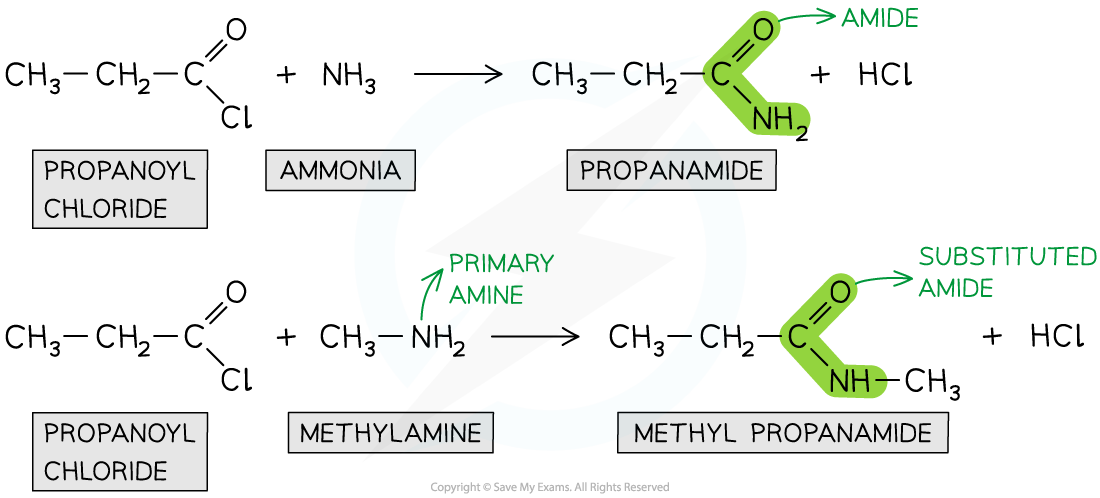
Acyl chlorides undergo reactions with ammonia and primary amines to form amides
Nucleophilic Addition–Elimination Mechanism
- Acyl chlorides undergo?nucleophilic?addition-elimination?reactions such as?hydrolysis, esterification?reactions to form esters, and?condensation?reactions to form?amides
- The general mechanism of these nucleophilic addition-elimination reactions involve two steps:
- Step 1 -?Addition of a?nucleophile?across the C=O bond
- Step 2 -?Elimination of a?small molecule?such as HCl?or H2O
Mechanism of hydrolysis of acyl chlorides
- In the?hydrolysis?of acyl chlorides, the water molecule acts as a?nucleophile
- Step 1 - Nucleophilic addition;?the lone pair on the oxygen atoms carry out an?initial attack?on the carbonyl carbon
- Step 2 - Elimination;?this is followed by the elimination of a hydrochloric acid (HCl) molecule
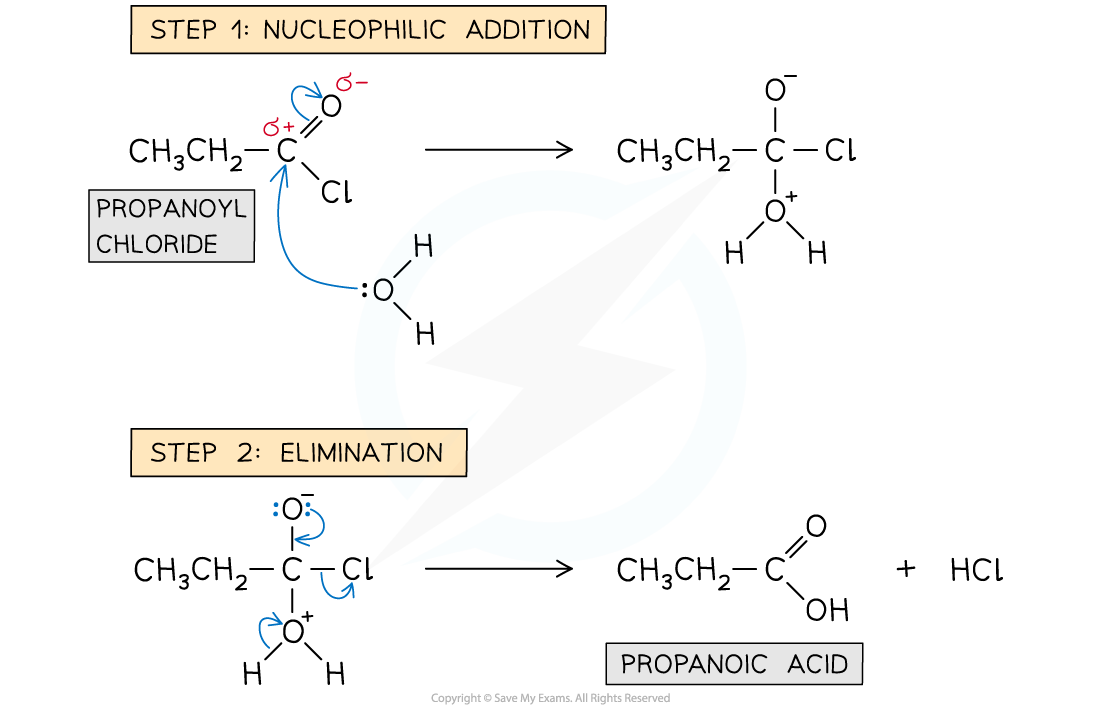
Reaction mechanism of the hydrolysis of acyl chlorides
Formation of esters: reaction mechanism
- In the?esterification?reaction of acyl chlorides, the alcohols act as a?nucleophile
- Step 1 - Nucleophilic addition;?the lone pair on the oxygen atoms carry out an?initial?attack on the carbonyl carbon
- Step 2 - Elimination;?this is again followed by the elimination of an HCl?molecule
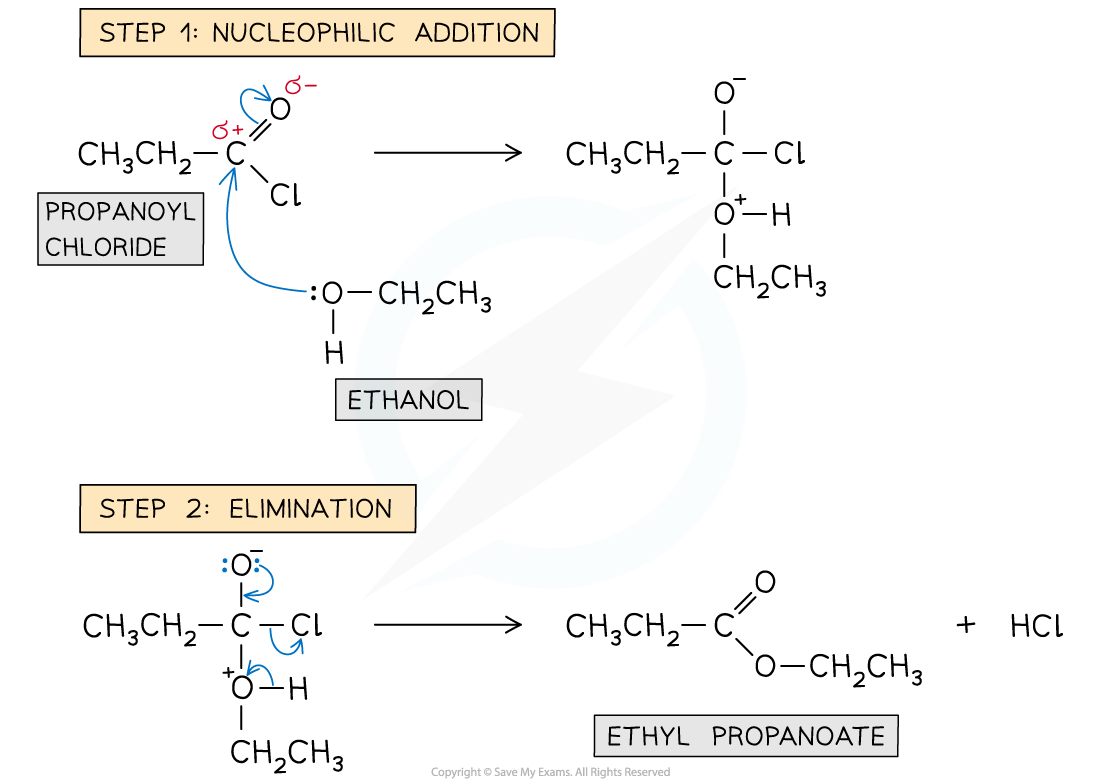
Reaction mechanism of the esterification of acyl chlorides with alcohols
Formation of amides: reaction mechanism
- The nitrogen atom in?ammonia?and?primary amines?act as a?nucleophile
- Step 1 - Nucleophilic addition;?the lone pair on the nitrogen atoms carry out an?initial?attack on the carbonyl carbon
- Step 2 - Elimination;?this is followed by the elimination of an HCl?molecule
- Step 3 - Acid-Base reaction;?the HCl?formed would immediately react with excess ammonia to give ammonium chloride in an acid-base reaction
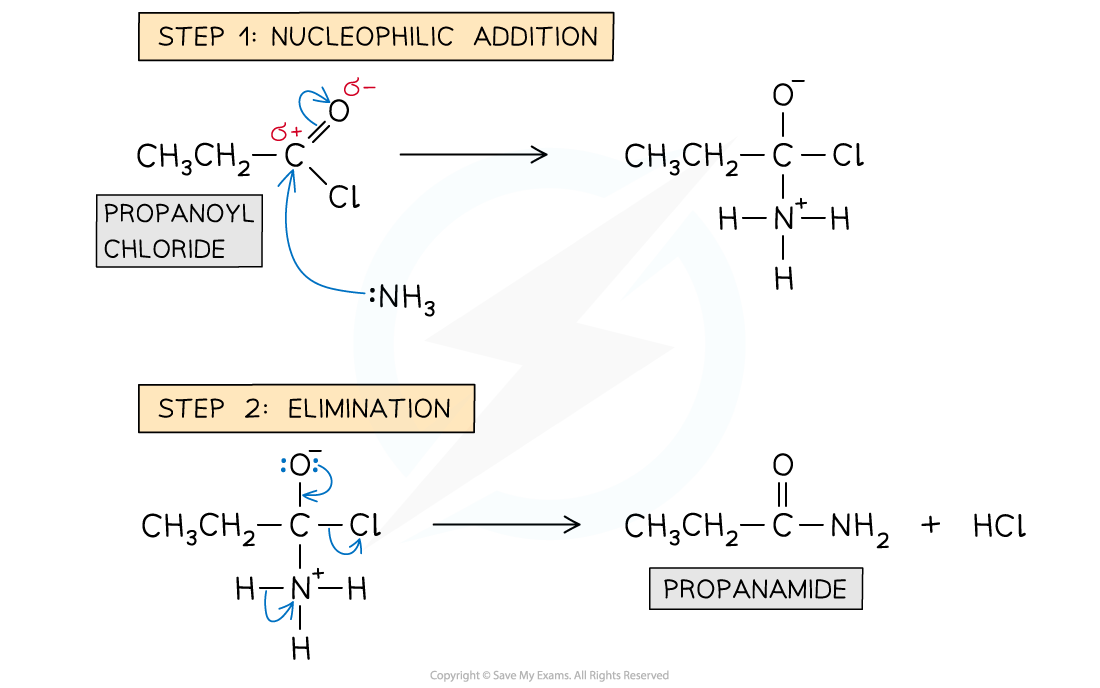
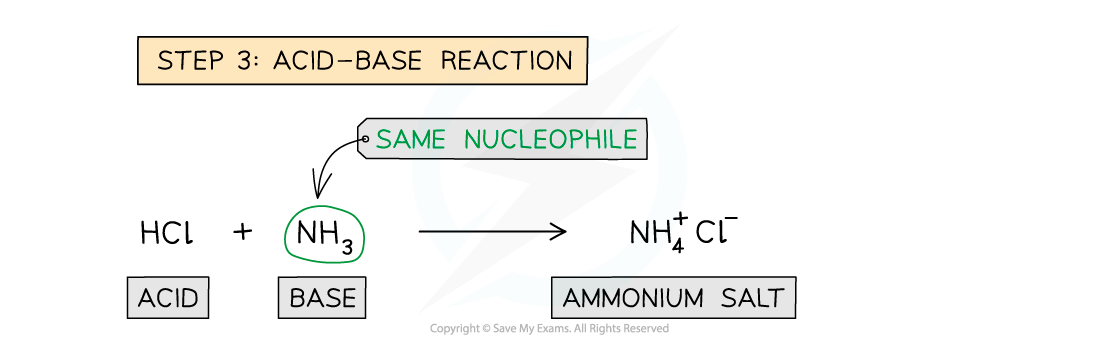
Reaction mechanism of the formation of amides from acyl chlorides with ammonia
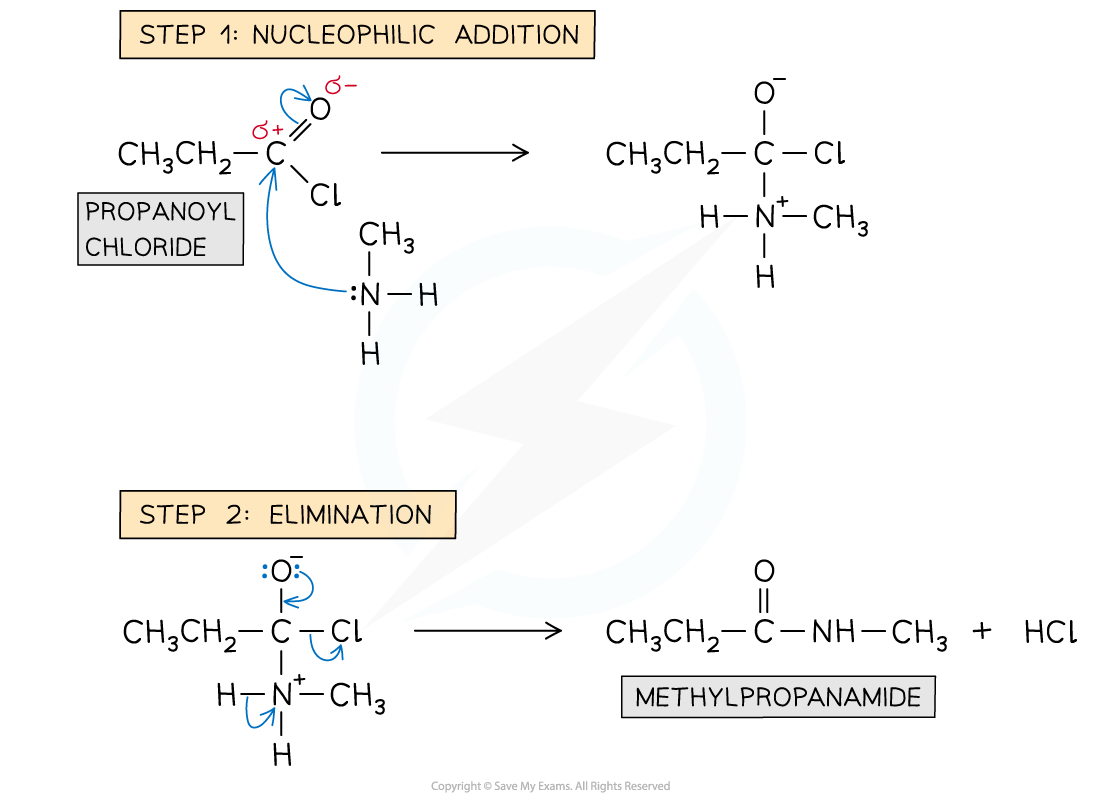
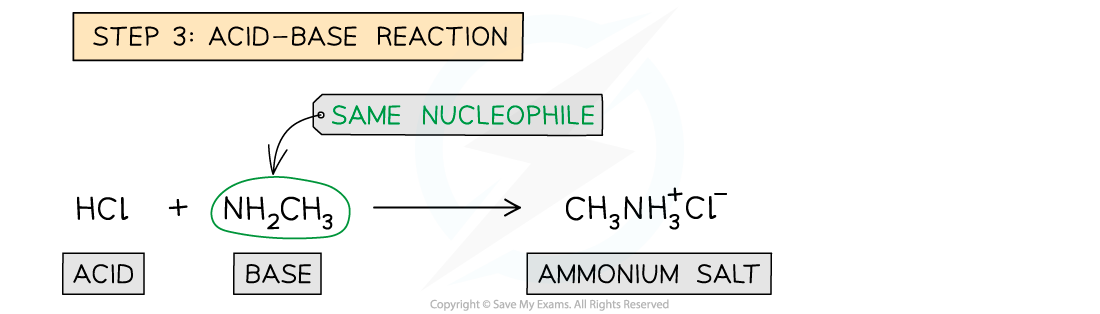
Reaction mechanism of the formation of amides from acyl chlorides with primary amines
轉(zhuǎn)載自savemyexams
以上就是關(guān)于【AQA A Level Chemistry復(fù)習(xí)筆記7.3.5 Acylation】的解答,如需了解學(xué)校/賽事/課程動(dòng)態(tài),可至翰林教育官網(wǎng)獲取更多信息。
往期文章閱讀推薦:
斯坦福大學(xué)官方推薦書單!名校學(xué)霸們暑假都在讀什么?
MIT官方發(fā)布【2026年夏季推薦閱讀書單】!橫跨科學(xué)/人文/經(jīng)濟(jì)...


翰林AMC8視頻課重磅上線!

國(guó)際競(jìng)賽真題資源免費(fèi)領(lǐng)取






