IB DP Chemistry: HL復(fù)習(xí)筆記10.2.1 Alkanes - Combustion

Unreactive Alkanes
Strength of C-H bonds
- Alkanes consist of carbon and hydrogen atoms which are bonded together by?single?bonds
- Unless a lot of heat is supplied, it is difficult to break these?strong?C-C and C-H covalent bonds
- This decreases the reactivity of alkanes in chemical reactions
Lack of polarity
- The?electronegativities?of the carbon and hydrogen atoms in alkanes are almost the same
- This means that both atoms share the electrons in the covalent bond almost equally
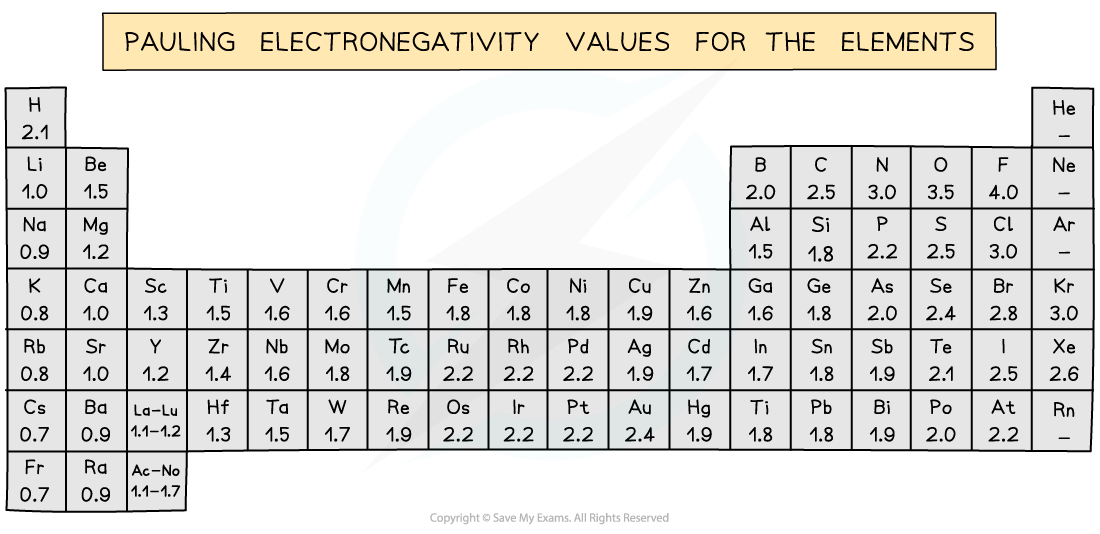
The Pauling Scale shows that the difference in electronegativity between carbon and hydrogen is only 0.4
- As a result of this, alkanes are?nonpolar?molecules and have no partial positive or negative charges (δ+?and δ-?respectively)
- Alkanes therefore do not react with?polar reagents
- They have no electron-deficient areas to attract?nucleophiles
- And also lack electron-rich areas to attract?electrophiles
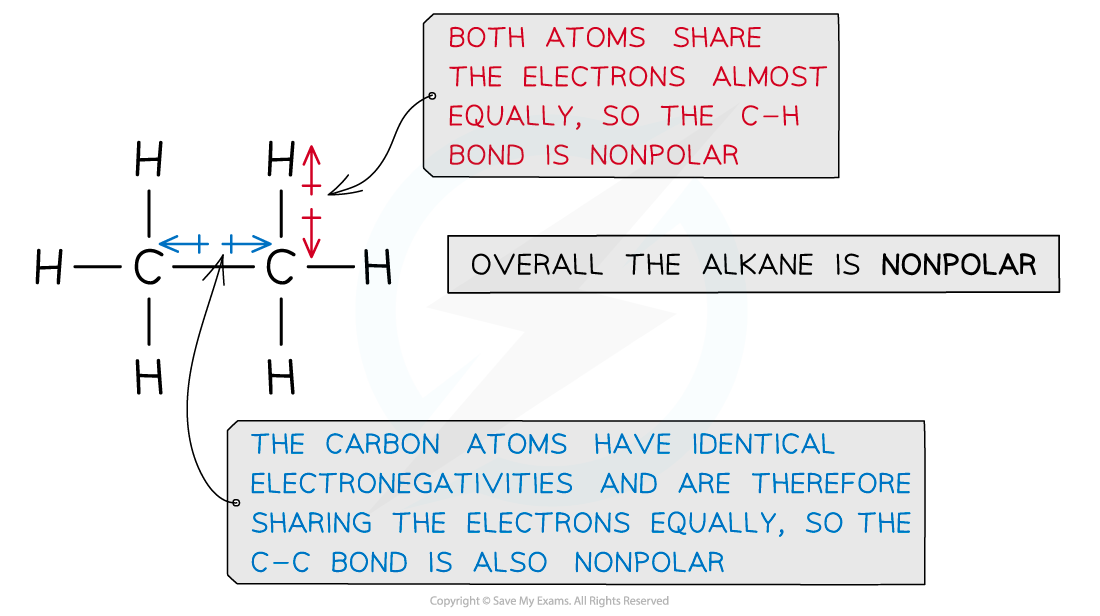
Ethane is an example of an alkane that lacks polarity due to almost similar electronegativities of the carbon and hydrogen atoms
- Due to the unreactivity of alkanes, they only react in combustion reactions and undergo substitution by halogens
Exam Tip
Remember: nucleophiles are negatively charged and are attracted to electron-deficient regions.Electrophiles are positively charged and attracted to electron-rich regions.
Combustion of Alkanes
- Alkanes are?combusted?(burnt) on a large scale for their use as fuels
- They also react in?free-radical substitution?reactions to form more reactive halogenoalkanes
Complete combustion
- When alkanes are burnt in?excess?(plenty of) oxygen,?complete combustion?will take place and all carbon and hydrogen will be oxidised to?carbon dioxide?and?water?respectively
- For example, the complete combustion of octane to carbon dioxide and water
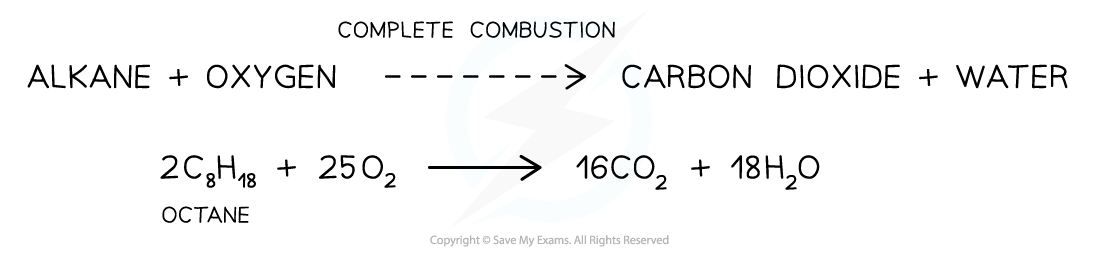
The complete combustion of alkanes
Incomplete combustion
- When alkanes are burnt in only a?limited supply?of oxygen,?incomplete combustion?will take place and not all the carbon is fully oxidised
- Some carbon is only?partially?oxidised to form?carbon monoxide
- For example, the incomplete combustion of octane to form carbon monoxide
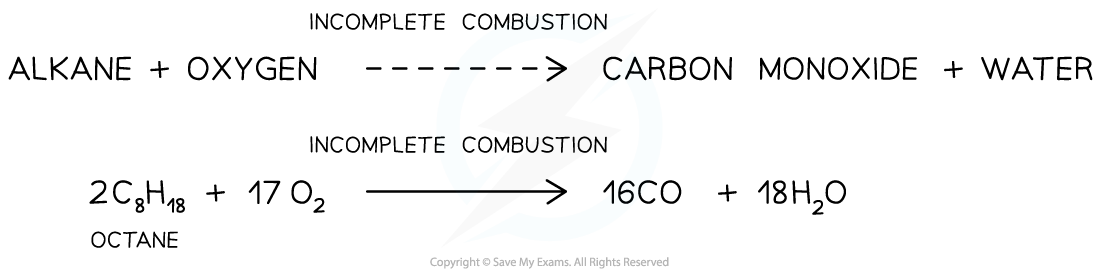
The incomplete combustion of alkanes
- Carbon monoxide is a?toxic?gas as it will bind to haemoglobin in blood which can then no longer bind?oxygen
- As no oxygen can be transported around the body, victims will feel?dizzy, lose consciousness?and if not removed from the carbon monoxide, they can?die
- Carbon monoxide is extremely dangerous as it is?odourless?(it doesn’t smell) and will not be noticed
- Incomplete combustion often takes place inside a?car engine?due to a limited amount of oxygen present
- With a reduced supply of oxygen,?carbon will be produced in the form of soot:
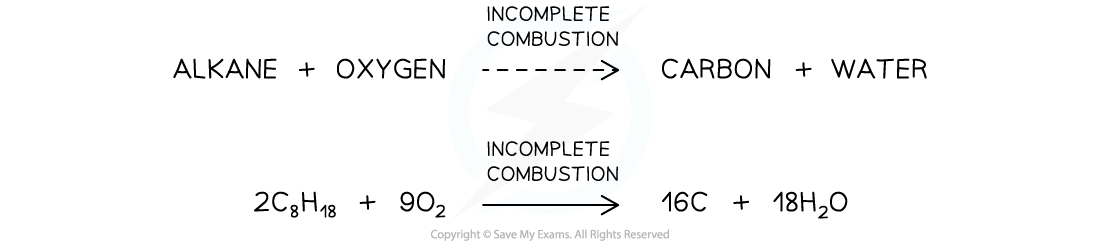
The incomplete combustion of alkanes (2)
Exam Tip
Incomplete combustion of alkanes never produces hydrogen as it is always preferentially oxidised in any available oxygen, rather than carbon
轉(zhuǎn)載自savemyexams

國際競賽真題資源免費領(lǐng)取


美高學(xué)分項目重磅來襲!立即了解