IB DP Chemistry: SL復習筆記10.2.13 Reactions of Benzene

Reactions of Benzene
- Arenes?are very stable compounds due to the?delocalisation of π electrons?in the ring
- This is because the electron density is spread out over the molecule instead of being confined to a small area
- During chemical reactions such as?substitution reactions, this delocalised ring is maintained
- Addition reactions?however,?disrupt?the?aromatic stabilisation?so they are not favoured
Substitution
- Halogenation?reactions are examples of?electrophilic substitution?reactions
- Arenes undergo?substitution?reactions with chlorine (Cl2) and bromine (Br2) in the presence of anhydrous AlCl3?or AlBr3?catalyst?respectively to form?halogenoarenes?(aryl halides)
- The chlorine or bromine act as an?electrophile?and replaces a hydrogen atom on the benzene ring
- The catalyst is required for the reaction to take place, due to the stability of the benzene structure

Arenes undergo substitution reactions with halogens to form aryl halides
- Alkylarenes?such as methylbenzene undergo halogenation on the 2 or 4 positions
- This is due to the?electron-donating?alkyl groups which activate these positions
- The halogenation of alkylarenes therefore result in the formation of?two products
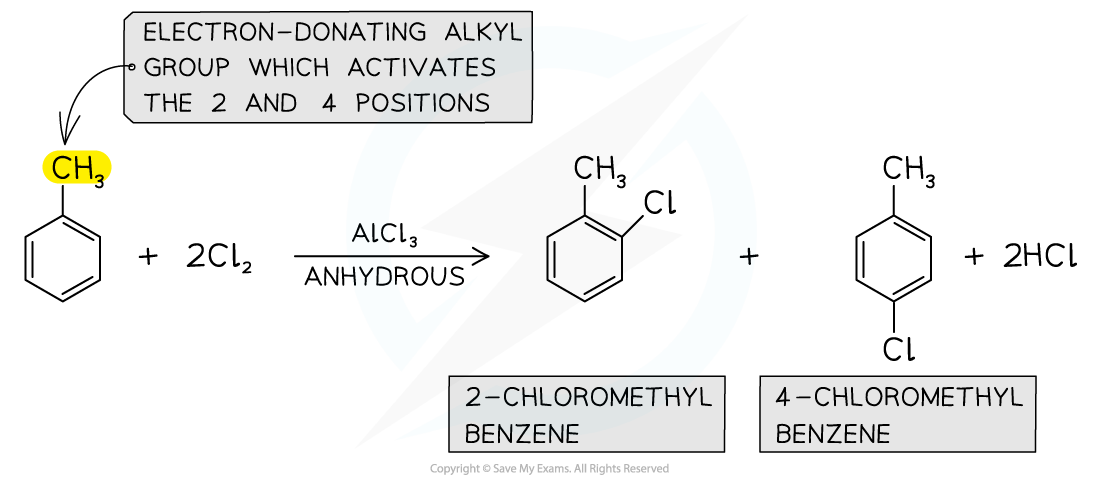
Alkylarenes are substituted on the 2 or 4 position
- Multiple substitutions?occur when?excess?halogen is used
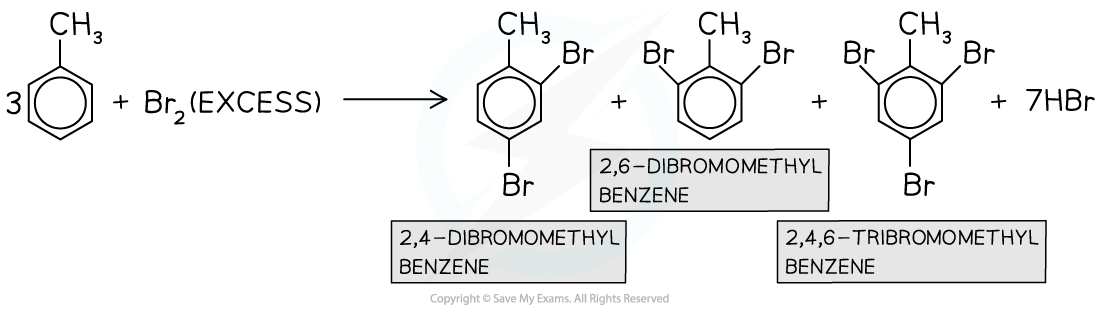
In the presence of excess halogen, multiple substitutions occur
Nitration
- Another example of a substitution reaction is the?nitration?of arenes
- In these reactions, a nitro (-NO2) group replaces a hydrogen atom on the arene
- The benzene is reacted with a mixture of concentrated nitric acid (HNO3) and concentrated sulfuric acid (H2SO4) at a temperature between 25 and 60?oC

Nitration of benzene
- Again, due to the?electron-donating?alkyl groups in alkylarenes, nitration of methylbenzene will occur on the 2 and 4 position
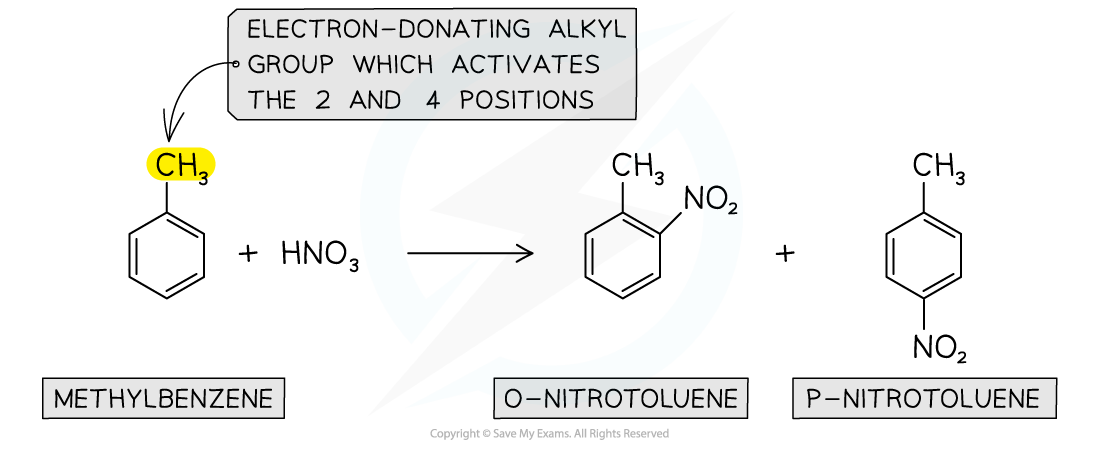
Nitration of alkylarenes
轉載自savemyexams
以上就是關于【IB DP Chemistry: SL復習筆記10.2.13 Reactions of Benzene】的解答,如需了解學校/賽事/課程動態,可至翰林教育官網獲取更多信息。
往期文章閱讀推薦:
MIT官方發布【2026年夏季推薦閱讀書單】!橫跨科學/人文/經濟...


翰林AMC8視頻課重磅上線!

國際競賽真題資源免費領取






