CIE A Level Chemistry復習筆記6.2.7 Degenerate & non-Degenerate d Orbitals

Define Degenerate & non-Degenerate d Orbitals
- There are?five d orbitals?in an?isolated?transition element atom or ion
- An isolated transition element is one that is not bonded to anything else
- These d orbitals are all at the same energy level (they are equal in energy) and are therefore said to be?degenerate orbitals
- When ligands are attached, the transition element ion is?not?isolated anymore
- The dative bonding from the ligands causes the five d orbitals to split into two sets
- These two sets are?not?equal in energy and are described as being?non-degenerate orbitals
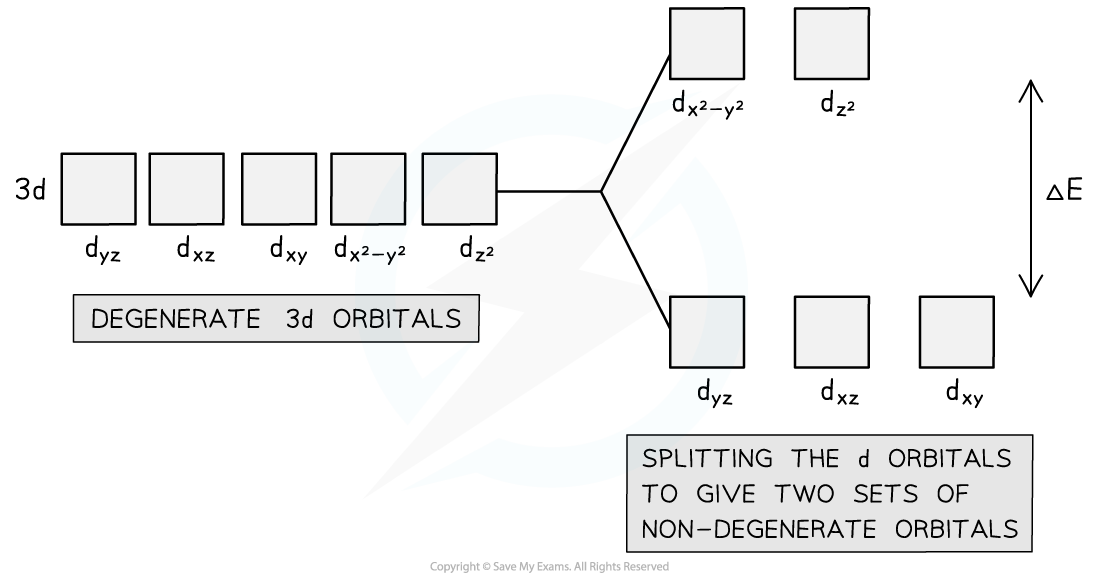
Upon binding to ligands, the d orbitals of the transition element ion split into two non-degenerate sets of orbitals
Degenerate d Orbital Splitting
- An isolated transition element has five?degenerate?3d orbitals
- Upon dative covalently bonding to a ligand, these d orbitals are split into two sets of non-degenerate orbitals
Splitting in octahedral complexes
- In?octahedral?complexes, there are six ligands arranged around the?central metal ion
- The lone pairs of the ligands repel the electrons in the x2-y2?and z2?orbitals of the metal ion?more than?they repel the electrons in the 3dyz, 3dxz,?and 3dxy?orbitals
- This is because the 3dx2-y2?and 3dz2?orbitals line up with the dative bonds in the complex’s octahedral shape
- This is because the ligands are attached to or approaching the central metal ion along the x, y and z axes, and the 3dx2-y2?and 3dz2?orbitals have lobes along these axes
- The electrons in these two orbitals are closer to the bonding electrons, so there is more?repulsion
- This means that when the d orbitals split, the 3dx2-y2?and 3dz2?orbitals are at a slightly higher energy level than the other three
- The difference in energy between the?non-degenerate?d orbitals is labelled as?ΔE
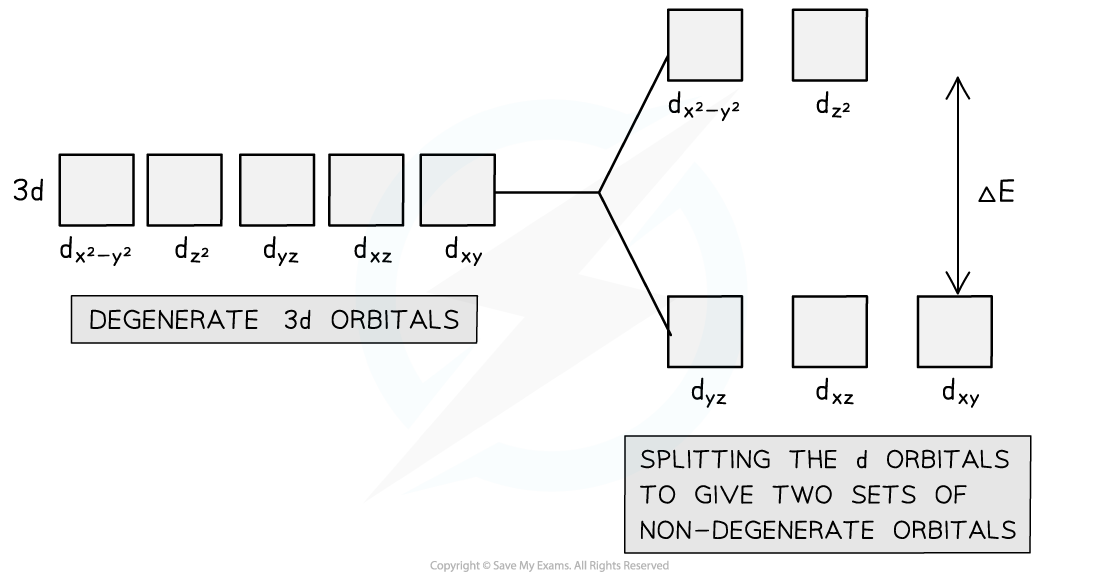
Splitting of 3d orbitals in an octahedral complex
Splitting in tetrahedral complexes
- In?tetrahedral?complexes, there are four ligands arranged around the central metal ion
- The bonding pair of electrons from the four ligands now line up with the 3dyz, 3dxz,?and 3dxy?orbitals of the central metal ion
- Now, the 3dx2-y2?and 3dz2?orbitals lie between the metal-ligand bonds
- Therefore, there is less repulsion with the 3dx2-y2?and 3dz2?orbitals
- When the d orbitals split this time, the 3dx2-y2?and 3dz2?orbitals are at?lower?and?more?stable?energy level than the other three
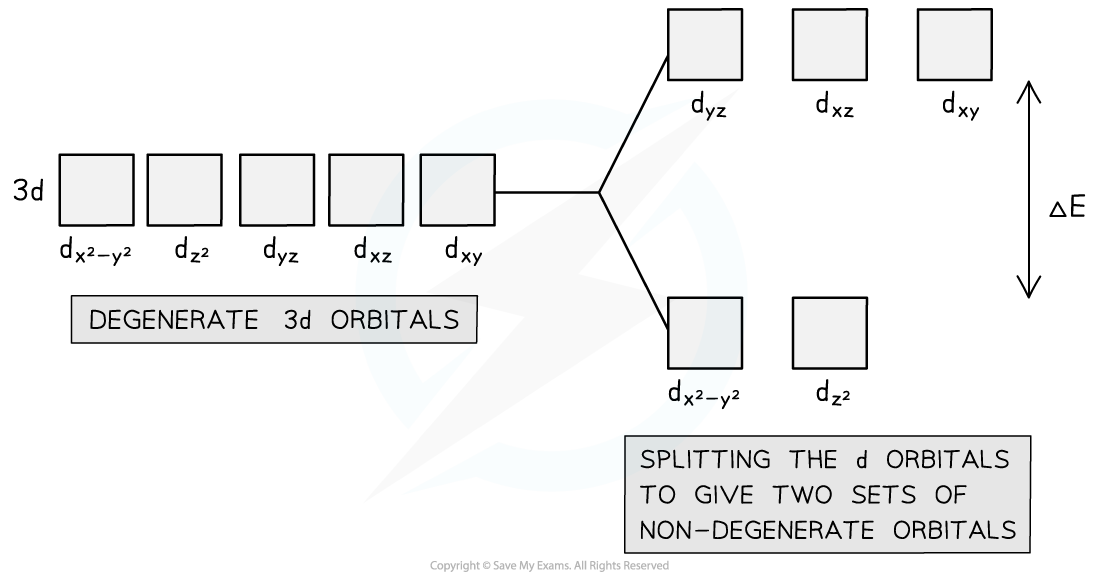
Splitting of 3d orbitals in a tetrahedral complex
轉載自savemyexams
以上就是關于【CIE A Level Chemistry復習筆記6.2.7 Degenerate & non-Degenerate d Orbitals】的解答,如需了解學校/賽事/課程動態,可至翰林教育官網獲取更多信息。
往期文章閱讀推薦:
MIT官方發布【2026年夏季推薦閱讀書單】!橫跨科學/人文/經濟...


翰林AMC8視頻課重磅上線!

國際競賽真題資源免費領取






