CIE A Level Physics復習筆記7.1.5 Transverse & Longitudinal Waves

Properties of Transverse & Longitudinal Waves
- In mechanical waves, particles oscillate about fixed points
- The direction of oscillations with regards to the direction of wave travel determine what type of wave it is
Transverse waves
- A transverse wave is one where the particles oscillate?perpendicular?to the direction of the wave travel (and energy transfer)
- Transverse waves show areas of?crests?(peaks) and?troughs
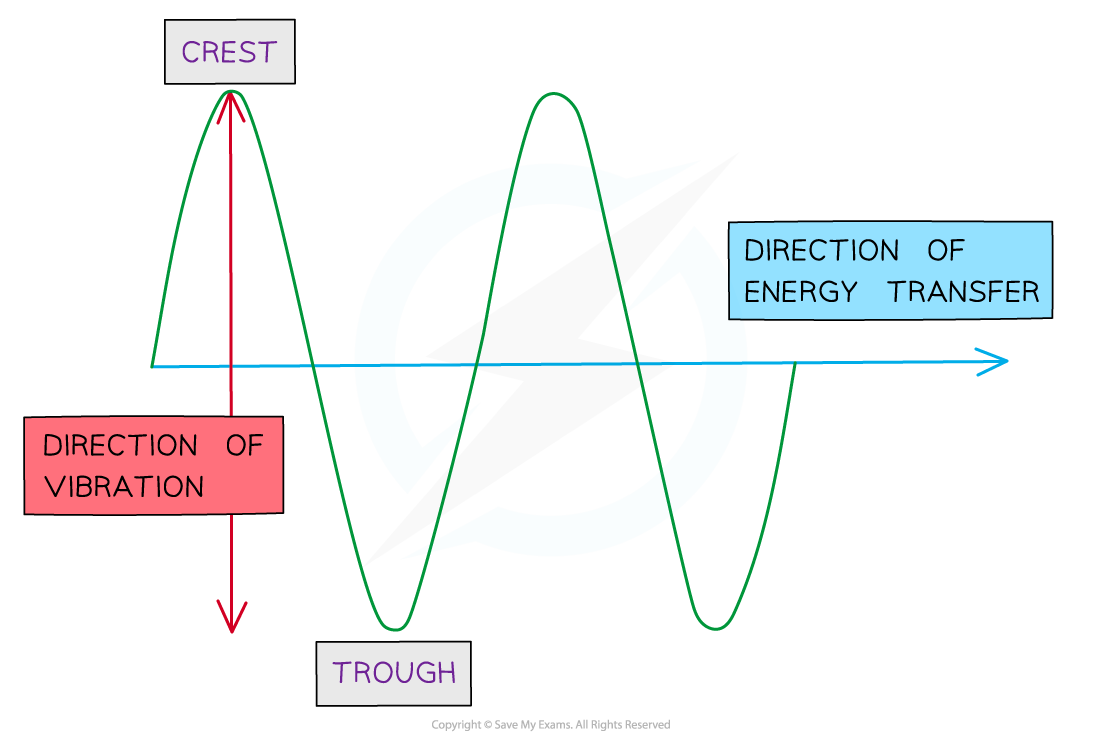
Diagram of a transverse wave
- Examples of transverse waves are:
- Electromagnetic waves e.g. radio, visible light, UV
- Vibrations on a guitar string
- These can be shown on a rope
- Transverse waves?can?be polarised
Longitudinal waves
- A longitudinal wave is one where the particles oscillate?parallel?to the direction of the wave travel (and energy transfer)
- Longitudinal waves show areas of?compressions?and?rarefactions
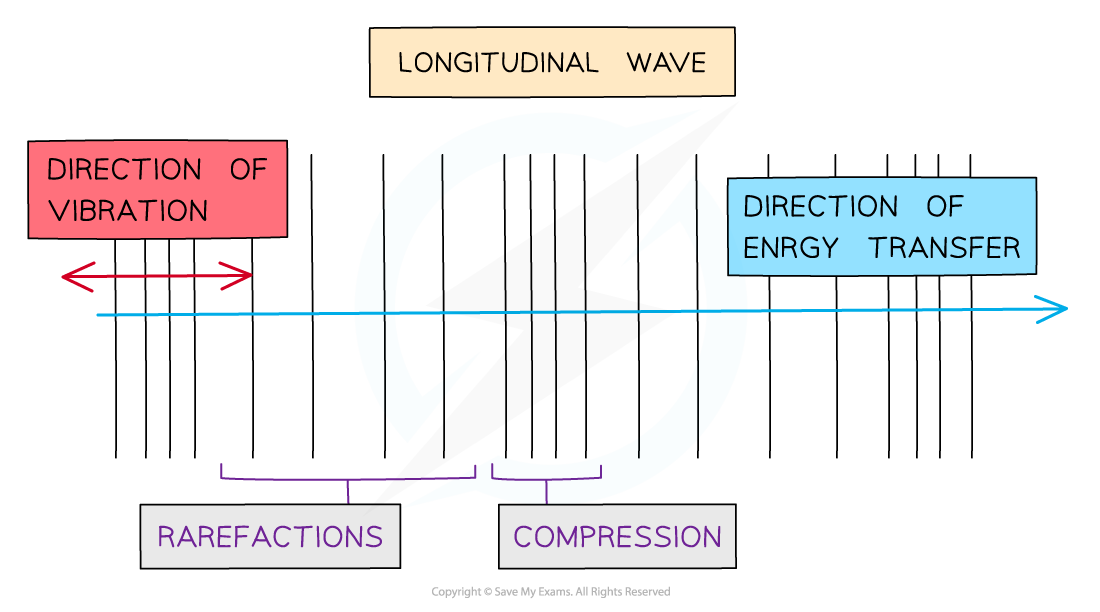
Diagram of a longitudinal wave
- Examples of longitudinal waves are:
- Sound waves
- Ultrasound waves
- These can be shown on a slinky spring
- Longitudinal waves?cannot?be polarised
- You will have learned how to analyse the properties of a wave, such as amplitude and wavelength, in “General Wave Properties”
- The diagram below shows the equivalent of a wavelength on a longitudinal wave
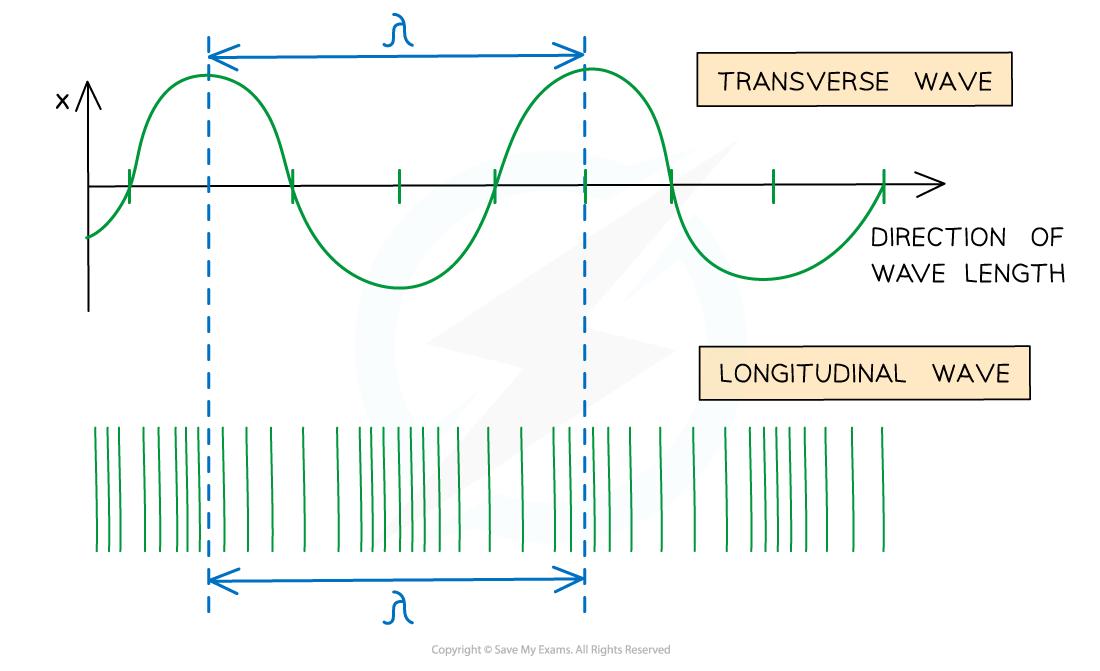
Wavelength shown on a longitudinal wave
Exam Tip
The definition of transverse and longitudinal waves are often asked as exam questions, make sure to remember these definitions by heart!
Graphical Representations of Transverse & Longitudinal Waves
Worked Example
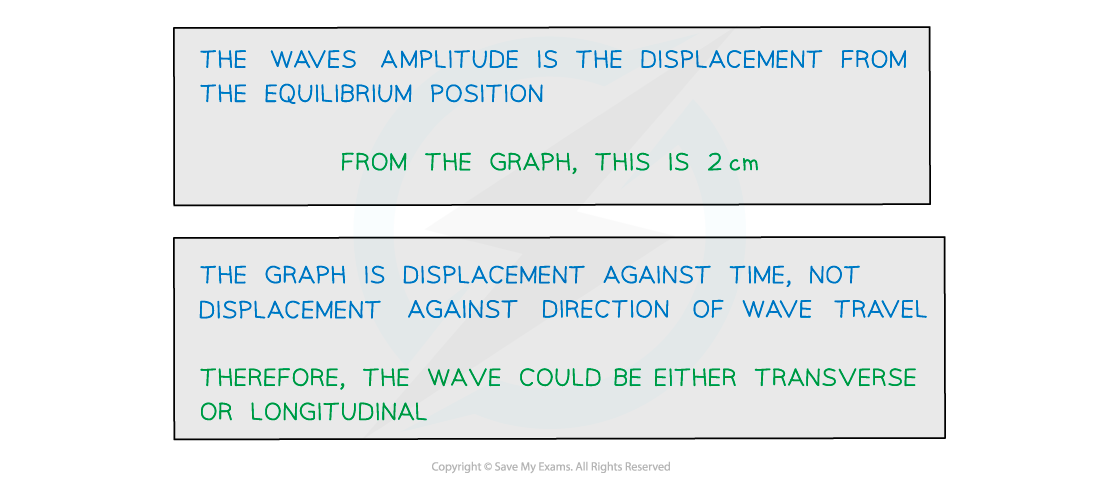
The graph shows how the displacement of a particle in a wave varies with time.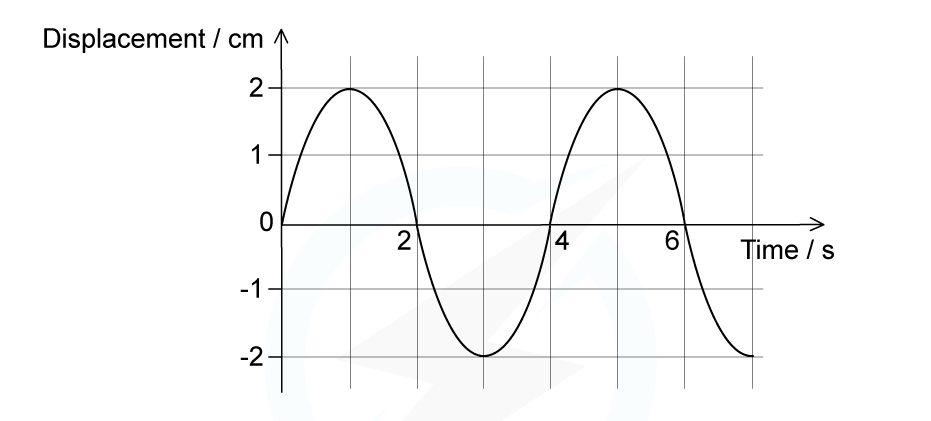
Which statement is correct?
A.?The wave has an amplitude of 2 cm and could be either transverse or longitudinal.
B.?The wave has an amplitude of 2 cm and has a time period of 6 s.
C.?The wave has an amplitude of 4 cm and has a time period of 4 s.
D.?The wave has an amplitude of 4 cm and must be transverse.
ANSWER:? ?A
Exam Tip
Both transverse and longitudinal waves can look like transverse waves when plotted on a graph - make sure you read the question and look for whether the wave travels?parallel?(longitudinal) or?perpendicular?(transverse) to the direction of travel to confirm which type of wave it is.
轉載自savemyexams

國際競賽真題資源免費領取


美高學分項目重磅來襲!立即了解