CIE A Level Maths: Pure 3復(fù)習(xí)筆記8.2.2 Geometry of Complex Addition, Subtraction & Conjugation

Geometry of Complex Addition, Subtraction & Conjugation
What does addition look like on an Argand diagram?
- The?addition?of complex numbers can be shown by the addition of?corresponding column vectors
- If
 and
and , then
- This can be written as
- If
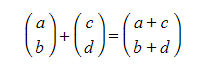
-
- An alternative is to write
 ?adding the respective real and imaginary parts separately
- An alternative is to write
- A complex number
 can be represented by the position vector
What does subtraction look like on an Argand diagram?
- As with addition we can use knowledge of vectors to represent subtraction of complex numbers
- If and , then

- This can be written as

- If
-
- An alternative is to write
 subtracting the respective real and imaginary parts separately
- An alternative is to write
What are the geometric representations of complex addition and subtraction?
- Let?w?be a given complex number with?real part?a?and?imaginary part?b
- Let?z?be any complex number represented on an Argand diagram
- Adding w to z results in z being translated by vector

- Subtracting w from z results in z being translated by vector

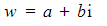
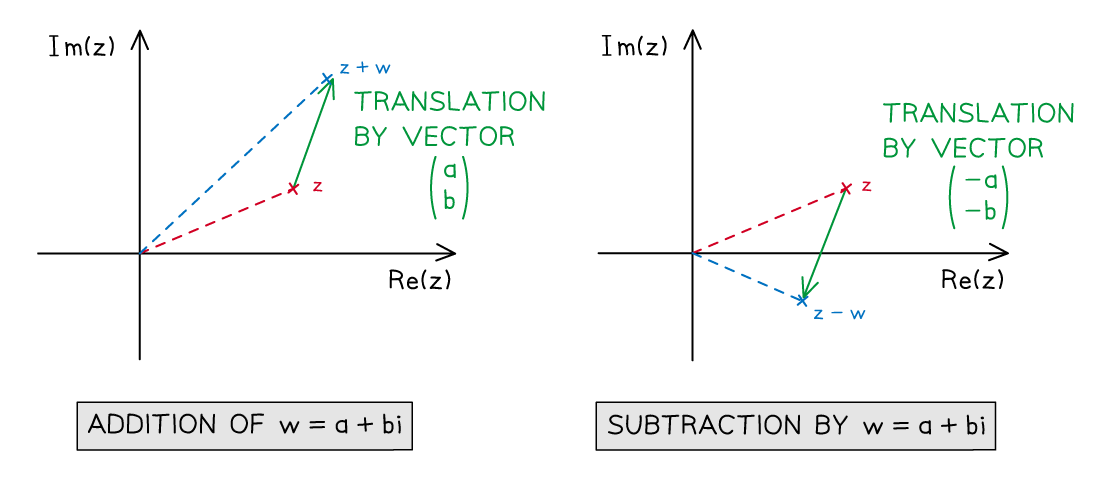
What is the geometric representation of complex?conjugation?
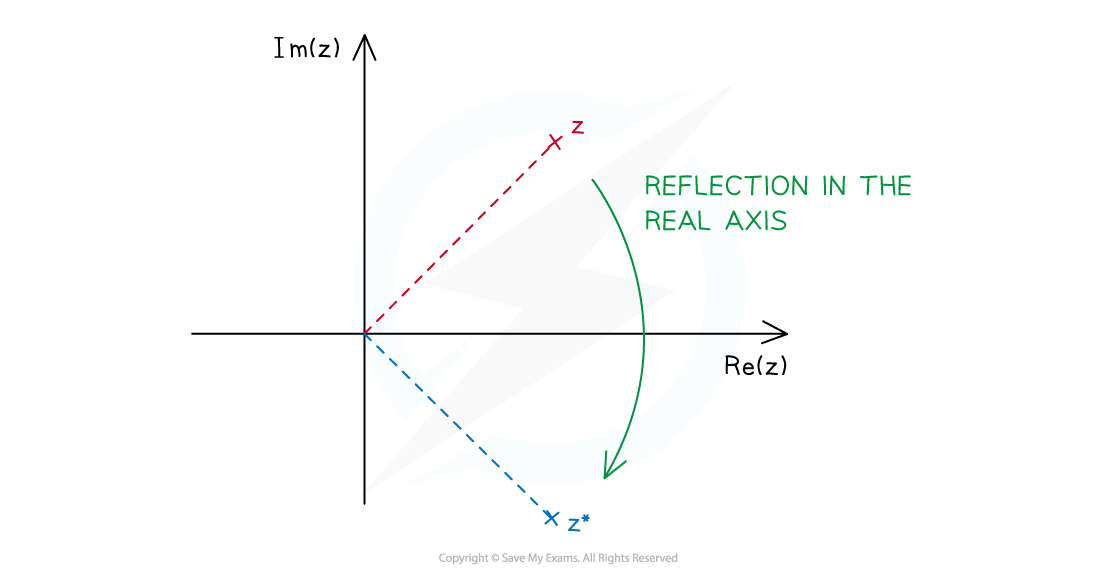
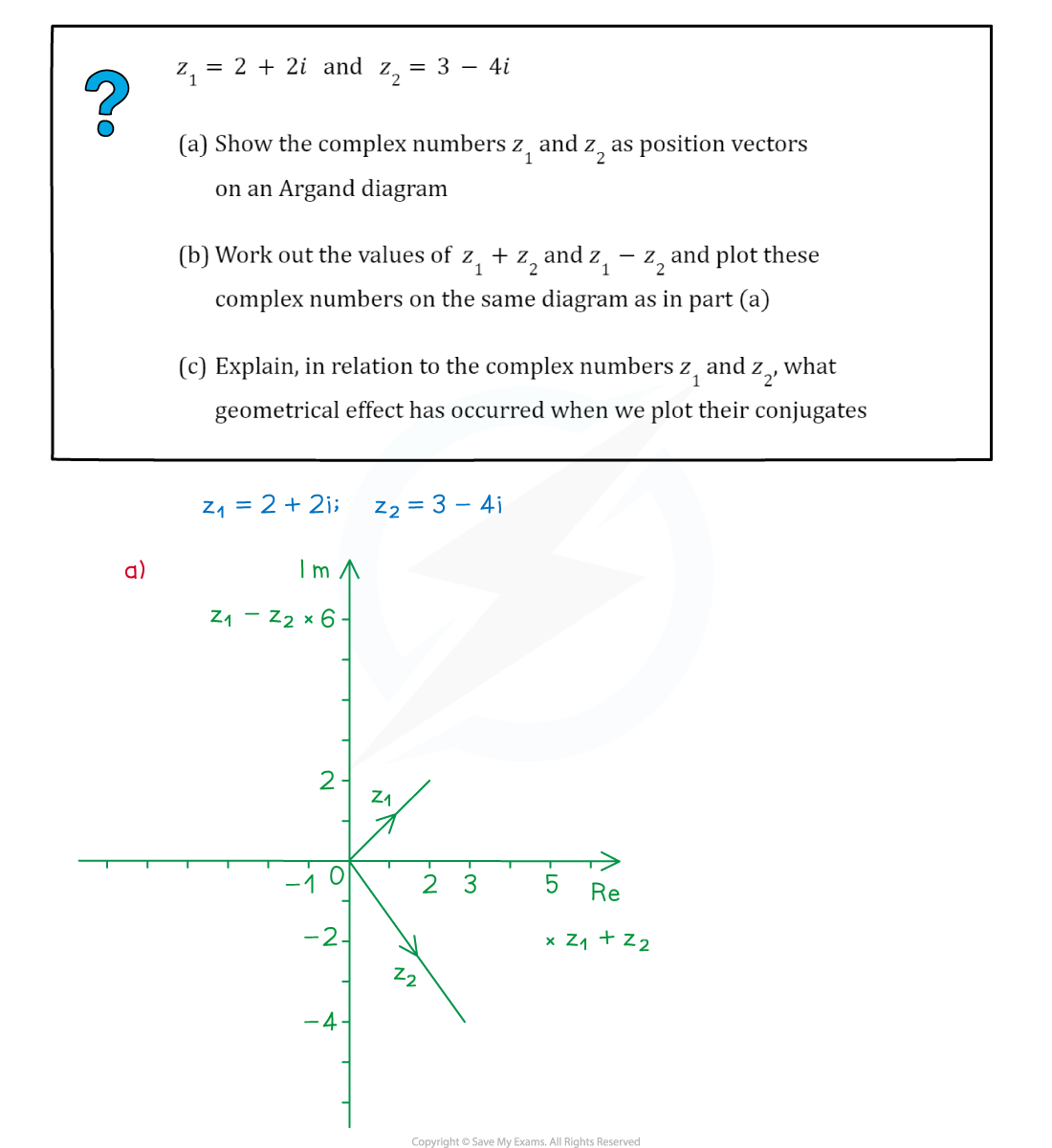
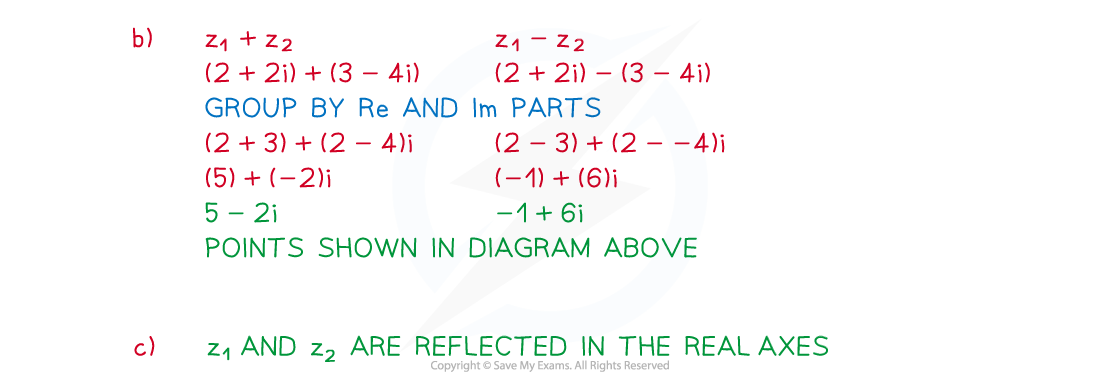
- If we plot?complex conjugate?pairs on an Argand diagram, we notice the points are?reflections?of each other in the?real axis
- Let?z?be any complex number represented on an Argand diagram
- Complex conjugating?z?results in?z?being?reflected?in the real axis
Worked Example
Exam Tip
Read questions carefully; is it asking to plot the complex number as a point or as a vector?
Be extra careful when representing subtraction geometrically, remember that the solution will be a translation of the shorter diagonal of the parallelogram made up by the two vectors.
轉(zhuǎn)載自savemyexams
以上就是關(guān)于【CIE A Level Maths: Pure 3復(fù)習(xí)筆記8.2.2 Geometry of Complex Addition, Subtraction & Conjugation】的解答,如需了解學(xué)校/賽事/課程動態(tài),可至翰林教育官網(wǎng)獲取更多信息。
往期文章閱讀推薦:
斯坦福大學(xué)官方推薦書單!名校學(xué)霸們暑假都在讀什么?
MIT官方發(fā)布【2026年夏季推薦閱讀書單】!橫跨科學(xué)/人文/經(jīng)濟...


翰林AMC8視頻課重磅上線!

國際競賽真題資源免費領(lǐng)取






