Edexcel IGCSE Physics: Double Science 復習筆記:2.2.1 Current in Series & Parallel

Edexcel IGCSE Physics: Double Science 復習筆記:2.2.1 Current in Series & Parallel
Current in Series Circuits
- In a circuit that is a closed-loop, such as a series circuit, the current is the?same value at any point
-
- This is because the number of electrons per second that passes through one part of the circuit is the same number that passes through any other part
- This means that?all?components in a closed-loop have the same current
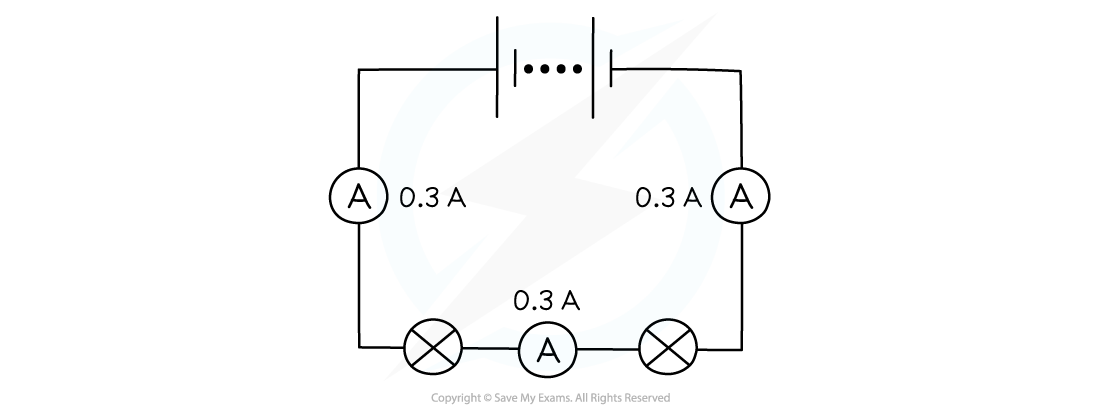
The current is the same at each point in a closed-loop
- The amount of current flowing around a series circuit depends on two things:
- The?voltage?of the power source
- The?number?(and type) of components in the circuit
- Increasing?the?voltage?of the power source drives?more?current?around the circuit
- So, decreasing the voltage of the power source reduces the current
- Increasing?the?number?of components in the circuit?increases?the?total?resistance
- Hence?less?current?flows through the circuit
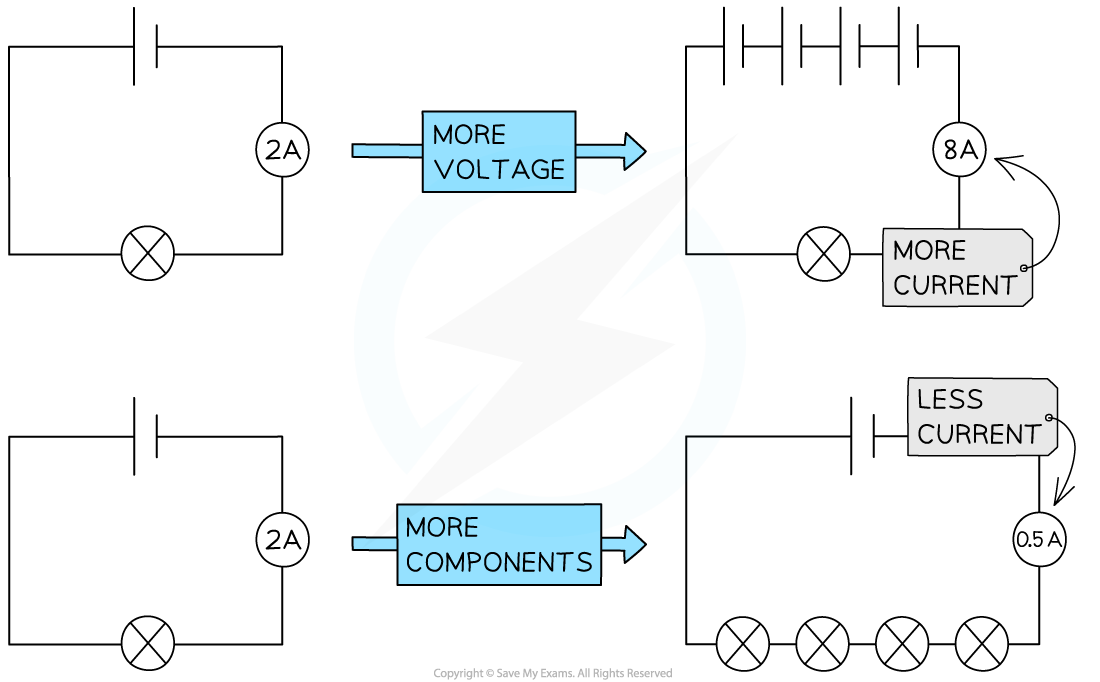
Current will increase if the voltage of the power supply increases, and decreases if the number of components increases (because there will be more resistance)
Current in Parallel Circuits
- At a?junction?in a?parallel?circuit?(where two or more wires meet) the current is?conserved
- This means the amount of current flowing into the junction is equal to the amount of current flowing out of it
- This is because?charge?is conserved
- Note that the current does not always split equally – often there will be more current in some branches than in others
- The current in each branch will only be identical if the?resistance?of the components along each branch are?identical
- Current behaves in this way because it is the?flow of electrons:
- Electrons are physical matter – they cannot be created or destroyed
- This means the total number of electrons (and hence current) going around a circuit must remain the same
- When the electrons reach a junction, however, some of them will go one way and the rest will go the other
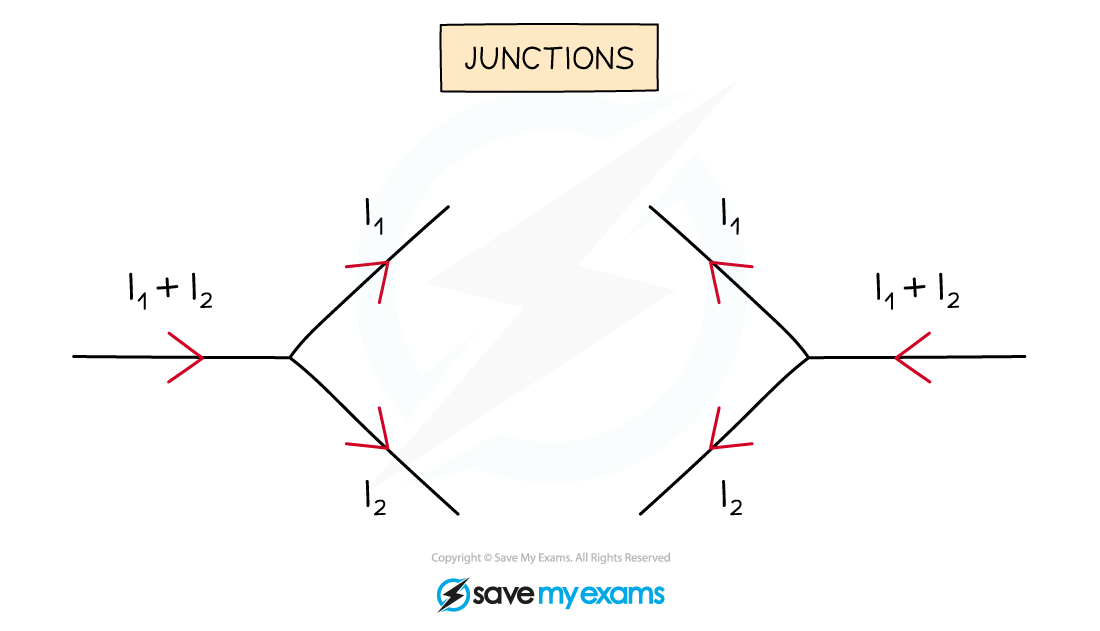
Current is split at a junction into individual branches
Worked Example
In the circuit below, ammeter A0?shows a reading of 10 A, and ammeter A1?shows a reading of 6 A. What is the reading on ammeter A2?
Step 1: Recall that at a junction, the current is conserved
-
- This means that the total amount of current flowing into a junction is equal to the total amount flowing out
Step 2: Consider the first junction in the circuit where current splits
-
- The diagram below shows the first junction in the circuit

Step 3: Calculate the missing amount of current
-
- Since 10 A flows in to the junction (the total current from the battery), 10 A must flow out of the junction
- The question says that 6 A flows through ammeter A1?so the remaining current flowing through ammeter A2?must be:
10 A ? 6 A =?4 A
-
- Therefore,?4 A?flows through ammeter A2
Exam Tip
The direction of current flow is super important when considering junctions in a circuit.You should remember that current flows from the?positive?terminal to the?negative?terminal of a cell / battery. This will help determine the direction current is flowing 'in' to a junction and which way the current then flows 'out'.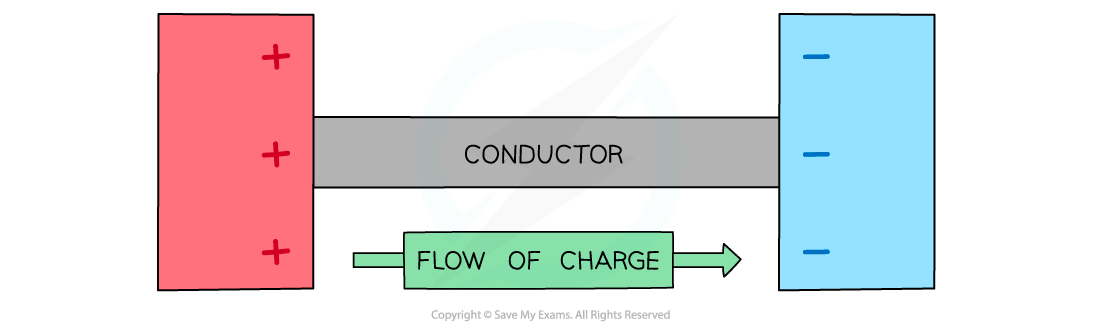
轉載自savemyexams
以上就是關于【Edexcel IGCSE Physics: Double Science 復習筆記:2.2.1 Current in Series & Parallel】的解答,如需了解學校/賽事/課程動態,可至翰林教育官網獲取更多信息。
往期文章閱讀推薦:
MIT官方發布【2026年夏季推薦閱讀書單】!橫跨科學/人文/經濟...


翰林AMC8視頻課重磅上線!

國際競賽真題資源免費領取






