CIE IGCSE Biology: 復習筆記:1.1.2 States of Matter

CIE IGCSE Biology: 復習筆記:1.1.2 States of Matter
State Changes
Melting
- Melting is when a solid changes into a liquid
- Requires heat energy which transforms into?kinetic?energy, allowing the particles to move
- Occurs at a specific temperature known as the?melting point?(m.p.)
Boiling
- Boiling is when a liquid changes into a gas
- Requires heat which causes bubbles of gas to form?below?the surface of a liquid, allowing for liquid particles to escape from the surface and within the liquid
- Occurs at a specific temperature known as the?boiling point?(b.p.)
Freezing
- Freezing is when a liquid changes into a solid
- This is the reverse of melting and occurs at exactly the?same?temperature?as melting, hence the melting point and freezing point of a pure substance are the same. Water, for example, freezes and melts at 0 oC
- Requires a significant decrease in temperature (or loss of thermal energy) and occurs at a specific temperature
Evaporation
- Evaporation occurs when a liquid changes into a gas and occurs over a?range?of temperatures
- Evaporation occurs only at the?surface?of liquids where high energy particles can escape from the liquid's surface at?low?temperatures, below the b.p. of the liquid
- The larger the surface area and the warmer the liquid surface, the more quickly a liquid can evaporate
Condensation
- Condensation occurs when a gas changes into a liquid on cooling and it takes place over a?range?of temperatures
- When a gas is cooled its particles lose energy and when they bump into each other they lack the energy to bounce away again, instead they group together to form a liquid
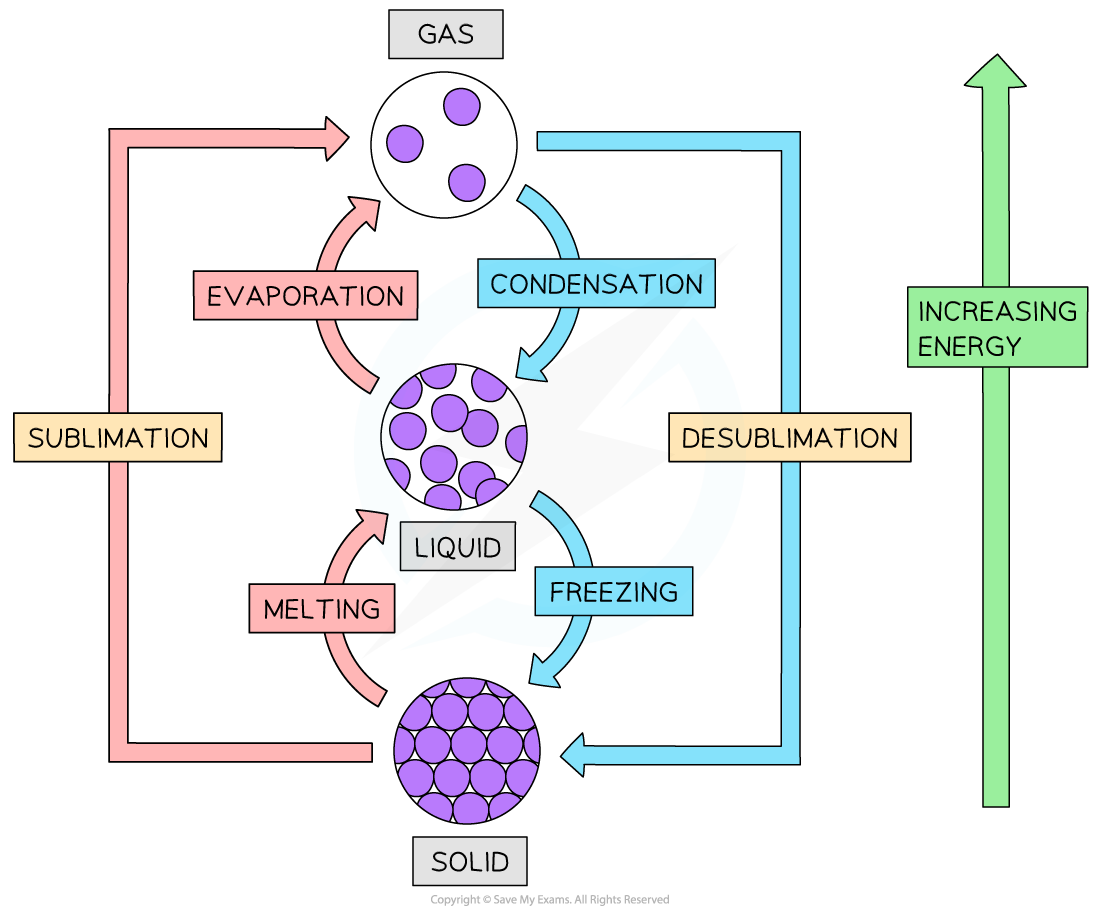
Interconversion of solids, liquids and gases
Exam Tip
Questions on the particle theory of matter show interconversion of states with a reversible arrow: ?, which means that the process can go forwards and backwards. Read the question carefully and pick the direction of the change in state that the question refers to.
Sublimation is no longer part of the syllabus, but you can see how it fits in on the interconversion diagram with the other state changes.
State Changes & Kinetic Theory
EXTENDED
- When substances are heated, the particles?absorb?thermal energy which is converted into kinetic energy. This is the basis of the kinetic theory of matter
- Heating a solid causes its particles to vibrate more and as the temperature increases, they vibrate so much that the solid?expands?until the structure breaks and the solid melts
- On further heating, the now liquid substance expands more and some particles at the surface gain sufficient energy to overcome the intermolecular forces and?evaporate
- When the b.p. temperature is reached, all the particles gain enough energy to escape and the liquids boils
- These changes in state can be shown on a graph called a?heating curve
- Cooling down a gas has the reverse effect and this would be called a?cooling?curve
- These curves are used to show how changes in temperature affect changes of state
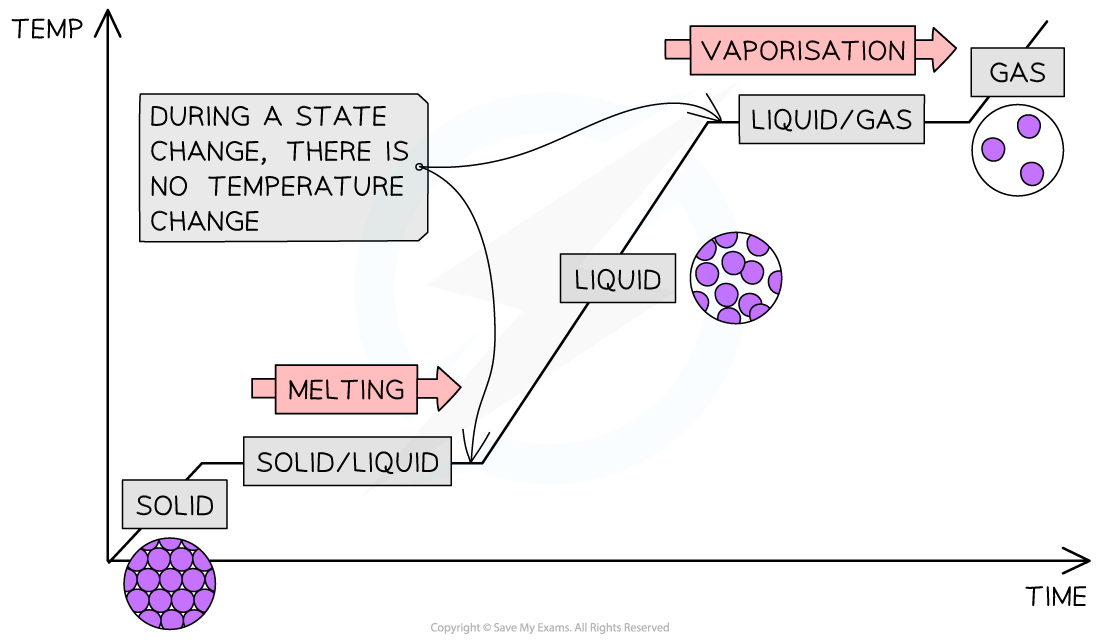
A heating curve showing the states, state changes and temperature changes as time progresses
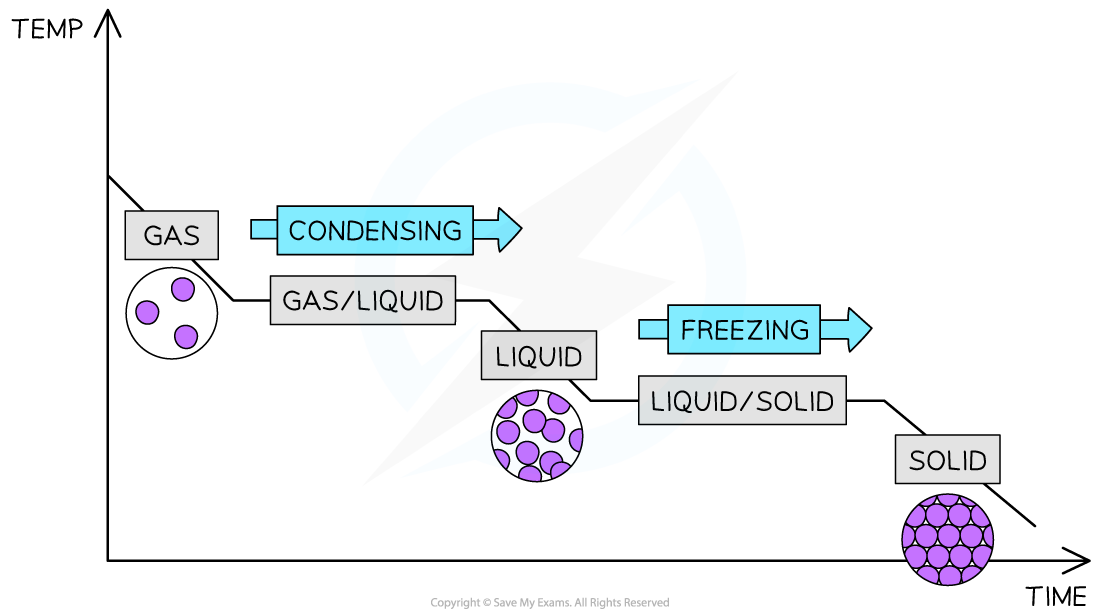
A cooling curve is like a heating curve, but is the mirror image
轉載自savemyexams
以上就是關于【CIE IGCSE Biology: 復習筆記:1.1.2 States of Matter】的解答,如需了解學校/賽事/課程動態,可至翰林教育官網獲取更多信息。
往期文章閱讀推薦:
MIT官方發布【2026年夏季推薦閱讀書單】!橫跨科學/人文/經濟...


翰林AMC8視頻課重磅上線!

國際競賽真題資源免費領取






