2011CAP Prize Exam加拿大高中物理大獎(jiǎng)賽真題免費(fèi)下載

歷年CAP High School Prize Exam加拿大高中物理大獎(jiǎng)賽
真題與答案下載

翰林國際教育全網(wǎng)首發(fā)
力爭超快速發(fā)布最全資料
助你在升學(xué)路上一帆風(fēng)順
為你
千千萬萬遍
2011 CAP Prize Exam真題免費(fèi)下載
共計(jì)3小時(shí)考試時(shí)間
此套試卷由23道選擇題以及3道大題組成
每道大題含有不同數(shù)量的小題
完整版下載鏈接見文末
部分真題預(yù)覽:
Data:
Speed of light c =3.00 × 10⁸m/s
Gravitational constant G =6.67 × 10?11N · m2kg2
Acceleration due to gravity g =9.80m/s2
Density of fresh water ρ =1.00 × 10³kg/m3
Normal atmospheric pressure P0 =1.01 × 10⁵Pa
Specific heat of water Cw = 4.186 × 10³?J/(kg · K)
Fundamental charge e =1.60× 10?19 C
Mass of electron me =9.11 × 10?31kg
Mass of proton mp =1.67 × 10?27kg
Planck’s constant h =6.63 × 10?34Js
Coulomb’s constant 1/(4πε0)=8.99 × 109 N · m2 /C2
Boltzmann’s constant k=1.38 × 10?23J/K
A.U. Astronomical Unit = 1.49598 ×10¹¹m: The approx-imate distance from the Sun to the Earth.
Radius of the Earth RE =6.371 × 10⁶m
Linear expansion coefficient of iron αFe = 1.1 ×10?5K?1
Linear expansion coefficient of zinc αZn = 3.0 ×10?5K?1
1 US mile = 1609 meters
1 US gallon = 3.785 liters
Part A: Multiple Choice
1)Incandescent light bulbs are notorious for being relatively inefficient in producing visible light. The tungsten wire inside such a bulb is at a temperature of approximately 3000 K and the emission spectrum is very similar to that of a blackbody. The e?ciency is so low because
- Most of the electrons are absorbed in the tungsten wire.
- Most of the power is lost due to the resistance of the bulb.
- The electric power actually is efficiently transformed into radiation but at 3000 K, most of it is infrared.
- A blackbody absorbs more light than it emits,hence it appears black.
2)A solar panel installed on a spaceship has a maximum energy output of 5 kW near the Earth. What is the maximum energy output of the solar panel when the spaceship is near Mars?
(The distance from the Earth to the Sun is 1 A.U. and from Mars to the Sun is 1.5 A.U.)
- 3.3 kW;
- 2.2 kW;
- 1.0 kW;
- 0.55 kW;
- 0.20 kW.
3)A scientist measured a 1μA current in an area of a hu-man brain. Unlike current in metals which is carried by free electrons,the current in the brain is mainly car-ried by potassium ions. Each potassium ion has one unit of charge e. This current corresponds to the ?ow of how many potassium ions per second?
- 6× 10⁵;
- 6× 10⁶;
- 6× 10⁸;
- 6× 10¹²;
- 6× 10¹⁸ .
4)The gas supply to your physics professor’s house suddenly stops due to a gas line failure. It is winter and the temperature outside is ?5 oC and constant. Assuming all the doors and windows remain closed, which of these graphs best describes how the temperature in the house changes with time after the gas supply stops?
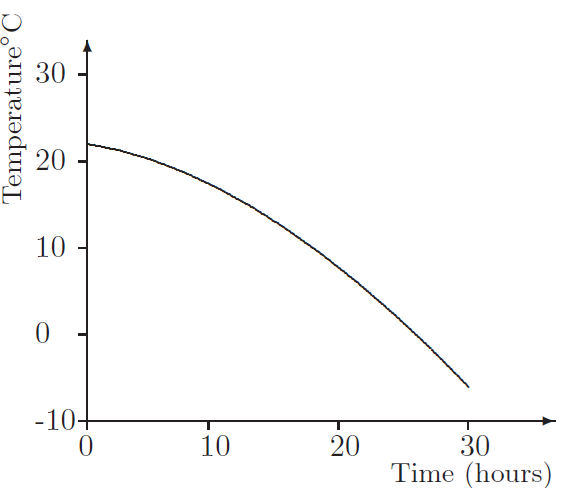
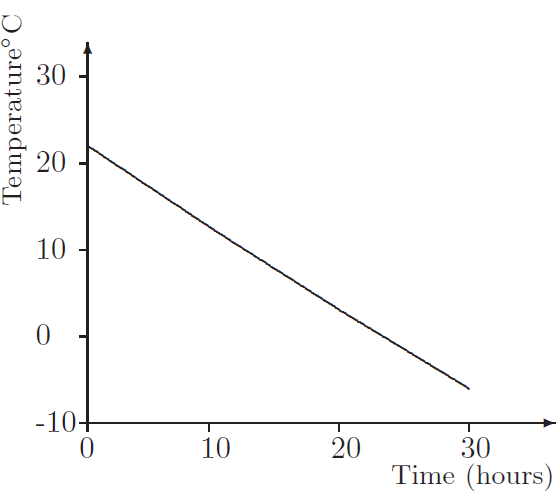
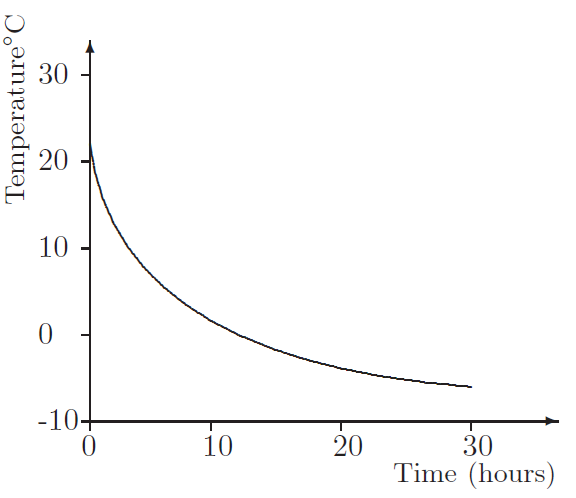
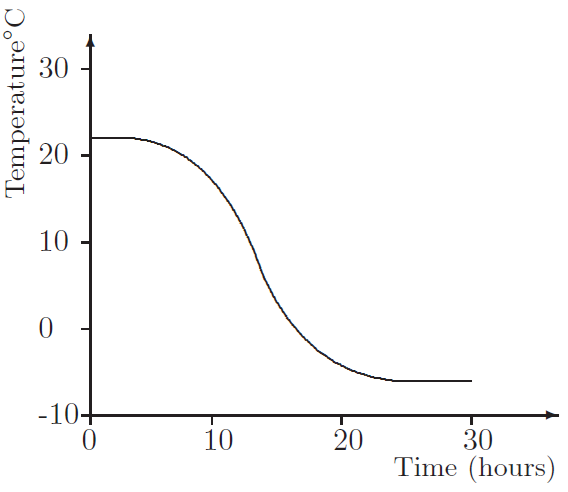
5)The ray of light travelling in air hits the parallel glass plate as shown. Which are the possible continuations of the light ray?
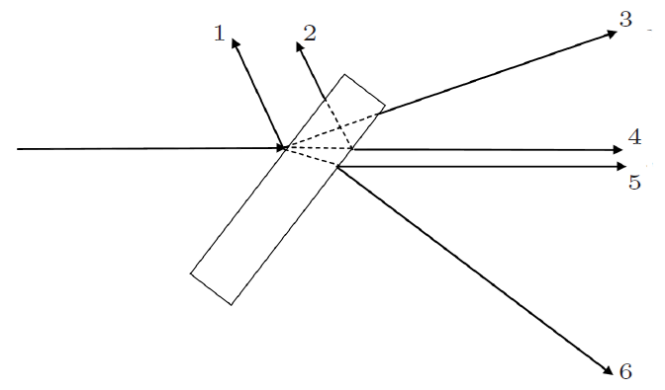
- 4 only.
- both 2 and 4.
- both 3 and 6.
- both 1 and 5.
完整版真題資料可以底部二維碼免費(fèi)領(lǐng)取↓↓↓
[vc_btn title="查看更多CAP Prize Exam加拿大物理奧林匹克學(xué)術(shù)活動(dòng)相關(guān)詳情" color="primary" align="center" i_icon_fontawesome="fa fa-globe" css_animation="zoomIn" button_block="true" add_icon="true" link="url:http%3A%2F%2Fwww.linstitute.net%2Farchives%2F92551||target:%20_blank|"]
[products columns="2" orderby="title" order="ASC" ids="310579,310582 "]
以上就是關(guān)于【2011CAP Prize Exam加拿大高中物理大獎(jiǎng)賽真題免費(fèi)下載】的解答,如需了解學(xué)校/賽事/課程動(dòng)態(tài),可至翰林教育官網(wǎng)獲取更多信息。
往期文章閱讀推薦:
2026五大奧賽中國隊(duì)斬獲四個(gè)世界第一,全員金牌收官!
【組隊(duì)招募】經(jīng)濟(jì)/數(shù)模競賽CNEC/IEO/SIC/HiMCM…組隊(duì)報(bào)名!


翰林AMC8視頻課重磅上線!

國際競賽真題資源免費(fèi)領(lǐng)取






