AQA A Level Physics復習筆記5.2.3 Superconductivity
Superconductivity All materials have some resistivity - even good electrical conductors such as copper and silver Resistance means that when electricity flows through a material, it heats up...
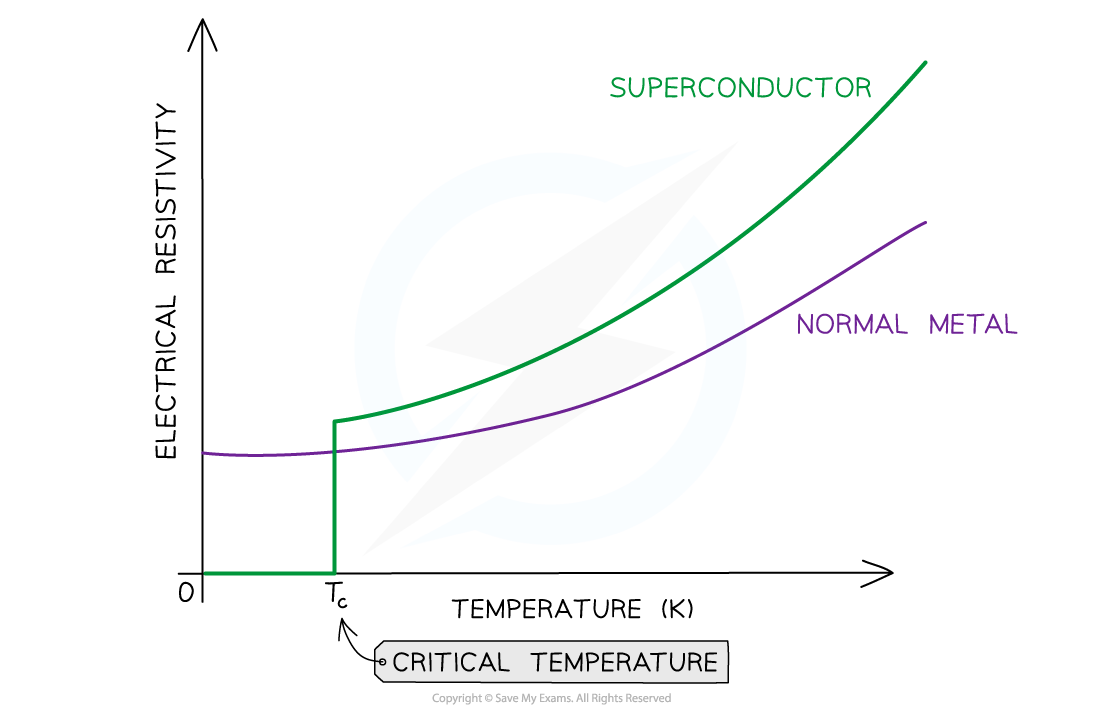
Superconductivity All materials have some resistivity - even good electrical conductors such as copper and silver Resistance means that when electricity flows through a material, it heats up...
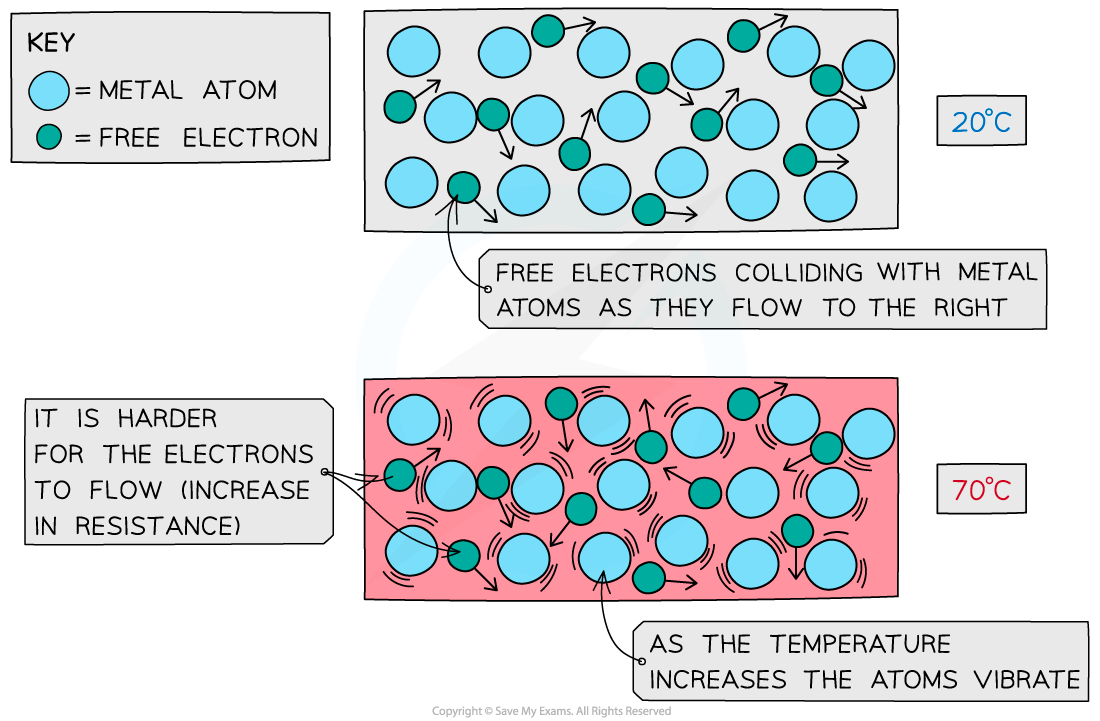
Temperature & Resistance All solids are made up of vibrating atoms The higher the temperature, the faster these atoms vibrate Electric current is the flow of free electrons in a m...
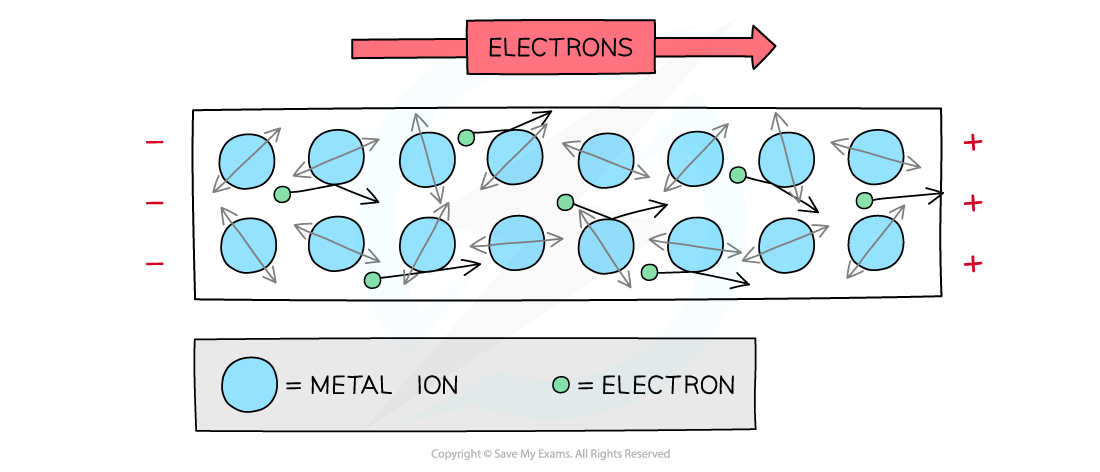
Resistivity All materials have some?resistance?to the flow of charge As?free?electrons?move?through a metal wire, they collide with ions which get in their way As a result, they?transfer?som...

Ohm's Law Ohm’s law states: For a conductor at a constant temperature, the current through it is proportional to the potential difference across it Constant temperature implies constant resi...

Electric Current & Potential Difference Electric Current Electric current is defined as?the rate of flow of positive charge?carriers It is measured in units of?amperes (A)?or?amps ...
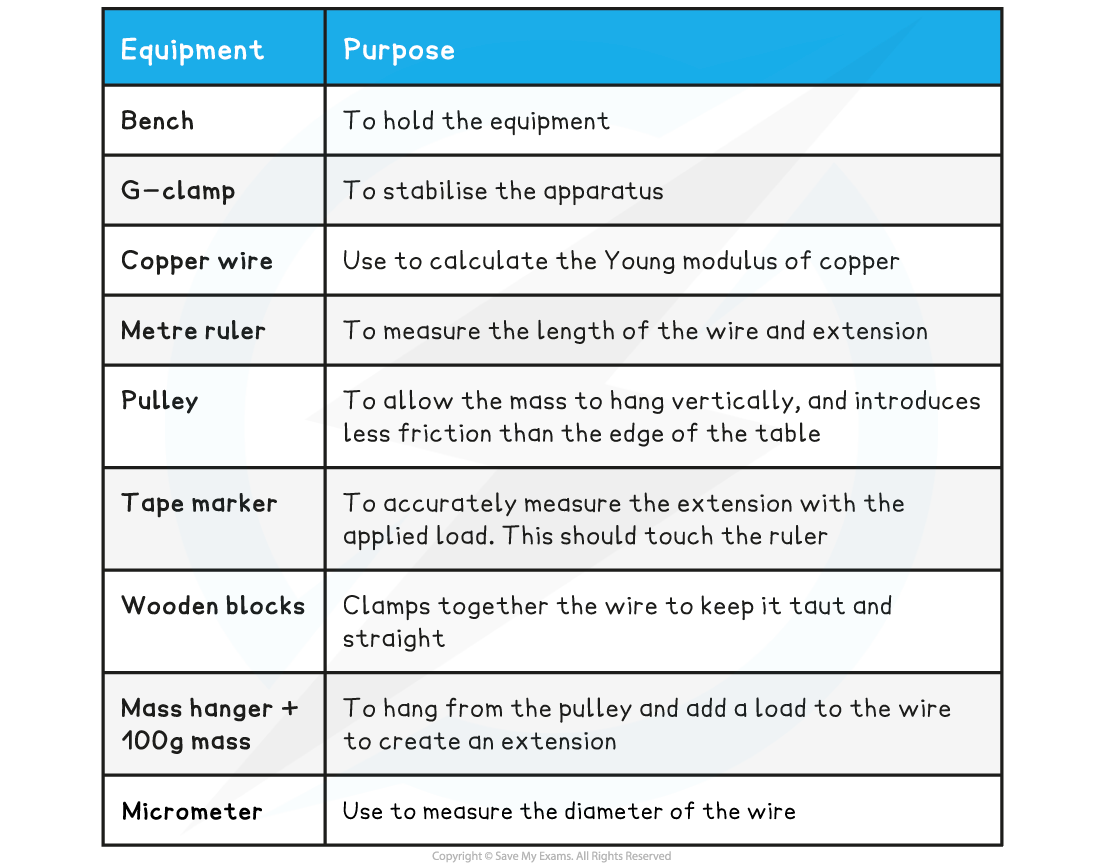
Required Practical: The Young Modulus Aims of the Experiment The aim of the experiment is to measure the Young Modulus of a metal in the form of a wire This requires a clamped horizontal wir...

The Young Modulus The Young modulus is the measure of the ability of a material to withstand changes in length with an added load This gives information about the stiffness of a material Thi...
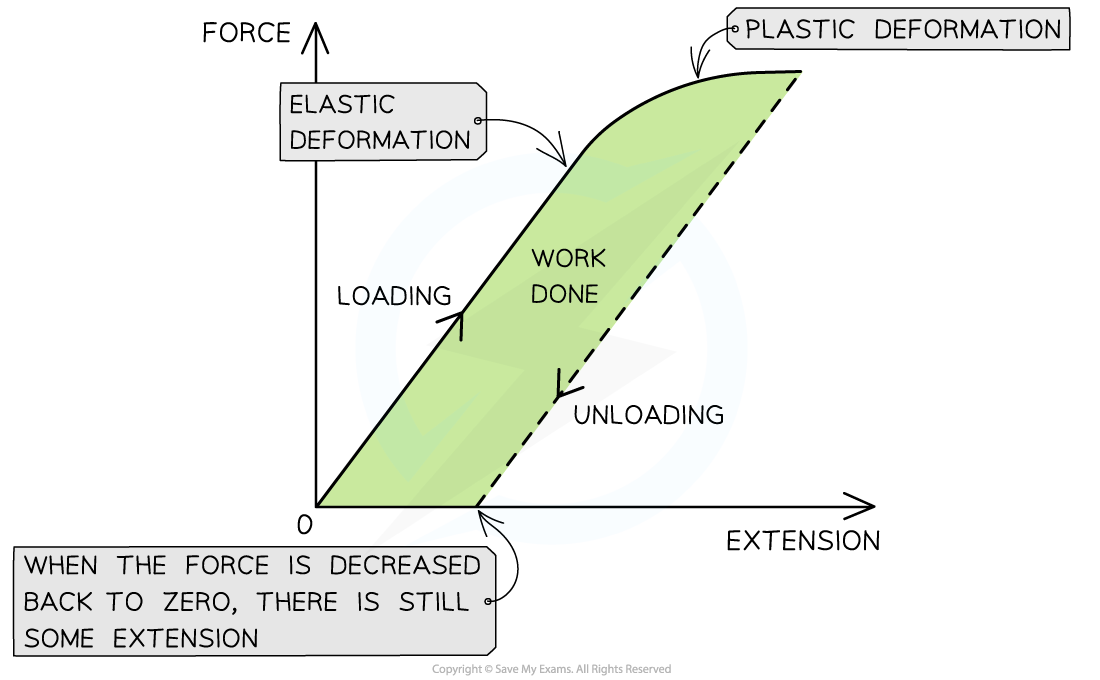
Conservation of Energy in Deformation Loading and Unloading a Metal Wire When a metal wire is loaded with a force and stretched beyond its limit of proportionality, it will undergo?plastic d...
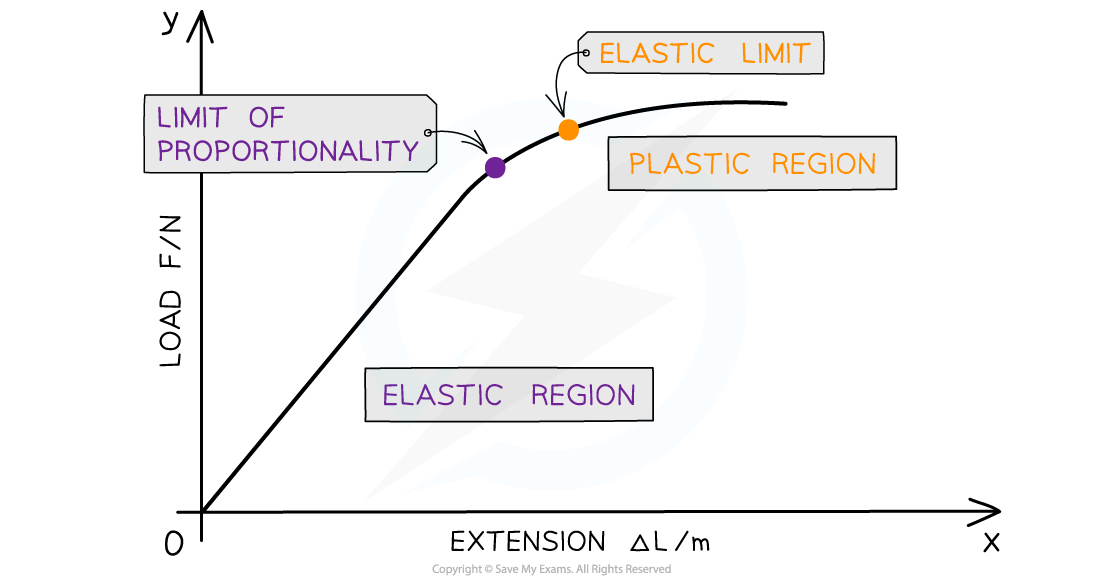
Plastic Behaviour Materials can undergo two types of deformations: Elastic deformation When the load is removed, the object?will?return to its original shape This is shown in the elastic reg...





