2024NEC Critical Thinking案例已發(fā)布!Pre組中國站CT案例及破題思路來了!

3月份,備受關(guān)注的NEC復(fù)賽已開幕了!
主辦方已于2月24日對所有晉級的選手公布Critical Thinking題目!
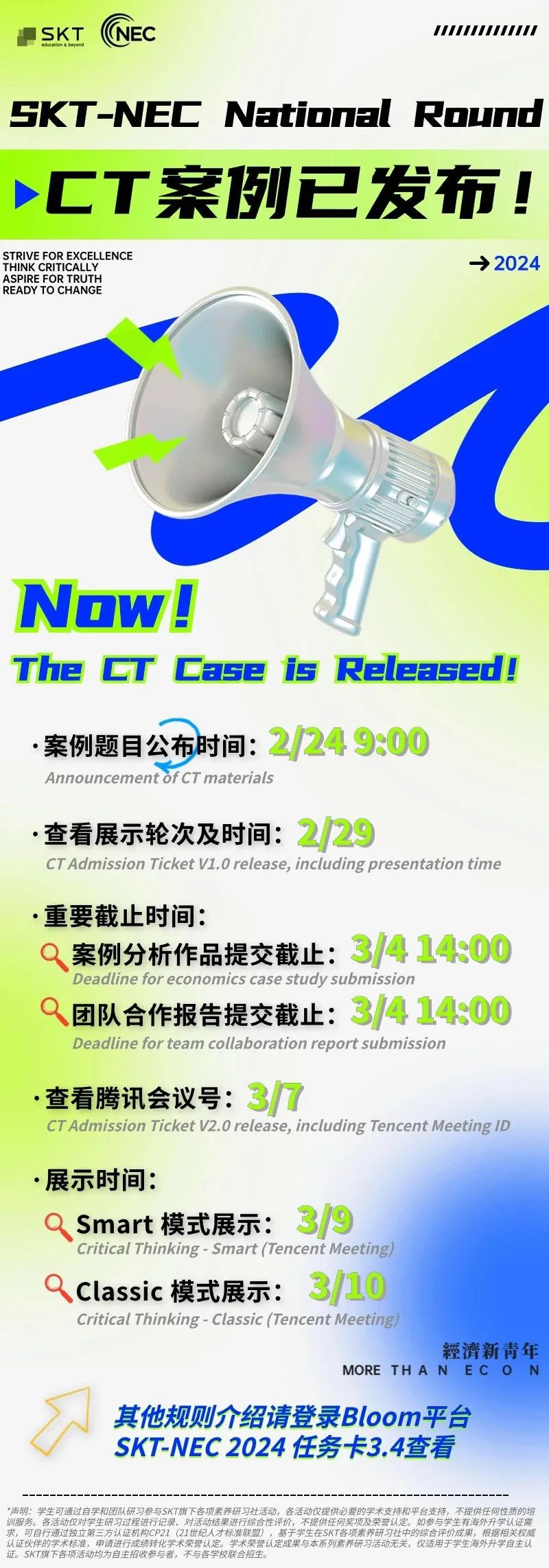 圖片來自:SKT官微
根據(jù)賽程,從案例發(fā)布到成果提交(3月4日)只有短短10天,時間非常緊張,如何在這10天內(nèi)解題是所有選手都面臨的問題。一起來看看如何破題!
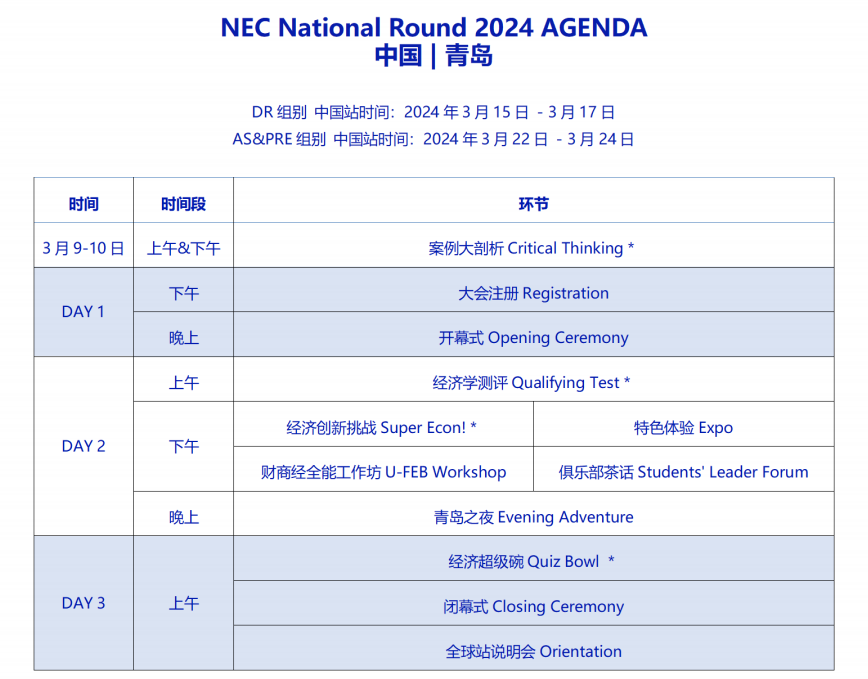
NEC2024中國站日程安排
NEC由CEE(Council for Economics Education)美國經(jīng)濟(jì)教育學(xué)會舉辦,發(fā)起于2000年,是具有歷史沉淀的中學(xué)生經(jīng)濟(jì)學(xué)術(shù)活動。
NEC 2024中國站云端峰于山東青島重啟線下!
DR組別:2024年3月15日-3月17日
AS&PRE組別:2024年3月22日-3月24日
01CT案例大剖析環(huán)節(jié)重要時間點
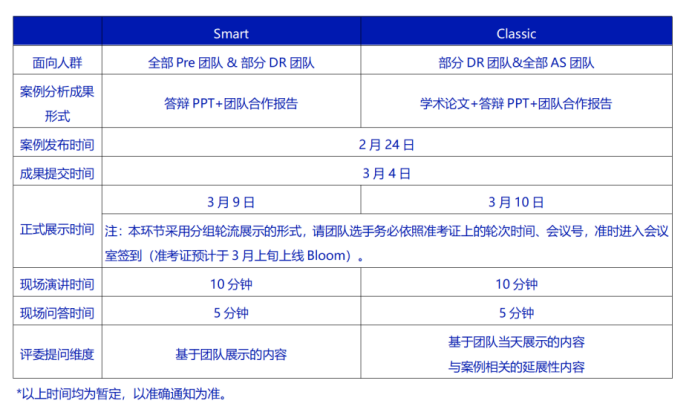
02Critical Thinking 案例大剖析?|?賽制介紹
NEC Critical Thinking?案例大剖析環(huán)節(jié)是一項團(tuán)隊合作任務(wù)。每個團(tuán)隊將在這一環(huán)節(jié)中,針對某個經(jīng)濟(jì)學(xué)問題或案例進(jìn)行符合邏輯的分析并提出解決方案。演講當(dāng)天,團(tuán)隊將實時連線評委,以PPT的形式展示團(tuán)隊分析成果,并回答評委提出的相關(guān)問題。本環(huán)節(jié)共分為兩個模式,Classic模式和Smart模式,以團(tuán)隊為單位計分。兩個模式獨立進(jìn)行評比,只有Classic模式的團(tuán)隊才有資格角逐 NEC 2024 全球賽的晉級資格。
Classic模式
面向DR/AS組別的學(xué)生
難度較高,適合經(jīng)濟(jì)學(xué)基礎(chǔ)較扎實的學(xué)生
需要提交學(xué)術(shù)論文、成果展示PPT、團(tuán)隊合作報告
評委將基于團(tuán)隊展示的內(nèi)容以及與案例相關(guān)的拓展性內(nèi)容進(jìn)行提問
Smart模式
面向Pre/DR組別的學(xué)生
難度較低,適合經(jīng)濟(jì)學(xué)知識儲備相對薄弱的學(xué)生
只需要提交成果展示PPT、團(tuán)隊合作報告
評委僅基于團(tuán)隊展示的內(nèi)容進(jìn)行提問
免費獲取NEC活動資料掃碼咨詢,NEC課程詳詢顧問老師
03NEC-PRE中國站問題&破題思路
⭐Pre組Case:
As a member of an economic advisory committee tasked with exploring policy initiatives, you are being asked to view fossil fuel reduction through an economic lens and make suggestions for how to curb the country’s increasing dependence on foreign oil. There are several aspects to consider, including the strong economic incentives to maintain the status quo, as people have become reliant on things such as their ability to drive their cars to and from work, for example.
Your job is to propose some policies that include the following questions:
● What are the costs and benefits of reducing the dependence on fossil fuels?
● What are some policies that affect the demand for fossil fuels?
● What are some policies that affect the supply of fossil fuels?
● What unintended consequences might your policies create? For example, how might your policies affect the price and quantity of goods that currently rely on fossil fuels for their production and/or distribution?
● How do short-run and long-run effects differ?
As a member of an economic advisory committee tasked with exploring policy initiatives, you are being asked to view fossil fuel reduction through an economic lens and make suggestions for how to curb the country’s increasing dependence on foreign oil. There are several aspects to consider, including the strong economic incentives to maintain the status quo, as people have become reliant on things such as their ability to drive their cars to and from work, for example.
Your job is to propose some policies that include the following questions:
● What are the costs and benefits of reducing the dependence on fossil fuels?
● What are some policies that affect the demand for fossil fuels?
● What are some policies that affect the supply of fossil fuels?
● What unintended consequences might your policies create? For example, how might your policies affect the price and quantity of goods that currently rely on fossil fuels for their production and/or distribution?
● How do short-run and long-run effects differ?
由于篇幅有限,
完整版賽題+PPT格式要求
掃上文二維碼免費領(lǐng)取
⭐破題思路:
對化石燃料的減少及如何遏制國家對外國石油依賴提出建議,需要考慮維持現(xiàn)有經(jīng)濟(jì)激勵,例如,人們對開車上下班的依賴。以下是報告整體結(jié)構(gòu)及重點分析思路:
1、使用圖表和數(shù)據(jù)展示化石燃料依賴的優(yōu)勢和劣勢。
2、分析減少對化石燃料依賴的成本和收益。
3、探討目前限制化石燃料需求和供應(yīng)的政策,以及對經(jīng)濟(jì)的影響。
4、提出團(tuán)隊的建議,并探討可能產(chǎn)生的后果,包括對商品價格和數(shù)量的影響。考慮短期和長期影響的差異。
需求端政策:
1、提供清潔能源的財政補(bǔ)貼。
2、實施對燃油車的限制,如車牌配額和限行措施。
3、加強(qiáng)油品質(zhì)量標(biāo)準(zhǔn)和燃油車排放控制技術(shù)。
4、投資清潔能源基礎(chǔ)設(shè)施。
供應(yīng)端政策:
1、增加汽油稅收。
2、從增強(qiáng)公民環(huán)保意識和支持清潔技術(shù)入手。
3、設(shè)立家庭碳排放信用機(jī)制。
以上就是關(guān)于【2024NEC Critical Thinking案例已發(fā)布!Pre組中國站CT案例及破題思路來了!】的解答,如需了解學(xué)校/賽事/課程動態(tài),可至翰林教育官網(wǎng)獲取更多信息。
往期文章閱讀推薦:
NEC/IEO經(jīng)濟(jì)競賽備考福利已準(zhǔn)備就緒!新賽季翰林助你直通全球賽!


翰林AMC8視頻課重磅上線!

國際競賽真題資源免費領(lǐng)取






